 ultimate-guide
Benefits of Daily Green Juice: A 2026 Guide
Table of Contents
- Why Daily Green Juice Matters for Busy Professionals
- Green Juice vs Whole Vegetables: Understanding the Nutritional Trade-Offs
- Key Health Benefits of Drinking Green Juice Daily
- Best Vegetables for Green Juice and Nutrient Density
- Green Juice Cleanse Benefits and Optimal Timing
- Fresh-Pressed vs Store-Bought: What You Need to Know
- Common Mistakes That Undermine Daily Green Juice Results
- Frequently Asked Questions
Last Updated: August 17, 2026
Why Daily Green Juice Matters for Busy Professionals
For professionals juggling demanding schedules, a glass of fresh-pressed green juice delivers concentrated micronutrients, phytonutrients, and antioxidants in minutes, nutrients that would take significantly longer to consume from whole vegetables alone. A single 16-ounce glass of cold-pressed green juice can contain the equivalent micronutrient profile of multiple servings of raw vegetables in a bioavailable form your body absorbs quickly.
The real appeal is practical: green juice provides immediate access to vitamins A, C, and K, magnesium, potassium, and chlorophyll in one convenient serving. For professionals seeking to restore digestion, increase energy, and improve mental clarity, daily green juice consumption addresses multiple wellness goals simultaneously without the afternoon crash that comes from refined carbohydrates.

Green Juice vs Whole Vegetables: Understanding the Nutritional Trade-Offs
Whole vegetables retain their complete fiber content, which supports digestive health, feeds beneficial gut bacteria, and promotes satiety. When you juice vegetables, you remove most of this fiber. However, cold-pressed green juice concentrates bioavailable micronutrients and phytonutrients that your body can absorb rapidly, making it valuable for those recovering from illness or managing digestive inflammation.
The practical reality: green juice and whole vegetables serve complementary roles. A diet relying exclusively on juice will leave you deficient in fiber and lacking satiety. But incorporating daily green juice alongside whole vegetables, salads, and fiber-rich foods captures the benefits of both approaches. Green juice enhances a healthy diet; it doesn't replace the foundational need for whole foods.
Key Health Benefits of Drinking Green Juice Daily
The benefits of daily green juice cluster around five primary mechanisms: immune support, energy optimization, digestive restoration, blood sugar management, and inflammatory reduction.
Immune system support and antioxidant protection
Green juice delivers high concentrations of vitamin C and antioxidants like beta-carotene and lutein, which support immune function. Leafy greens contain phytonutrients that help your body manage oxidative stress, the cellular damage that accumulates from inflammation and environmental exposure. Consistent consumption of antioxidant-rich foods correlates with improved immune markers and reduced systemic inflammation.
Energy levels and natural stimulation
Unlike energy drinks loaded with added sugars, green juice provides sustained energy through nutrient density. The vitamins and minerals in green juice, particularly magnesium and potassium, support mitochondrial function, the cellular process that generates usable energy. The absence of high glycemic load means your blood sugar remains stable, avoiding the insulin spike-and-crash cycle that leaves you exhausted by mid-morning.
Digestive health and gut microbiome
Green vegetables contain compounds that support healthy gut microbiome composition. Even the liquid portion of green juice contains prebiotic compounds and enzymes that promote digestive function. For individuals with compromised digestion or inflammatory gut conditions, fresh-pressed juice can be gentler on the digestive tract than raw vegetables while still delivering micronutrients.
Blood sugar management and sustained energy
Green juice's low glycemic index means it doesn't trigger rapid blood sugar elevation. Leafy greens and low-sugar vegetables like celery and cucumber contain minimal simple carbohydrates, so your pancreas doesn't need to mount a large insulin response. For individuals managing prediabetes or metabolic syndrome, green juice offers a way to increase vegetable intake without destabilizing blood sugar.
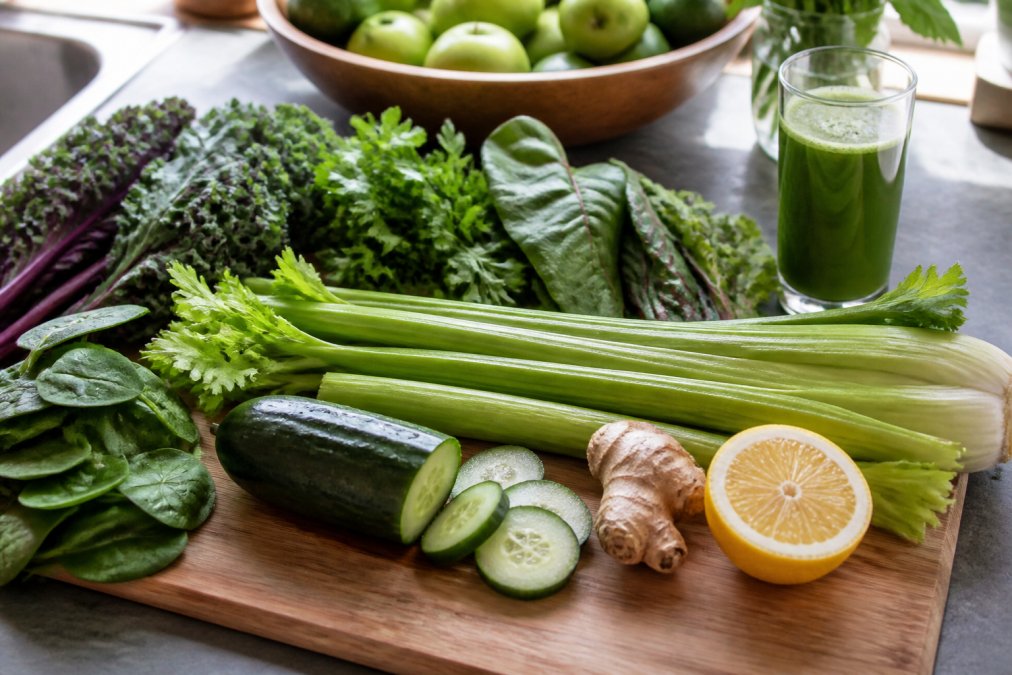
Best Vegetables for Green Juice and Nutrient Density
Leafy greens form the foundation of nutrient-dense green juice. Spinach, kale, and collard greens deliver exceptional levels of vitamin K, vitamin A, magnesium, and iron. Kale is denser in phytonutrients, but spinach offers better bioavailability due to lower oxalate content.
Celery and cucumber serve as hydrating bases that increase juice volume without adding significant sugar. Celery supports electrolyte balance, while cucumber's potassium makes it valuable for post-workout recovery.
Cruciferous vegetables like broccoli and cabbage contain sulforaphane and indole compounds that support detoxification and reduce inflammation. A small amount goes a long way due to their strong flavor.
Herbs like parsley and cilantro add antimicrobial properties and additional micronutrients. Parsley is exceptionally high in vitamin K and vitamin C.
Ginger and turmeric add anti-inflammatory properties. Turmeric's curcumin compound is one of the most researched anti-inflammatory compounds available.
The optimal approach involves rotating vegetables seasonally. A base of spinach or kale, combined with celery, cucumber, and rotating cruciferous vegetables, provides balanced nutrient density without overwhelming flavor intensity.
Green Juice Cleanse Benefits and Optimal Timing
The concept of using nutrient-dense juice consumption to support your body's natural detoxification processes has practical merit when approached realistically. Your liver and kidneys handle detoxification continuously; a green juice cleanse reduces digestive burden while flooding your system with micronutrients that support these processes.
A sustainable approach involves consuming green juice as part of your regular diet rather than as a multi-day fast. Many professionals find that adding one fresh-pressed green juice daily, consumed in the morning on an empty stomach, provides maximum nutrient absorption. Morning consumption aligns with your body's natural cortisol rhythm and supports the energy needs of your workday.
If you're considering a multi-day juice cleanse, approach it cautiously. Short-term cleanses (1-3 days) can provide digestive rest, but extended fasting on juice alone may cause headaches and fatigue. A safer approach involves incorporating daily green juice into your regular diet while maintaining whole foods.
Fresh-Pressed vs Store-Bought: What You Need to Know
The difference between fresh-pressed and store-bought green juice centers on enzyme content, oxidation, and nutrient retention.
Cold-pressed juice is extracted using hydraulic pressure rather than high-speed blending, which minimizes heat generation and oxidation. This preserves more heat-sensitive enzymes and phytonutrients. Cold-pressed juice typically retains higher nutrient density and has a longer shelf life (3-5 days refrigerated).
Fresh-pressed juice from high-speed juicers generates heat that can denature some enzymes and oxidize sensitive phytonutrients. However, if consumed immediately, it still delivers significant micronutrient and antioxidant benefits.
Pasteurized commercial juice undergoes heat treatment to extend shelf life, which destroys most enzymes and damages heat-sensitive vitamins. While it still contains some micronutrients, the enzymatic and phytonutrient profile is substantially reduced.
If you're purchasing pre-made juice, cold-pressed options from reputable local juice providers offer the best balance of nutrient retention and convenience. DIY juicing at home using a quality cold-press juicer gives you complete control over ingredients and freshness.
Common Mistakes That Undermine Daily Green Juice Results
Treating juice as a meal replacement is the most common error. Green juice lacks the protein, healthy fats, and fiber needed for satiety and sustained energy. Green juice works best as a supplement to balanced meals.
Consuming excessive quantities of juice undermines blood sugar management benefits. A standard 16-ounce serving of leafy-green-based juice is appropriate; doubling this amount increases sugar load without proportional nutrient benefits.
Neglecting the fiber component prevents you from maintaining healthy microbiome composition. Daily green juice plus whole foods creates balance; juice alone creates nutritional gaps.
Inconsistent consumption patterns prevent lasting benefits. Your body adapts to consistent nutrient intake over weeks, not days.
Choosing oxidized or low-quality juice undermines the entire effort. A bottle sitting in a cooler for hours has lost significant enzyme and phytonutrient content.
Ignoring individual digestive responses can create problems. Start with 8 ounces daily and increase over two weeks, allowing your microbiome to adjust.
The benefits of daily green juice emerge when you approach it as a sustainable addition to a balanced diet, not as a shortcut or replacement for whole foods. Fresh-pressed green juice delivers concentrated micronutrients, supports immune function, stabilizes energy levels, and promotes digestive health when you understand its role as a complement to whole vegetables and balanced nutrition.
At Roxberry Juice Co., we've built our entire practice around the principle that transparency, freshness, and nutrient density matter. When you choose daily green juice, you're investing in a practice that supports your body's natural resilience and energy. Download our app to explore our cold-pressed green juice options and discover how fresh-pressed nutrition can fit into your daily routine.
Frequently Asked Questions
Is it good to drink green juice every day?
Daily green juice can be part of a healthy routine, especially when made from whole vegetables rich in micronutrients, vitamins, and antioxidants. However, consistency matters more than perfection. Fresh-pressed juice provides concentrated phytonutrients and bioavailable vitamins that support immune function and energy levels. The key is pairing juice with whole foods to maintain adequate fiber intake, since juicing removes the fiber content found in whole produce. Start with small servings and monitor how your body responds.
Should I drink green juice in the morning or at night?
Morning is typically the best time for green juice consumption. Drinking it on an empty stomach or with a light breakfast allows faster nutrient absorption and can provide a natural energy boost through vitamins and minerals like magnesium and potassium. This timing also supports hydration and digestive enzyme activity early in the day. If you drink juice later, pair it with protein or healthy fats to slow sugar absorption and maintain stable blood sugar regulation throughout the day.
Does green juice count as a serving of vegetables?
Green juice provides concentrated micronutrients and phytonutrients from vegetables, but it doesn't fully replace whole produce. Juicing removes most of the fiber content that whole vegetables offer, which is essential for digestive health and gut microbiome support. A single serving of juice may contain nutrients equivalent to multiple servings of raw vegetables, but the missing fiber limits its ability to support satiety and sustained digestion. Use green juice to supplement your vegetable intake, not replace it entirely.
Can green juice help with bloating and digestion?
Green juice can support digestive health through its digestive enzymes and anti-inflammatory properties, which may reduce bloating over time. Leafy greens contain chlorophyll and minerals that calm inflammation in the digestive tract. However, some people experience temporary bloating when starting juice cleanses due to detoxification reactions. If you have IBS or digestive sensitivity, introduce green juice gradually and avoid prolonged cleanses without professional guidance. The best results come from consistent, moderate consumption paired with whole vegetables and adequate hydration.