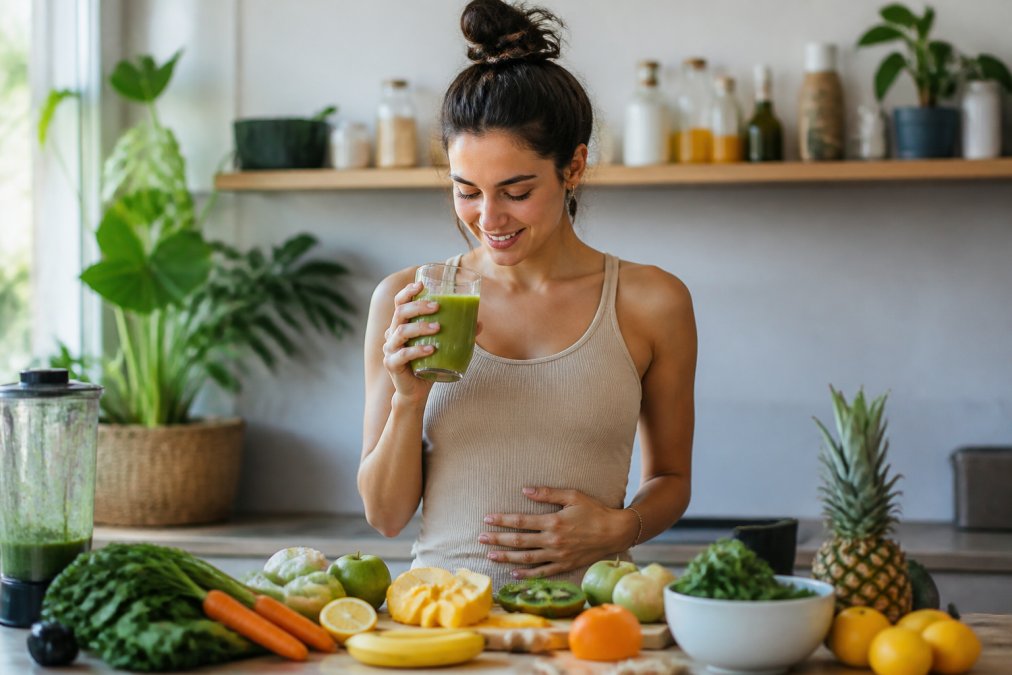
 how-to
How to Improve Digestion Naturally: 7 Simple Habits
Table of Contents
- Why Digestion Slows Down (And How to Fix It)
- Eat More Foods for Better Gut Health
- How to Reduce Bloating Naturally: 5 Immediate Steps
- The Benefits of Fresh-Pressed Juice for Digestion
- Move After Meals to Improve Digestion Naturally
- Stress, Sleep, and Your Gut-Brain Connection
- Common Mistakes That Hurt Your Digestion
- Your 7-Day Plan to Improve Digestion Naturally
- Frequently Asked Questions
Last Updated: September 6, 2026
Digestion is the foundation of how your body absorbs energy, clears waste, and regulates inflammation, yet many people accept bloating, sluggishness, and irregularity as normal. You can improve digestion naturally with daily habits that don't require expensive supplements or restrictive diets. This guide distills practical steps to restore great digestion through whole-food nutrition.
Why Digestion Slows Down (And How to Fix It)
Digestion slows when the gastrointestinal tract lacks the fiber, fluid, and movement it needs to process food efficiently. A sedentary routine, a diet heavy in processed foods, and chronic stress all reduce gut motility, the wave-like contraction that pushes food through your system (peer-reviewed research).
The fix starts with the basics: adequate fiber to form soft, bulky stools and consistent hydration to keep everything moving. When both are missing, transit time lengthens and you feel heavy, bloated, and fatigued after meals.
A common mistake is overhauling your entire diet overnight, which often backfires because a sudden jump in fiber causes gas and cramping. Instead, add one high-fiber food per day and increase your water intake alongside it.
Eat More Foods for Better Gut Health
The best foods for better gut health are whole plant foods rich in fiber, polyphenols, and natural prebiotics that feed beneficial gut bacteria. Apples, oats, bananas, leafy greens, and berries are excellent starting points because they are gentle on the system and easy to digest.
Fermented foods also play a key role. Yogurt with live cultures, kefir, sauerkraut, and kimchi introduce probiotics directly into your digestive tract, helping to balance the microbiome. If you are dairy-free, options like coconut yogurt and fermented vegetables deliver similar benefits without the lactose.
Lean protein and healthy fats matter too. Grilled chicken, fish, eggs, avocado, and olive oil are easier on the stomach than fried or heavily processed proteins, supporting nutrient absorption without triggering inflammation.
For a concentrated source of these nutrients, fresh-pressed juice made from real vegetables and fruits delivers enzymes and phytonutrients in a form your body can absorb quickly. Many customers find that a green juice with ginger or lemon in the morning kickstarts their digestion.
How to Reduce Bloating Naturally: 5 Immediate Steps
Bloating happens when gas gets trapped in the digestive tract, usually because of eating too fast, swallowing air, or struggling to break down certain foods. To reduce bloating naturally, focus on how you eat as much as what you eat.
- Chew each bite thoroughly. Aim for 20 to 30 chews per mouthful (the NIH). This breaks food into smaller particles and pre-mixes it with saliva, which contains digestive enzymes.
- Slow your eating pace. Put your fork down between bites. A meal should take at least 15 to 20 minutes.
- Avoid carbonated drinks with meals. The bubbles introduce extra gas into your stomach.
- Try a short walk after eating. Ten minutes of gentle movement helps gas pass through the system.
- Identify trigger foods. Common culprits include beans, broccoli, and onions, but triggers vary by person. Keep a simple food diary for one week.
The Benefits of Fresh-Pressed Juice for Digestion
The benefits of fresh pressed juice for digestion come down to bioavailability and enzyme preservation. When fruits and vegetables are pressed rather than cooked, their natural enzymes and water-soluble vitamins remain intact, reducing the work your stomach has to do.
Fresh-pressed juice also provides concentrated hydration. Many people are mildly dehydrated without realizing it, and that alone slows gut motility. A 12-ounce juice made from cucumber, celery, apple, and ginger delivers a significant portion of your morning fluid needs along with compounds that soothe the digestive tract.
Fresh-pressed juice is not a replacement for whole fruits and vegetables, which provide necessary fiber. Think of it as a complement: whole foods supply the bulk, while fresh juice delivers a concentrated dose of nutrients that are easy to absorb, especially between meals or before physical activity.
Move After Meals to Improve Digestion Naturally

Light physical activity after a meal is one of the most effective ways to improve digestion naturally because it stimulates gut motility without diverting blood flow away from the digestive organs. A 10 to 15 minute walk at a comfortable pace is the sweet spot.
Walking within 30 minutes of finishing a meal helps regulate blood sugar and encourages the stomach to empty at a healthy rate. Lying down immediately after eating, by contrast, slows gastric emptying and can contribute to acid reflux.
Post-meal movement does not need to be elaborate. Standing up from your desk, walking around the block, or doing light household chores all count. The goal is simply to avoid sitting still or reclining for the first hour after you eat.
Stress, Sleep, and Your Gut-Brain Connection
The gut-brain axis is a two-way communication system between your digestive tract and your central nervous system, meaning your emotional state directly influences how well you digest food. Chronic stress triggers cortisol release, which can slow digestion, increase inflammation, and alter the balance of bacteria in your gut.
Sleep hygiene is the overlooked half of this equation. Your gut follows a circadian rhythm, and poor or irregular sleep disrupts the timing of digestive enzyme release and gut motility. Adults who consistently get fewer than seven hours of sleep often report more bloating and irregularity (PubMed).
Stress reduction does not require an hour of meditation. Simple practices like deep breathing for five minutes before a meal, taking a screen-free break at lunch, or scheduling a regular evening walk can lower cortisol enough to make a measurable difference.
The Specific Link Between Sleep and Digestive Enzyme Production
Most guides note that sleep matters, but they rarely explain why. The connection is rooted in your circadian clock, which regulates more than just wakefulness, it also orchestrates the release of digestive secretions.
- Salivary amylase production follows a circadian rhythm. It peaks during daytime hours and declines in the evening. This enzyme begins carbohydrate breakdown in your mouth, so a late-night meal is processed less efficiently from the very first bite.
- Gastric acid secretion also follows a daily pattern. It typically peaks in the morning and early afternoon, aligning with typical meal times. When you eat against this rhythm, such as a large meal at 10 PM, your stomach is less prepared to break down protein efficiently.
- Pancreatic enzyme output and bile release similarly ramp up during the day and taper at night. This means that a heavy evening meal is digested more slowly, leading to prolonged fullness and a higher likelihood of reflux when you lie down.
Sleep quality directly modulates this system. A single night of poor sleep can shift these rhythms, reducing enzyme release efficiency the next day. Chronic sleep restriction, consistently getting fewer than seven hours, can flatten the circadian amplitude of these digestive secretions, making every meal harder to process. support digestive health.
The Cortisol-Gut Motility Loop
Stress does not just make you feel anxious; it physically slows your gut. When cortisol levels remain elevated, the parasympathetic nervous system, which drives "rest and digest" activity, is suppressed. This reduces the strength and frequency of the migrating motor complex (MMC), the wave-like contractions that sweep food and bacteria out of the small intestine between meals.
A practical consequence: if you eat lunch at your desk while answering emails, your body stays in a sympathetic (fight-or-flight) state, and the MMC remains sluggish. The same meal eaten in a relaxed setting, away from screens, will move through your system more efficiently.
A 10-Minute Evening Protocol to Reset the Gut-Brain Axis
To address both stress and sleep quality simultaneously, consider a simple evening routine that takes about 10 minutes:
- Dim the lights 60-90 minutes before bed. Bright light, especially blue light from screens, suppresses melatonin production, which is a timing signal for your gut as well as your brain.
- Practice 5 minutes of slow diaphragmatic breathing. Inhale for 4 counts, exhale for 6 counts. This activates the vagus nerve, the primary parasympathetic pathway to your digestive organs. It lowers heart rate and signals your gut to shift into digestive mode.
- Avoid eating within 3 hours of bedtime. This gives your stomach time to empty and allows the MMC to perform its cleaning function during the night.
- Keep a consistent sleep schedule, even on weekends. A variation of more than 60-90 minutes in your wake time disrupts the circadian signals that coordinate digestive enzyme release.
The Vagus Nerve: Your Direct Line to Better Digestion
The vagus nerve is the main highway of the gut-brain axis. It carries sensory information from your gut to your brain and sends motor signals back to control digestion. Stimulating it is one of the most direct ways to improve digestion naturally.
Simple vagus nerve activators include:
- Cold water face immersion: Splashing cold water on your face or a brief cold shower activates the vagus nerve.
- Humming or singing: The vibration of the vocal cords stimulates the vagus nerve, which is why some practitioners recommend humming for a minute before a meal.
- Gargling: Gargling water vigorously for 30 seconds activates the vagus nerve through the throat muscles.
These techniques are not substitutes for stress management, but they offer quick, accessible ways to shift your nervous system toward a digestive state before eating.
By understanding the specific mechanisms, circadian enzyme rhythms, cortisol's effect on gut motility, and the vagus nerve's role, you can move beyond generic "reduce stress" advice and implement targeted habits that measurably improve how your body processes food.
Common Mistakes That Hurt Your Digestion
Several well-intentioned habits can quietly undermine your digestive health. The most common is drinking large amounts of water during meals, which dilutes stomach acid and makes it harder to break down protein. Sip sparingly during the meal and drink most of your fluid between meals instead.
Another mistake is relying on antacids for routine indigestion. Occasional use is fine, but frequent use can reduce stomach acid below the level needed to absorb vitamin B12 and other nutrients. Eating dinner too late, a heavy meal within two hours of bedtime, disrupts sleep and slows overnight digestion.
Medication interactions are also frequently missed. Certain common drugs, including some pain relievers and antibiotics, can alter gut bacteria or irritate the stomach lining. If you take prescription medication, talk to your doctor about whether it might be affecting your digestion before assuming the problem is dietary.
The Medication-Digestion Connection Most Guides Ignore
Most natural digestion advice overlooks a major variable: the medications you already take. OTC and prescription drugs can profoundly alter gut function, and understanding these interactions is essential for accurate self-diagnosis.
- Nonsteroidal anti-inflammatory drugs (NSAIDs): Ibuprofen (Advil, Motrin) and naproxen (Aleve) are common for pain and inflammation. Regular use can irritate the stomach lining, increasing the risk of gastritis and ulcers. If you rely on these more than twice a week, discuss alternatives with your doctor.
- Antibiotics: These are designed to kill bacteria, but they do not discriminate between harmful pathogens and your beneficial gut flora. A course of antibiotics can reduce microbial diversity for weeks or months. Rebuilding your gut after a course often requires a focus on prebiotic fibers (garlic, onions, oats) and fermented foods like kefir or plain yogurt.
- Proton pump inhibitors (PPIs): Drugs like omeprazole (Prilosec) and esomeprazole (Nexium) suppress stomach acid production. While effective for GERD, long-term use can reduce acid enough to impair protein breakdown and mineral absorption, particularly magnesium and vitamin B12. Work with your prescriber on the lowest effective dose.
- Metformin: Commonly prescribed for type 2 diabetes, metformin frequently causes gastrointestinal side effects like diarrhea and nausea. An extended-release version or a slow dose titration often mitigates these issues.
- Opioid pain relievers: These slow gut motility significantly, frequently leading to constipation. If you take these short-term, proactive hydration and fiber intake are critical.
Hydration Timing: The Question Everyone Asks
A common question is whether drinking water during meals helps or hinders digestion. The answer is nuanced and depends on the amount.
- Sipping (4-8 ounces) with a meal is fine. It helps soften food and supports the movement of the bolus down the esophagus. It does not meaningfully dilute gastric juices.
- Gulping (16+ ounces) with a meal can be counterproductive. A large volume of fluid rapidly stretches the stomach and can dilute the concentration of stomach acid and digestive enzymes, slowing the initial breakdown of protein and fats. This can lead to a feeling of heaviness or incomplete digestion.
- The optimal pattern is to hydrate well between meals, aim for 8-12 ounces about 30 minutes before eating, and then sip only as needed during the meal. This ensures you are well-hydrated without interfering with the digestive process.
A practical test: if you feel bloated or overly full after meals, track your fluid intake during the meal. Reducing your mealtime beverage from 20 ounces down to 6-8 ounces often resolves the issue within a few days.
The Late-Night Eating Trap
Eating a large meal within two hours of bedtime disrupts digestion and sleep. When you lie down, gravity no longer assists gastric emptying, and the lower esophageal sphincter can relax, allowing stomach contents to reflux into the esophagus. This causes heartburn and fragments sleep, further impairing the next day's digestive enzyme production.
A better approach is to front-load your calories earlier in the day. If you are genuinely hungry in the evening, choose a small snack, like a handful of almonds or a few slices of turkey, rather than a full meal. This gives your stomach time to empty before you lie down, typically 3 to 4 hours for a mixed meal.
Understanding these less obvious factors, medication effects, precise hydration timing, and late-night eating mechanics, can help you identify the true cause of your digestive discomfort instead of guessing. When you address these, the standard advice about fiber and probiotics becomes far more effective.
Your 7-Day Plan to Improve Digestion Naturally
A structured week helps you build these habits without feeling overwhelmed. Here is a simple framework you can adapt to your schedule:
| Day | Morning Habit | Meal Focus | Evening Habit |
|---|---|---|---|
| 1 | Warm lemon water, 10-min walk | Add berries and oats for breakfast | Dinner by 7 PM, no screens at table |
| 2 | Fresh-pressed green juice | Swap one processed snack for an apple | 10-min walk after dinner |
| 3 | 5-min deep breathing before coffee | Add fermented food (kefir or sauerkraut) | Herbal tea, lights dim by 9 PM |
| 4 | Hydrate 16 oz before breakfast | Lean protein with lunch, no fried food | Stretch for 10 minutes |
| 5 | Fresh-pressed juice with ginger | Increase vegetable portion at dinner | No alcohol, early to bed |
| 6 | Walk 15 minutes after breakfast | Cook a plant-forward meal at home | Journal for 5 minutes to reduce stress |
| 7 | Gentle yoga or stretching | Eat mindfully, chew thoroughly | Plan next week's meals |
The plan above combines the core levers: fiber intake, hydration, fermented foods, post-meal movement, and stress management. You do not need to be perfect every day, consistency across the week is what drives results.
Many find that starting the day with a fresh-pressed juice can make a healthy eating plan easier to follow. Roxberry Juice Co. offers juices made from 100% natural real fruits and vegetables, blended to order, providing nutrient density. Whether you are dairy-free, managing IBS, or just looking for a quick breakfast, a juice or açaí bowl with our signature Roxberry Granola can fit naturally into a gut-friendly routine.
Digestion is not complicated, but it does require attention to a few consistent habits: whole foods, adequate fiber, hydration, movement, and stress management. Start with one or two changes from this guide rather than trying to fix everything at once. For busy mornings when you need a nourishing option, Roxberry Juice Co. offers fresh-pressed juices, smoothies, and açaí bowls made from transparent, real ingredients that support healthy digestion and steady energy. Get started with Roxberry Juice Co. and download our app to find your nearest store.
Frequently Asked Questions
What should I drink to improve digestion throughout the day?
Water is the top choice for supporting digestion. Aim for steady sips throughout the day rather than large amounts at once. Herbal teas like ginger, peppermint, and chamomile can also calm the digestive tract. Fresh-pressed juices, like those with ginger or pineapple, offer enzymes that may aid breakdown, but they should complement, not replace, your water intake.
How do fresh-pressed juices and fiber-rich foods support gut health?
Fresh-pressed juice delivers concentrated vitamins, enzymes, and hydration that give your digestive system a gentle boost. Fiber-rich foods, including whole fruits, vegetables, and whole grains, add bulk to stool and feed beneficial gut bacteria. Combining both ensures you get soluble fiber for regularity and insoluble fiber to keep things moving. This pairing supports a healthy gut microbiome and more regular digestion.
What are the most effective natural ways to improve digestion?
The most effective approach combines a few core habits. Eat whole foods like leafy greens and lean protein, and chew slowly to start the breakdown process. Stay hydrated and add light movement, like a 10-minute walk after meals. Managing stress through deep breathing and prioritizing sleep also directly impacts your gut-brain connection. Consistency with these habits matters more than any single fix.
Can a short-term cleanse help reset my digestive system?
A short-term cleanse can help you reset your routine by cutting out processed foods and alcohol while flooding your system with nutrients. Many people feel less bloated and more energized. The key is choosing a cleanse with real, whole ingredients and following it with sustainable healthy habits. A cleanse is a starting point, not a permanent solution for long-term digestive health.