 how-to
How to Make Healthy Breakfast Smoothies for Energy
Table of Contents
- Best Ingredients for Energy Smoothies
- The Macronutrient Balance Formula
- Dairy Free Smoothie Recipes Healthy
- How to Meal Prep Breakfast Smoothies
- Blender Consistency and Texture Optimization
- Common Mistakes to Avoid
- Frequently Asked Questions
Last Updated: September 22, 2026
Best Ingredients for Energy Smoothies
Building an energy smoothie starts with choosing the right foundation. The best ingredients for energy smoothies combine protein, complex carbs, healthy fats, and fiber to keep you full and focused.
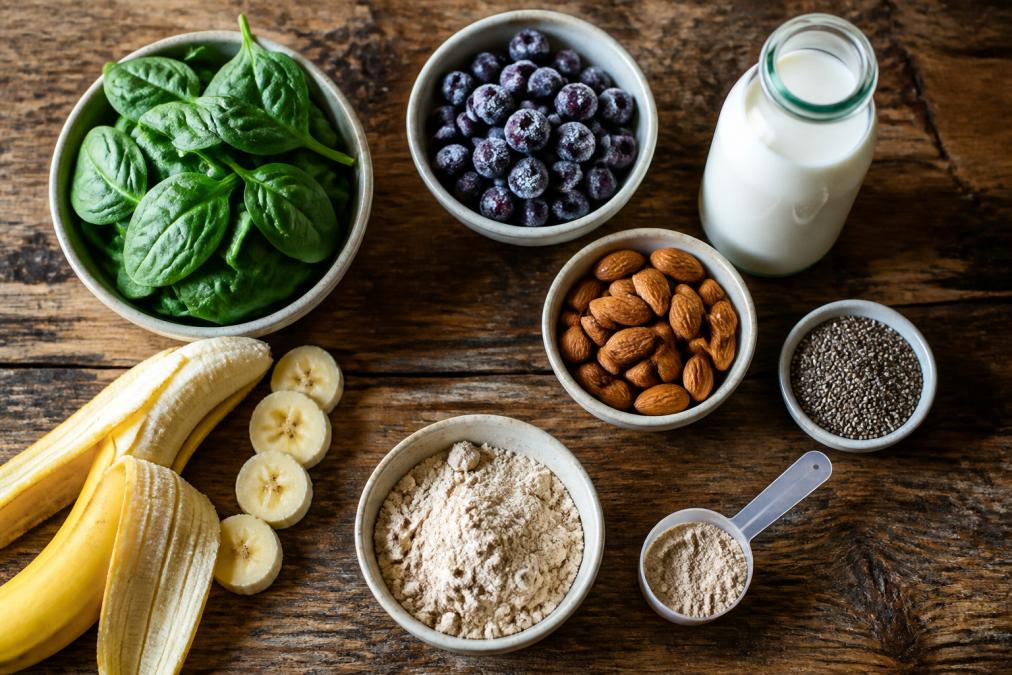
Think of your smoothie as a formula, not a recipe. Each component serves a specific purpose. Skip one, and your energy crashes by mid-morning.
Protein for sustained satiety
Protein is non-negotiable for energy smoothies. It slows digestion and keeps blood sugar stable, preventing the energy dip that hits an hour after breakfast.
Good protein sources include:
- Greek yogurt (if you tolerate dairy)
- Plant-based protein powder
- Nut butters
- Seeds like hemp or pumpkin
Aim for 15-25 grams of protein per smoothie. This amount keeps you satisfied for hours without feeling heavy.
Complex carbohydrates and fiber
Simple carbs spike blood sugar and crash hard. Complex carbs and fiber do the opposite. They release energy slowly and feed your gut bacteria, which improves digestion.
Add fiber-rich carbs like:
- Rolled oats
- Whole grain bread (yes, really)
- Banana or berries
- Chia or flax seeds
A common mistake is skipping carbs entirely. Your brain needs them. The trick is choosing whole sources, not refined sugar.
Healthy fats and omega-3s
Fat slows digestion and stabilizes blood sugar. Omega-3 fatty acids support brain function and reduce inflammation.
Include healthy fats from:
- Avocado
- Nut butters
- Chia seeds
- Flaxseeds
- Walnuts
A tablespoon or two is enough. Too much fat makes smoothies feel heavy and can slow digestion uncomfortably.
The Macronutrient Balance Formula
The ideal smoothie contains roughly 20-30% protein, 40-50% carbs, and 20-30% fat. This ratio keeps energy steady for 3-4 hours.
Here's the practical math: if your smoothie is 400 calories, aim for 100-120 calories from protein, 160-200 from carbs, and 80-120 from fat.
Why blood sugar regulation matters
When blood sugar spikes, your pancreas releases insulin. Insulin clears glucose from your bloodstream fast. Too fast, and you crash.
Preventing post-smoothie energy crashes
The best way to prevent a crash is to eat your smoothie slowly. Drink it over 15-20 minutes instead of chugging it. Your digestive system processes it more gradually.
Dairy Free Smoothie Recipes Healthy
Dairy-free smoothies work just as well as traditional ones. The key is choosing plant-based milk that doesn't separate or taste chalky, and building recipes around affordable, nutrient-dense ingredients that don't require specialty superfoods.
Plant-based milk options
Not all plant milks are equal. Some are thin and watery. Others have strong flavors that overpower fruit.
The best options are:
- Oat milk (creamy, neutral taste, blends well, widely available and affordable)
- Almond milk (light, good for fruit-forward smoothies, lowest cost option)
- Coconut milk (rich, works for tropical flavors, higher fat content)
- Cashew milk (smooth, slightly sweet, mid-range price)
- Soy milk (highest protein at 7-8g per cup, closest to dairy, budget-friendly)
Budget-friendly ingredient swaps for expensive superfoods
Many smoothie recipes call for premium ingredients like hemp seeds ($12-15 per pound), macadamia nuts ($18-22 per pound), or specialty powders. These are not necessary for nutrition or energy.
Instead of hemp seeds ($0.50-0.75 per tablespoon):
- Sunflower seeds ($0.08-0.12 per tablespoon): Nearly identical omega-3 and protein content, 85% cheaper
- Pumpkin seeds ($0.10-0.15 per tablespoon): Slightly higher in magnesium, more affordable
- Ground flaxseed ($0.05-0.08 per tablespoon): Highest omega-3 content per dollar, requires blending into smoothies
Instead of macadamia nuts ($1.20-1.50 per ounce):
- Peanut butter ($0.15-0.25 per tablespoon): 80% cheaper, 8g protein per 2 tablespoons, identical fat profile
- Almond butter ($0.25-0.40 per tablespoon): 50% cheaper than macadamia, widely available, 7g protein per 2 tablespoons
- Sunflower seed butter ($0.12-0.20 per tablespoon): Nut-free option, lowest cost, 6g protein per 2 tablespoons
Instead of specialty protein powders ($1.50-3.00 per scoop):
- Plain Greek yogurt ($0.30-0.50 per 6 oz): 15-20g protein, adds creaminess, no artificial ingredients
- Silken tofu ($0.40-0.60 per 6 oz): 10g protein, neutral flavor, works in any smoothie
- Powdered milk ($0.15-0.25 per 3 tablespoons): 9g protein, shelf-stable, no additives
- Canned chickpeas ($0.50-0.75 per can): 15g protein, adds creaminess, undetectable flavor when blended with fruit
Instead of acai or goji berries ($2-4 per ounce):
- Frozen blueberries ($0.40-0.60 per cup): Identical antioxidant content, 70% cheaper, widely available year-round
- Frozen blackberries ($0.35-0.50 per cup): Higher fiber, lower sugar, more affordable
- Frozen raspberries ($0.45-0.65 per cup): Lowest sugar content, excellent for blood sugar stability
Instead of coconut oil ($0.50-1.00 per tablespoon):
- Olive oil ($0.10-0.20 per tablespoon): Same fat profile, cheaper, adds no flavor to fruit smoothies
- Avocado ($0.50-1.00 per 1/4): Whole food source, adds creaminess, 3g fiber
Three complete budget-friendly recipes
Recipe 1: Green Energy Smoothie (Cost: $1.20 per serving)
- 1 cup unsweetened oat milk ($0.25)
- 1 cup frozen spinach ($0.15)
- 1 frozen banana ($0.15)
- 1/2 cup frozen blueberries ($0.30)
- 2 tablespoons peanut butter ($0.20)
- 1/2 cup plain Greek yogurt ($0.15)
- 1 tablespoon ground flaxseed ($0.05)
Blend on high for 60 seconds. This smoothie delivers 22g protein, 8g fiber, and sustained energy for 4+ hours. The cost is 70% lower than the original recipe with macadamia nuts and hemp seeds.
Recipe 2: Tropical Plant-Based Smoothie (Cost: $1.35 per serving)
-
1 cup unsweetened coconut milk ($0.30)
-
1 frozen banana ($0.15)
-
1/2 cup frozen mango ($0.25)
-
1/2 cup frozen pineapple ($0.25)
-
2 tablespoons almond butter ($0.30)
-
1/2 cup silken tofu ($0.30)
-
1 tablespoon sunflower seeds ($0.10)
-
1 cup unsweetened almond milk ($0.20)
-
1 frozen banana ($0.15)
-
2 tablespoons peanut butter ($0.20)
-
3 tablespoons powdered milk ($0.20)
-
1 tablespoon unsweetened cocoa powder ($0.10)
-
1 tablespoon sunflower seeds ($0.10)
Buying strategies to maximize savings
- Buy frozen fruit in bulk during peak season (summer for berries, fall for stone fruits). Frozen fruit is cheaper than fresh, lasts 6-12 months, and has identical nutritional value.
- Purchase nut butters in bulk from warehouse stores (Costco, Sam's Club). A 2-pound jar of peanut butter costs 40% less per ounce than individual jars.
- Use store-brand plant milks. They're nutritionally identical to name brands and cost $1.50-2.00 per carton versus $3.00-4.00 for premium brands.
- Buy Greek yogurt in large containers (32 oz) rather than individual cups. Cost per ounce drops by 50%.
- Substitute one premium ingredient per recipe. You don't need all expensive items, swap out one or two per smoothie to cut costs significantly.
How to Meal Prep Breakfast Smoothies
Meal prepping smoothies saves 10-15 minutes on busy mornings. The most effective method is freezing smoothie packs in advance.
Freezing and storage techniques
A smoothie pack is a bag or container with all dry ingredients and frozen fruit pre-portioned. You just add liquid and blend.
To freeze smoothie packs:
- Measure dry ingredients (protein powder, oats, seeds) into a freezer bag or container
- Add frozen fruit
- Add any nut butter or healthy fats
- Label with the date and what milk to add
- Freeze for up to 2 weeks
Batch preparation step-by-step
For a week of smoothies, dedicate 30 minutes on Sunday.
- Wash and chop fresh ingredients (spinach, berries)
- Freeze fruit on a sheet tray for 2-3 hours
- Prep 5-7 smoothie packs with frozen fruit, protein powder, and seeds
- Store packs in the freezer in labeled bags or containers
- Keep plant-based milk in the fridge
Blender Consistency and Texture Optimization
The texture of your smoothie matters more than people think. A well-blended smoothie feels satisfying. A chunky or separated one feels unfinished.
If you have a standard blender, use these tricks:
- Blend liquids and soft ingredients first (milk, yogurt, banana)
- Add frozen fruit and leafy greens next
- Pulse 5-10 times, then blend on high for 30-45 seconds
- Add seeds and nuts last, pulse briefly to avoid over-processing
Common Mistakes to Avoid
Most people make the same errors with healthy breakfast smoothies. Knowing what to avoid saves time and money.
Frequently Asked Questions
What makes a healthy breakfast smoothie actually keep you full and energized?
A balanced smoothie combines three key elements: protein (from powder, yogurt, or nut butter) for satiety, complex carbohydrates (oats, banana, whole grains) for sustained energy, and healthy fats (nuts, seeds, avocado) for nutrient absorption. This macronutrient balance prevents blood sugar spikes and the energy crash that follows. Fiber from leafy greens and fruit adds fullness without excess calories. Most people feel satisfied for 3-4 hours with this formula.
What are the best dairy-free smoothie recipes for someone with dietary restrictions?
Plant-based milk alternatives like almond, oat, or coconut milk work as your base. For protein, use dairy-free powder, nut butters, or seeds like hemp or chia. A simple energy recipe: 1 cup oat milk, 1 scoop plant-based protein powder, 1 frozen banana, 2 tablespoons almond butter, 1 cup spinach, and ice. Another option: coconut milk, frozen berries, chia seeds, dates for natural sweetness, and a handful of leafy greens. Both provide complete macronutrient balance without dairy.
How far in advance can I meal prep breakfast smoothies?
Frozen smoothie packs stay fresh for up to 3 months when properly prepared. Layer dry ingredients (protein powder, oats, seeds) and frozen fruit in freezer bags, then add fresh spinach on top just before freezing. When ready to blend, pour contents into your blender with liquid and ice.
What ingredients should I add to prevent an energy crash after drinking my smoothie?
Include protein, fiber, and healthy fats to slow carbohydrate digestion and stabilize blood sugar. Add 1-2 tablespoons of nut butter or seeds (chia, flax, hemp), a scoop of protein powder, and at least 1 cup of leafy greens or fiber-rich vegetables. Limit high-glycemic fruits like mango; instead, use berries with lower sugar content. Avoid adding sweeteners beyond whole fruit. This combination of macronutrients creates sustained energy release over 3-4 hours without the mid-morning energy dip.