 how-to
Signs of Poor Gut Health: What to Watch For
Table of Contents
- What Your Gut Is Actually Doing All Day
- 12 Signs of Poor Gut Health You Shouldn't Ignore
- What Causes Poor Gut Health in the First Place
- The Gut-Brain Connection: Why Your Mood Lives in Your Belly
- Foods for Gut Health That Actually Make a Difference
- How to Improve Gut Health Naturally: A Step-by-Step Approach
- When to See a Doctor About Your Gut
- Frequently Asked Questions
Last Updated: August 14, 2026
What Your Gut Is Actually Doing All Day
Your gut is far more than a digestive organ. The gastrointestinal tract houses trillions of microorganisms that regulate immune function, produce neurotransmitters, manage inflammation, and govern nutrient absorption. This ecosystem, known as the microbiome, communicates constantly with your brain, skin, and immune system.
The gut microbiome is the community of bacteria, fungi, and other microorganisms living in your digestive tract. When balanced, digestion runs smoothly and energy stays steady. When it falls out of balance, a state called dysbiosis, the effects ripple outward in ways that feel unrelated to digestion.
At Roxberry Juice Co., we work with health-conscious individuals who come in with vague complaints: low energy, bloating, skin issues, and mood swings. More often than not, the gut is the common thread. This guide covers the signs of poor gut health most people miss, what drives gut imbalance, and practical steps that move the needle.
According to the National Institutes of Health's Human Microbiome Project, the human gut contains more microbial cells than human cells in the entire body. When gut health suffers, you're dealing with something significant.
12 Signs of Poor Gut Health You Shouldn't Ignore
Poor gut health rarely announces itself with one obvious symptom. It accumulates quietly across multiple systems before most people connect the dots.

Digestive Symptoms: Bloating, Gas, and Irregular Stools
- Persistent bloating after meals often signals dysbiosis or food intolerance.
- Excessive flatulence with foul odor suggests fermentation imbalances.
- Constipation (fewer than three bowel movements per week) points to slow gut motility and insufficient fiber or beneficial bacteria.
- Chronic diarrhea indicates the gut lining may be compromised, affecting nutrient and water absorption.
- Alternating constipation and diarrhea is a classic dysbiosis pattern, frequently associated with irritable bowel syndrome.
- Heartburn or acid reflux may reflect imbalances in gut bacteria affecting the lower esophageal sphincter.
- Abdominal pain or cramping without a clear cause warrants attention, particularly if recurring.
The Bristol Stool Chart from the National Library of Medicine offers a standardized scale that gastroenterologists use to assess gut health. Types 3 and 4 are considered ideal. Anything consistently outside that range is worth tracking.
Systemic Signals: Fatigue, Skin Issues, and Mood Shifts
- Unexplained fatigue that doesn't resolve with sleep signals poor nutrient absorption. When the gut isn't absorbing nutrients properly, the body runs on less fuel.
- Skin conditions including eczema, acne, psoriasis, and rosacea have well-documented links to gut inflammation and intestinal permeability. When the gut lining becomes too permeable, inflammatory compounds enter the bloodstream and surface on the skin.
- Mood shifts, anxiety, or low mood often trace back to the gut-brain axis. The gut produces a significant portion of the body's serotonin, and dysbiosis disrupts that production.
Less Obvious Red Flags: Weight Changes and Sleep Disturbances
- Unexplained weight gain or loss without dietary or activity changes can reflect disrupted metabolic health driven by gut imbalance. Certain bacterial profiles affect how efficiently the body extracts calories and stores fat.
- Sleep disturbances connect to gut health through serotonin and melatonin production, both influenced by the microbiome.
What Causes Poor Gut Health in the First Place
Chronic stress is one of the most underestimated factors. The gut and brain communicate bidirectionally, and sustained stress directly alters gut motility, increases intestinal permeability, and shifts microbiome composition. Stress management is a clinical necessity for gut health.
Other common causes include low fiber intake, ultra-processed foods and added sugars, frequent antibiotic use, chronic sleep deprivation, sedentary behavior, and unidentified food intolerances.
Medication-Induced Gut Imbalance
Antibiotics aren't the only medications affecting gut health. Proton pump inhibitors, NSAIDs, antidepressants, and some hormonal contraceptives alter the gut environment. Proton pump inhibitors reduce stomach acid, changing which microorganisms survive in the upper gastrointestinal tract. NSAIDs can compromise the gut lining with regular use. This doesn't mean avoiding these medications when clinically necessary, but the connection is worth raising with your doctor if you're experiencing poor gut health symptoms.
The Gut-Brain Connection: Why Your Mood Lives in Your Belly
The gut-brain axis is the bidirectional communication network linking the central nervous system and the enteric nervous system in the gut. The vagus nerve physically connects the brainstem to the gastrointestinal tract, carrying signals in both directions.
The gut plays a major role in producing serotonin, the neurotransmitter most associated with mood regulation. When dysbiosis disrupts this production, the downstream effects on anxiety, depression, and cognitive clarity are measurable. Stress activates the autonomic nervous system, which directly alters gut motility and can trigger cramping, diarrhea, or constipation. The relationship runs both ways: poor gut health worsens mental health, and poor mental health worsens gut health.
For anyone experiencing mood shifts alongside digestive symptoms, addressing the gut first is often more productive than treating each symptom separately.
Foods for Gut Health That Actually Make a Difference
The most effective foods for gut health either feed beneficial bacteria or introduce new ones.
Prebiotic foods feed existing bacteria:
- Garlic, onions, and leeks
- Bananas (especially slightly underripe)
- Oats and barley
- Asparagus and Jerusalem artichokes
- Legumes and lentils
Probiotic foods introduce live microorganisms:
- Yogurt with live active cultures
- Kefir
- Fermented foods like sauerkraut, kimchi, and miso
- Kombucha
Fiber intake is the single most impactful dietary variable for microbiome diversity. According to Harvard T.H. Chan School of Public Health's nutrition guidelines, most adults fall significantly short of recommended daily fiber intake, which directly limits beneficial gut bacteria diversity.
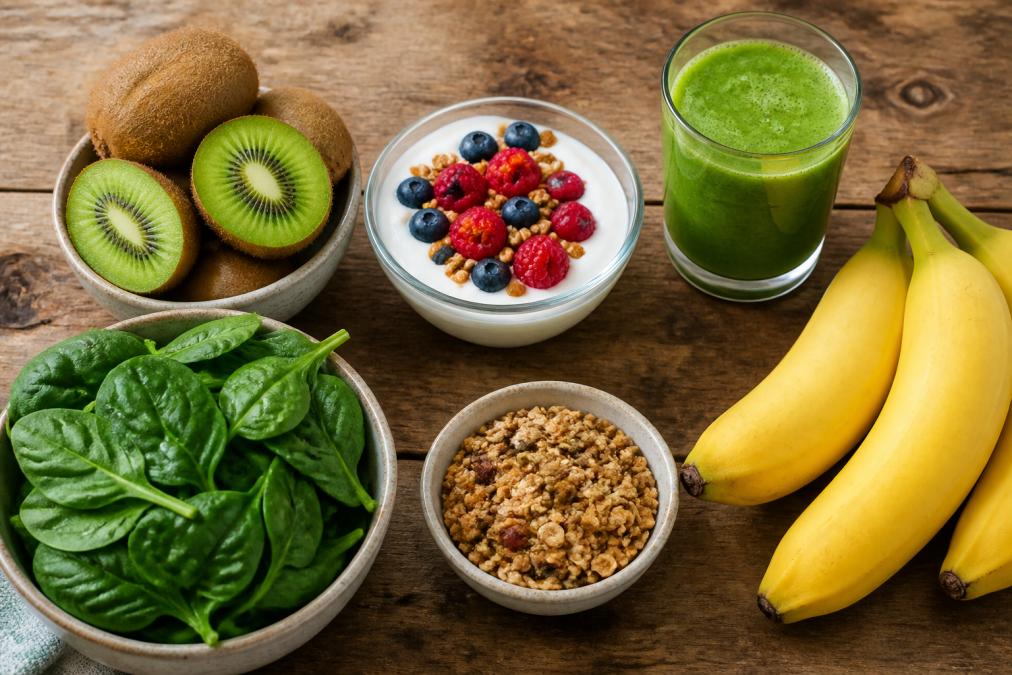
At Roxberry Juice Co., our fresh-pressed juices, smoothies blended to order, and açaí bowls are built around real fruits and vegetables that provide natural fiber, digestive enzymes, and phytonutrients. The signature Roxberry Granola adds prebiotic fiber without ultra-processed ingredients.
How to Improve Gut Health Naturally: A Step-by-Step Approach
Learning how to improve gut health naturally is less about dramatic interventions and more about consistent, compounding habits.
Step 1: Audit your current diet for fiber and fermented foods. Track for three days before making changes to establish a baseline.
Step 2: Add one prebiotic food and one probiotic food per day. Adding one banana and one serving of yogurt daily is more sustainable than a complete dietary reset.
Step 3: Reduce ultra-processed food intake gradually. Replace one processed snack per day with a whole-food alternative for lasting change.
Step 4: Address sleep and stress directly. Gut health does not improve reliably if sleep is poor and stress is chronic. These are foundational to microbial balance.
Step 5: Move your body daily. Physical activity increases gut motility and positively influences microbiome diversity. A 20-30 minute walk counts.
Step 6: Stay consistently hydrated. Water supports the mucosal lining of the intestines and helps move waste through the digestive tract.
| Step | Action | Primary Benefit |
|---|---|---|
| 1 | Audit fiber and fermented food intake | Establish baseline |
| 2 | Add one prebiotic + one probiotic food daily | Build microbial diversity |
| 3 | Replace one processed snack per day | Reduce bacterial imbalance |
| 4 | Improve sleep and manage chronic stress | Restore gut-brain axis balance |
| 5 | Daily movement (20-30 min minimum) | Improve gut motility |
| 6 | Consistent daily hydration | Support intestinal lining |
Personalized Nutrition vs. Generic Gut Advice
Generic gut advice has limits. The standard recommendation to "eat more fiber and take a probiotic" works for some people and does nothing for others because the microbiome is highly individual. Emerging approaches involve diagnostic testing, including comprehensive stool analysis and food sensitivity panels, to identify specific imbalances. If you've followed standard gut health advice for several months without improvement, personalized testing through a functional medicine practitioner is worth pursuing.
When to See a Doctor About Your Gut
Most gut health improvements happen through lifestyle and dietary changes. Some symptoms require medical evaluation.
See a doctor promptly if you experience:
- Blood in your stool or rectal bleeding
- Unexplained weight loss of more than a few pounds over a short period
- Severe or persistent abdominal pain
- Symptoms that wake you from sleep
- A family history of colorectal cancer combined with new digestive symptoms
- Persistent diarrhea lasting more than two weeks
- Difficulty swallowing
For actionable diagnostic guidance, the American College of Gastroenterology offers information on when to pursue GI evaluation and what to expect from diagnostic testing. A primary care physician is appropriate for most cases, with gastroenterologist referral warranted for persistent, worsening, or red-flag symptoms.
Gut health is one of those areas where the gap between knowing and doing tends to be wide. Roxberry Juice Co. exists for that starting point: fresh-pressed juices, real-fruit smoothies, and nutrient-dense açaí bowls built from transparent, whole-food ingredients that support digestion, energy, and mental clarity. Download the Roxberry Juice Co. app to explore our menu, find your nearest location, and make gut-supportive eating a seamless part of your daily routine.
Frequently Asked Questions
What are the most common symptoms of gut dysbiosis?
Gut dysbiosis, a bacterial imbalance in the microbiome, most often shows up as persistent bloating, gas, diarrhea, or constipation. You may also notice fatigue, brain fog, skin flare-ups like acne or eczema, frequent illness, and unexplained weight changes. These symptoms overlap with many conditions, which is why tracking their pattern and frequency matters before drawing conclusions. If several of these signs appear together and last more than a few weeks, a conversation with your doctor is the right next step.
Can poor gut health affect your mood and energy levels?
Yes, and the connection is more direct than most people expect. The gut-brain axis links your gastrointestinal tract to your central nervous system through millions of nerve fibers. Roughly 90% of the body's serotonin is produced in the gut, so when the microbiome is out of balance, mood, focus, and energy often suffer. People with signs of poor gut health frequently report persistent fatigue and heightened anxiety even when their sleep and stress levels seem otherwise normal.
How long does it take to improve gut health?
Minor imbalances often respond to dietary and lifestyle changes within two to four weeks. More established dysbiosis or conditions like leaky gut and chronic inflammation can take three to six months of consistent effort. The timeline depends on the root cause, how significant the imbalance is, and whether contributing factors, like ongoing stress or medication use, are addressed. Tracking symptoms weekly gives you a clearer picture of whether your approach is working or whether you need clinical support.
What foods should you avoid for better gut health?
Ultra-processed foods, added sugars, artificial sweeteners, and excess alcohol are the biggest disruptors of a healthy microbiome. These can reduce bacterial diversity and feed harmful strains over beneficial ones. For people with food intolerances, common triggers include gluten, dairy, and high-FODMAP foods like onions and beans. Avoiding these isn't always permanent, an elimination approach guided by a registered dietitian can help you identify your specific triggers rather than cutting out entire food groups unnecessarily.