 ultimate-guide
Why Avoid Artificial Juice Syrups: A Health Guide
Table of Contents
- The Hidden Cost of Artificial Juice Syrups
- High Fructose Corn Syrup Health Risks
- How Artificial Syrups Affect Blood Sugar and Insulin
- Synthetic Additives and Hidden Ingredients
- Benefits of Fresh Pressed Juice Over Artificial Alternatives
- How to Read Juice Labels and Spot Artificial Syrups
- Environmental and Inflammatory Consequences
- Making the Switch to Real Juice
- Frequently Asked Questions
The Hidden Cost of Artificial Juice Syrups
Artificial juice syrups extract a hidden metabolic toll that extends far beyond their nutrition label. These products are engineered to bypass your body's natural satiety signals, your brain doesn't register liquid calories the same way it processes solid food, so you can consume 200 calories of synthetic sweeteners without feeling satisfied, leading to overconsumption and metabolic confusion.
Many people assume all juice is created equal, but processing methods, ingredient sourcing, and nutritional density tell a completely different story. Artificial juice syrups contain added sweeteners, preservatives, and flavor compounds designed to extend shelf life and maximize profit margins. Over time, these ingredients create inflammation, disrupt your gut microbiome, and contribute to metabolic dysfunction.
What makes this particularly troubling is how these products are marketed. Labels use terms like "made with real fruit juice" or "natural flavors" to create an illusion of wholeness, but when artificial juice syrups make up the bulk of the product, the actual fruit juice content might be as low as 10-20%, with the rest being water, sweeteners, and additives.
At Roxberry Juice Co., we've spent years helping customers understand the real difference between what's marketed as "juice" and what actually nourishes your body.
High Fructose Corn Syrup Health Risks
High fructose corn syrup is metabolized differently than glucose. Your liver processes fructose directly, converting excess amounts to fat more readily than other sugars. Unlike glucose, which triggers insulin release and signals fullness to your brain, fructose doesn't produce the same leptin response that signals satiety, meaning you can drink a beverage sweetened with fructose and still feel hungry minutes later (peer-reviewed research).
Many beverages sweetened with high fructose corn syrup deliver 30-40 grams of fructose per serving (the FDA). For context, a whole apple contains about 5-6 grams of fructose alongside fiber and polyphenols that slow absorption and trigger satiety signals. Over weeks and months, this pattern contributes to weight gain, increased visceral fat storage, and metabolic syndrome.
Research consistently shows that high fructose consumption is associated with elevated triglyceride levels, increased uric acid production, and greater risk of fatty liver disease (peer-reviewed research). Fructose metabolism generates more reactive oxygen species than glucose metabolism, increasing oxidative stress throughout your body and contributing to systemic inflammation linked to cardiovascular disease, type 2 diabetes, and cognitive decline.
How Artificial Syrups Affect Blood Sugar and Insulin
Blood sugar spikes from artificial juice syrups happen faster and more dramatically than most people realize. The absence of fiber and whole food structure means nothing slows glucose absorption, your bloodstream gets flooded with glucose in minutes, triggering a sharp insulin response.
This insulin spike creates multiple problems in sequence. First, it drives glucose into your cells rapidly, causing a subsequent crash in blood sugar within 1-2 hours that triggers hunger and cravings for more sweet foods. Second, repeated insulin spikes exhaust your pancreas over time and increase your risk of insulin resistance, the metabolic condition that precedes type 2 diabetes.
Fresh-pressed juice from whole fruits still contains fiber and cellular structure that moderates glucose absorption. A serving of fresh apple juice raises blood sugar more gradually than an artificially sweetened beverage, even if the total sugar content appears similar on the label. Long-term consumption of artificial juice syrups contributes to metabolic dysfunction where elevated insulin levels drive inflammation, increase fat storage in the liver, and promote weight gain even when total calorie intake appears reasonable.
Synthetic Additives and Hidden Ingredients
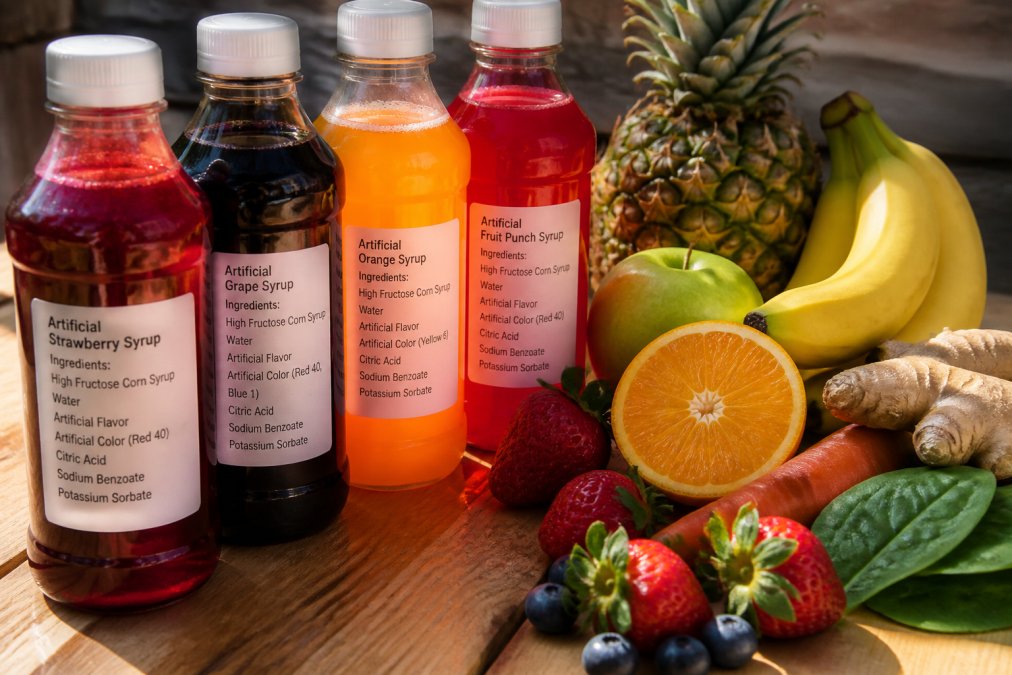
The ingredient list on most artificial juice syrups reads like a chemistry experiment. Beyond the primary sweetening agent, these products contain preservatives, colorants, thickeners, and flavor compounds that serve no nutritional purpose. Common additives include sodium benzoate, potassium sorbate, artificial flavoring compounds, and various colorants that prevent microbial growth but also change how your gut bacteria function.
Your microbiome contains trillions of bacteria that influence digestion, immune function, and mood regulation. Synthetic additives can disrupt this delicate ecosystem. Artificial flavoring compounds are particularly concerning because their exact composition is often proprietary information, manufacturers can list them simply as "natural flavors" or "artificial flavors" without disclosing the specific chemicals involved.
Synthetic colorants like Tartrazine (Yellow 5) and Allura Red (Red 40) are common in colored beverages. While approved for use, the need for artificial colorants indicates the product contains minimal actual fruit juice. Real juice gets its color from natural pigments in the fruit itself. Your liver and kidneys have to process everything you consume, and when you drink artificial juice syrups regularly, you're asking your detoxification systems to work overtime processing compounds that provide zero nutritional value.
Benefits of Fresh Pressed Juice Over Artificial Alternatives
Fresh-pressed juice from whole fruits and vegetables delivers nutritional density that artificial syrups cannot replicate. When you press whole produce, you extract vitamins, minerals, polyphenols, and enzymes that are still biologically active and work synergistically to support digestion, reduce inflammation, and enhance nutrient absorption.
Many people report improved energy levels, clearer skin, and better digestion within days of switching to fresh juice. Fresh-pressed juice contains live enzymes that artificial syrups completely lack, these enzymes support digestion and nutrient absorption. The polyphenol content in fresh juice is dramatically higher than in artificial alternatives; a single serving of fresh-pressed green juice might contain hundreds of different polyphenol compounds, each contributing to cellular health and reducing oxidative stress.
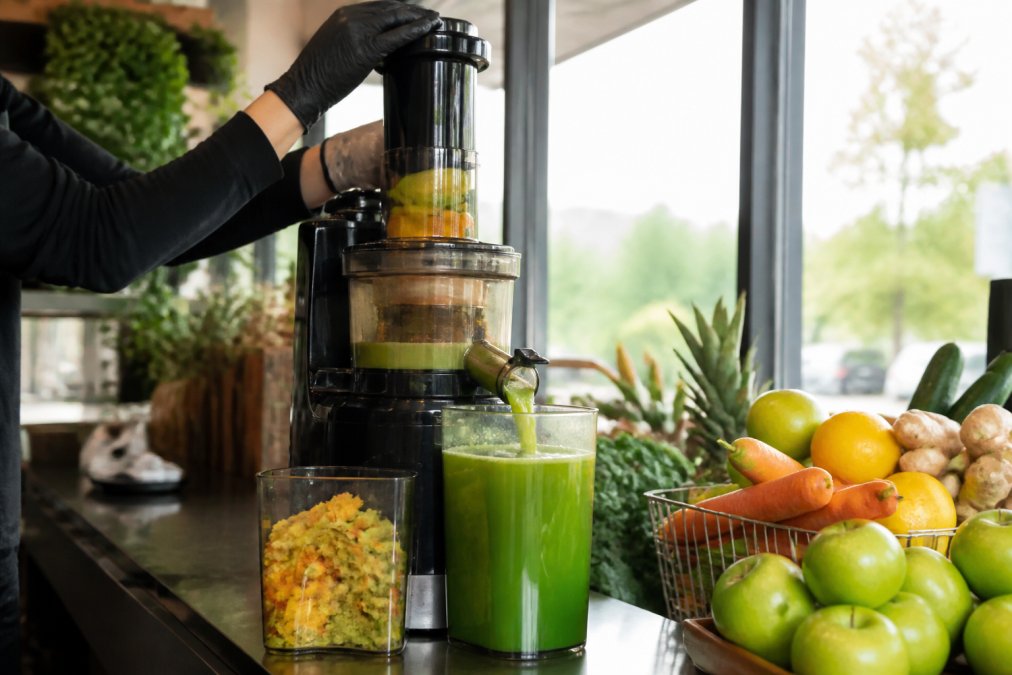
The nutrients in fresh juice are in forms your body recognizes and can absorb efficiently. Synthetic additives and processing methods in artificial syrups can actually interfere with nutrient absorption. Fresh juice, especially when it contains fiber from whole fruits and vegetables, triggers more appropriate hunger and fullness signals, making it easier to maintain a healthy weight without constant willpower.
How to Read Juice Labels and Spot Artificial Syrups
The first place to look is the ingredient list, which must be listed in descending order by weight. If water appears first, followed by a sweetening agent, you're looking at a beverage that's primarily sugar water with minimal actual juice. Real juice should list the juice itself as the first ingredient. hidden health risks.
Watch for terms that indicate artificial syrups. "Juice concentrate" is often code for a processed product stripped of nutrients and reconstituted with water and sweeteners. "Made with real fruit juice" might contain as little as 10% actual juice. If you see more than 10 ingredients, or if more than half are unfamiliar chemical names, you're looking at an artificially formulated product.
Look for specific sweetening agents. Artificial juice syrups commonly use high fructose corn syrup, glucose-fructose syrup, or various nonnutritive sweeteners. If the sweetening agent is listed as something other than the fruit itself, you're consuming added sweeteners. Artificial juice syrups often have unnaturally bright or uniform colors, while real juice varies slightly based on fruit ripeness. Products with shelf lives of months or years contain preservatives and have been processed in ways that compromise nutritional value.
Environmental and Inflammatory Consequences
The production of artificial juice syrups creates environmental consequences extending far beyond individual health impacts. High fructose corn syrup production requires massive agricultural operations dependent on monoculture farming, heavy pesticide use, and significant water consumption. Industrial juice concentrate production generates waste streams that burden water treatment systems.
The inflammatory response your body experiences from artificial juice syrups has broader implications. Chronic inflammation is implicated in cardiovascular disease, autoimmune conditions, cognitive decline, and various cancers. Inflammatory markers like C-reactive protein increase with regular consumption of artificial sweeteners and high fructose syrups, predicting cardiovascular disease risk and accelerated aging.
Gut dysbiosis caused by synthetic additives perpetuates low-grade inflammation throughout your body. Fresh juice, by contrast, supports anti-inflammatory processes, the polyphenols and phytonutrients in fresh-pressed juice feed beneficial bacteria that produce short-chain fatty acids strengthening your intestinal barrier and reducing systemic inflammation.
Making the Switch to Real Juice
Transitioning from artificial juice syrups to fresh-pressed juice requires understanding what to expect. Many people experience a brief adjustment period with mild fatigue or headaches, which indicates your body is beginning to eliminate accumulated toxins and adjust to a lower sugar load.
Start by replacing one artificial juice serving per day with fresh juice. Over the course of a week or two, your taste preferences will shift and your taste receptors will recalibrate to normal sweetness levels. Most people notice improved energy within 3-5 days of switching to fresh juice, with more stable blood sugar, fewer energy crashes, and improved sleep quality.
Fresh-pressed juice requires refrigeration and has a limited shelf life, which means you need to plan ahead. At Roxberry Juice Co., we've helped customers make this transition by providing convenient access to fresh-pressed juices that fit into busy schedules. While fresh-pressed juice costs more than artificially sweetened alternatives, when you factor in the health benefits, reduced inflammation, better energy, and decreased risk of chronic disease, the investment becomes preventive healthcare.
Start with simple combinations like a basic green juice with apple, celery, and ginger. Pair your juice with protein or fat to moderate the blood sugar response, consuming juice with a meal rather than on an empty stomach produces better metabolic results. Monitor your digestion during the transition; some people experience loose stools initially because the high water and nutrient content stimulates digestive movement, but this typically resolves within a few days.
Making the switch from artificial juice syrups to fresh-pressed juice is one of the most impactful dietary changes you can make. Your digestive system will recover, your energy will stabilize, and your body will begin to heal from the inflammatory burden of synthetic additives. At Roxberry Juice Co., we're committed to making this transition accessible through our 100% natural, fresh-pressed juices and smoothies blended to order. Download our app to find your nearest location and start your journey toward better health with real juice, real ingredients, and real results.
Frequently Asked Questions
Q: What makes high fructose corn syrup worse than regular sugar in artificial juice syrups?
A: High fructose corn syrup is metabolized differently than glucose. Your liver processes it more readily into fat, increasing triglyceride levels and promoting metabolic syndrome. Research shows HFCS consumption is linked to greater insulin resistance and inflammation than table sugar. Artificial syrups often contain 55% fructose, which your body doesn't regulate as effectively, leading to faster blood sugar spikes and greater long-term metabolic damage.
Q: How do I distinguish between real fruit juice and artificial syrup drinks when reading juice labels?
A: Check the ingredient list first, real juice lists only fruit, water, and sometimes natural preservatives. Artificial syrups list high fructose corn syrup, invert sugar, or glucose syrup as primary ingredients. Look for the word 'concentrate' or 'from concentrate' which indicates processing. The nutrition label matters too: real juice has fiber and higher nutritional density. If the label says 'juice drink' or 'juice beverage,' it contains added syrups and less actual juice than you'd expect.
Q: What are the long-term health risks of consuming artificial juice syrups regularly?
A: Regular consumption of artificial syrups increases risk of type 2 diabetes, fatty liver disease, obesity, and cardiovascular disease. Synthetic additives and preservatives trigger chronic inflammation, affecting digestion and energy levels. The constant blood sugar spikes from added sweeteners exhaust your pancreas over time, leading to insulin resistance. Long-term use also disrupts your microbiome, reducing your ability to absorb nutrients and maintain digestive health.
Q: Are there any nutritional benefits to artificial juice syrups?
A: No. Artificial juice syrups provide only empty calories and sweetness with no vitamins, minerals, enzymes, or fiber. Fresh-pressed juice retains bioavailable nutrients your body can actually use. Artificial syrups are engineered for flavor profile and shelf stability, not nutrition. They often contain nonnutritive sweeteners or added sugars that provide zero nutritional value while triggering metabolic stress and inflammation in your body.