 how-to
How to Reduce Stomach Inflammation Naturally
Table of Contents
- Understanding Stomach Inflammation and Gastritis
- Signs of Poor Gut Health to Watch For
- Step 1: Adjust Your Diet to Reduce Stomach Inflammation
- Step 2: Incorporate Probiotics and Gut-Healing Supplements
- Step 3: Adopt Lifestyle Modifications for Digestive Health
- Benefits of Fresh-Pressed Juice for Digestion
- Post-Flare-Up Recovery: What to Do After Acute Inflammation
- Common Mistakes to Avoid When Healing Stomach Inflammation
- Frequently Asked Questions
Last Updated: September 23, 2026
Understanding Stomach Inflammation and Gastritis
Gastritis is inflammation of the mucosal lining in your stomach. This condition ranges from mild discomfort to severe pain, and it's more common than many people realize. The stomach's protective lining can become inflamed due to stress, diet, medications like NSAIDs, or bacterial infection. When left untreated, chronic inflammation of the gastrointestinal tract can damage your digestive health and nutrient absorption.
You can reduce stomach inflammation naturally through dietary changes, lifestyle modifications, and targeted supplements that support your gut microbiome and restore digestive function.
Signs of Poor Gut Health to Watch For
Poor gut health signals through multiple channels beyond stomach pain, since your digestive system connects to your entire body.
Watch for these warning signs:
- Persistent abdominal pain or cramping after meals
- Bloating that lasts hours after eating
- Acid reflux or heartburn several times per week
- Unexplained fatigue or brain fog
- Changes in bowel habits (constipation or loose stools)
- Food sensitivities that weren't present before
- Skin issues like acne or eczema flare-ups
These symptoms suggest your gut microbiome is imbalanced. Stress amplifies inflammation through the gut-brain connection, creating a feedback loop that requires intervention.
Step 1: Adjust Your Diet to Reduce Stomach Inflammation
Diet is your most powerful tool. An anti-inflammatory diet reduces irritation to the mucosal lining while supporting beneficial bacteria.
Eat 4-5 smaller meals daily instead of large ones, which force your stomach to produce excess acid.
Best Foods for Stomach Inflammation
Certain foods actively support healing of the gastrointestinal inflammation:
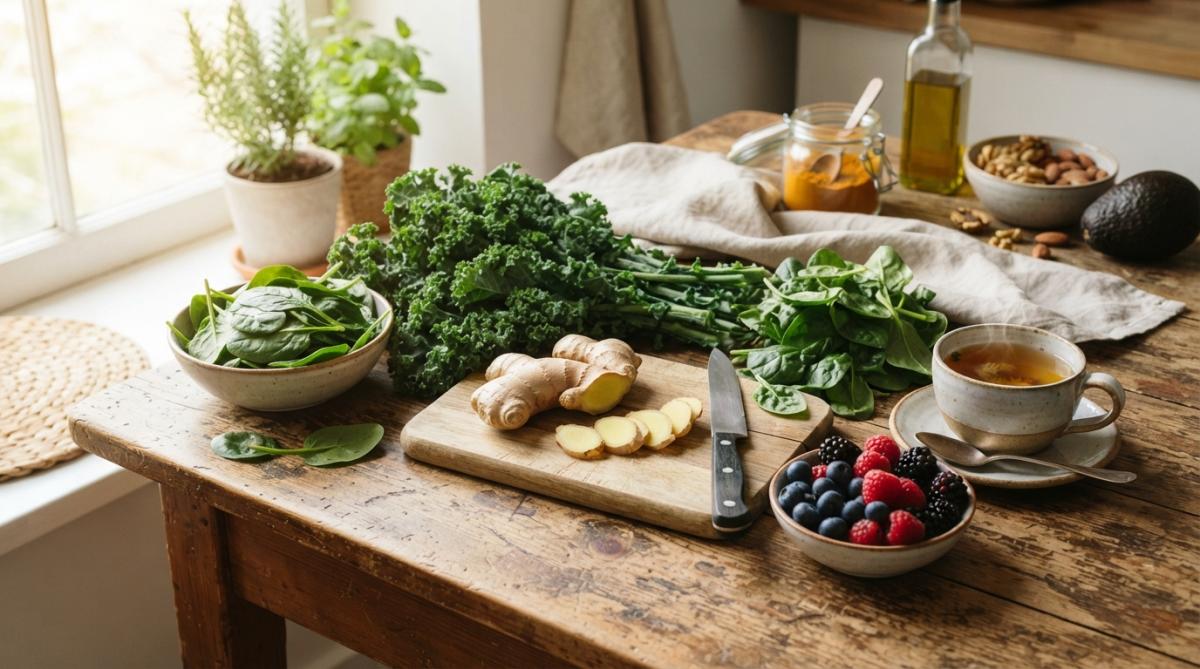
- Leafy greens (spinach, kale, arugula): low in fiber irritants, high in nutrients
- Ginger: natural anti-inflammatory that calms stomach acid
- Berries (blueberries, raspberries): packed with antioxidants for mucosal repair
- Bone broth: contains amino acids that rebuild the stomach lining
- Oatmeal: gentle on the stomach, supports digestive enzymes
- Sweet potatoes: nutrient-dense and easy to digest
- Aloe vera juice: soothes inflammation (use food-grade only)
- Manuka honey: antimicrobial and anti-inflammatory properties
- Green tea: contains compounds that reduce gastric inflammation
Fresh-pressed juice with ginger, leafy greens, and apple delivers concentrated nutrients without the fiber load that irritates inflamed stomachs.
Foods and Triggers to Avoid
These foods trigger inflammation and delay healing:
- Spicy foods and hot peppers (capsaicin irritates the mucosal lining)
- Citrus fruits and juices (acidic, increase stomach acid production)
- Tomato-based products (high acidity)
- Coffee and caffeine (stimulates excess gastric acid)
- Alcohol (irritates the stomach lining directly)
- Fried and fatty foods (slow digestion, increase acid)
- Processed foods with additives (inflammatory compounds)
- Dairy (can increase mucus production for some people)
- Chocolate (relaxes the lower esophageal sphincter)
- Carbonated beverages (gas increases pressure on stomach)
Keep a food journal for one week to identify your personal triggers faster than trial and error.
Step 2: Incorporate Probiotics and Gut-Healing Supplements
Probiotics restore balance to your intestinal flora, reducing chronic inflammation of the gastrointestinal tract, but strain selection and timing matter significantly.
Choosing the Right Probiotic Strains
Research shows specific bacterial strains reduce gastric inflammation more effectively than generic multi-strain formulas:
- Lactobacillus plantarum: reduces inflammatory markers in the stomach lining and strengthens the mucosal barrier
- Lactobacillus rhamnosus GG: decreases stomach acid production and supports immune tolerance in the gut
- Bifidobacterium longum: produces short-chain fatty acids that nourish your stomach's protective lining
- Saccharomyces boulardii: a beneficial yeast that crowds out harmful bacteria and reduces inflammation
Look for supplements listing specific strains by name. A 10 billion CFU formula with Lactobacillus plantarum and Bifidobacterium longum outperforms 50 billion CFU of generic strains.
Dosing and Timing for Maximum Effectiveness
Take probiotics on an empty stomach 30 minutes before breakfast, when stomach acid is lowest and more bacteria survive to your intestines.
Start with 10-25 billion CFU daily for two weeks to prevent die-off reactions, then increase to 25-50 billion CFU. Daily consistency matters more than high dosage.
Continue for 8-12 weeks. Most notice reduced bloating and acid reflux within 3-4 weeks, but full mucosal healing requires 8-12 weeks.
Synergistic Supplements That Amplify Healing
Probiotics work best when paired with supplements that directly repair your stomach lining and reduce inflammation:
L-glutamine (5-10 grams daily): This amino acid rebuilds the mucosal lining faster than any other supplement. Take it on an empty stomach 30 minutes before your probiotic for synergistic effect.
Zinc carnosine (75 mg twice daily): This compound specifically targets gastric ulcers and inflammation. Unlike generic zinc, carnosine is a dipeptide that crosses the stomach barrier and concentrates in damaged tissue. Studies show it reduces inflammation markers within 4 weeks. Take it with meals to improve absorption. Supporting the gastric lining with such targeted nutrients often serves as a foundational step to reduce systemic inflammation throughout the body, a process that remains closely linked to the health of the thyroid gland.
Slippery elm bark (1-2 grams, 2-3 times daily): Coats your stomach lining to protect against acid.
Supplement Timing Protocol
Timing prevents interactions and maximizes absorption:
- Upon waking: L-glutamine (empty stomach)
- 30 minutes later: Probiotic (empty stomach)
- Breakfast: Digestive enzymes (with food)
- Mid-morning: Slippery elm (30 minutes after breakfast)
- Lunch: Zinc carnosine + digestive enzymes (with food)
- Dinner: Digestive enzymes (with food)
- Before bed: Slippery elm (optional, if acid reflux is worse at night)
When to Expect Results
Week 1-2: Possible die-off symptoms (bloating, temporary cramping) as harmful bacteria are crowded out. This is normal and usually resolves within 3-5 days.
Step 3: Adopt Lifestyle Modifications for Digestive Health
What you do outside mealtimes matters just as much as what you eat. Lifestyle changes address the root causes of inflammation rather than just managing symptoms.
Sleep Hygiene and Gastric Acid Production
Poor sleep disrupts your circadian rhythm and causes your stomach to overproduce acid, irritating the mucosal lining.
Stress Management and the Gut-Brain Axis
The gut-brain axis connects your nervous system and digestive system. Stress triggers excess stomach acid and reduces blood flow to digestive organs.
Benefits of Fresh-Pressed Juice for Digestion
Fresh-pressed juice delivers concentrated nutrients without requiring your inflamed stomach to break down fiber, and retains enzymatic activity unlike commercial juices.
Post-Flare-Up Recovery: What to Do After Acute Inflammation
After a flare-up, a structured reintroduction plan prevents triggering another flare and accelerates mucosal healing.
Phase 1: Acute Recovery (Days 1-5)
Foods to eat:
- Bone broth (sipped warm, 1-2 cups daily)
- Plain oatmeal with a pinch of sea salt
- Mashed sweet potatoes or white potatoes
- Steamed white rice
- Soft-cooked eggs (if tolerated)
- Herbal teas: ginger, slippery elm, aloe vera (food-grade)
- Fresh-pressed juice with ginger and leafy greens (diluted 50/50 with water)
What to avoid completely:
- All spices, including black pepper and garlic
- Citrus, tomatoes, and acidic foods
- Coffee, tea (except herbal), and caffeine
- Alcohol and carbonated beverages
- Dairy, nuts, and seeds
- Fried foods and oils
- Raw vegetables and high-fiber foods
Supplement protocol during Phase 1:
- Probiotic: 10 billion CFU daily (lower dose to prevent die-off)
- L-glutamine: 5 grams, twice daily
- Slippery elm: 1 gram, 3 times daily
- Zinc carnosine: 75 mg, once daily
- Digestive enzymes: with any solid food
Track pain daily on a 1-10 scale. By day 3, expect 30-40% reduction. If pain worsens or remains unchanged, seek medical evaluation. If pain improves, proceed to Phase 2.
Phase 2: Gentle Reintroduction (Days 6-14)
Slowly reintroduce foods to identify what your stomach tolerates while preventing another flare.
Phase 3: Broader Reintroduction (Weeks 3-4)
Test leafy greens, berries, healthy fats, whole grains, and legumes using the same 2-3 day monitoring window. By week 4, most tolerate 15-20 foods.
Phase 4: Trigger Testing (Week 5+)
Test one trigger food in small portions, monitoring for 48 hours. If no symptoms, retry in 3 days. If symptoms appear, wait 2 weeks before retrying.
Red Flags: When to Seek Medical Help
If any of these occur during recovery, contact your doctor:
- Pain worsens despite following the protocol
- Vomiting or blood in vomit
- Black or tarry stools (sign of internal bleeding)
- Severe bloating that doesn't resolve within 2 hours
- Fever (sign of infection)
- Inability to keep food down for more than 24 hours
These symptoms suggest complications beyond simple gastritis and require professional evaluation.
Common Mistakes to Avoid When Healing Stomach Inflammation
Eating too much, too fast. Small, frequent meals prevent inflammation better than three large ones while your stomach rebuilds.
Frequently Asked Questions
What can I drink for an inflamed stomach?
Herbal teas like ginger, green tea, and chamomile are soothing options that reduce stomach inflammation. Fresh-pressed vegetable and fruit juices with anti-inflammatory ingredients like ginger and turmeric support digestive healing. Bone broth and aloe vera juice may also help soothe the mucosal lining. Avoid alcohol, caffeine, and acidic drinks during acute flare-ups. Stay hydrated with filtered water and herbal infusions to support nutrient absorption and reduce gastric irritation.
What are the common signs of poor gut health?
Poor gut health often shows as chronic indigestion, bloating, irregular bowel movements, abdominal pain, and brain fog. Other signs include food sensitivities, frequent infections, skin issues, and mood disturbances linked to the gut-brain axis. If your gut microbiome is imbalanced, you may experience nutrient malabsorption, fatigue, or persistent inflammation. These symptoms suggest your mucosal lining or digestive enzymes need support through dietary changes and lifestyle modifications.
How long does it take to reduce stomach inflammation naturally?
Most people notice improvement in 2-4 weeks with consistent dietary adjustments and lifestyle changes. Acute gastritis may resolve faster, while chronic inflammation requires sustained effort over 8-12 weeks. Recovery speed depends on the cause, NSAID overuse, stress, or dietary triggers, and how strictly you follow anti-inflammatory practices. Sleep hygiene, stress management, and probiotic supplementation accelerate healing. Post-flare-up recovery protocols help prevent relapse and restore digestive health more completely.
Can fresh-pressed juice help with stomach inflammation?
Fresh-pressed juice offers significant benefits for digestion when made from anti-inflammatory ingredients. Juices containing ginger, turmeric, leafy greens, and berries deliver digestive enzymes and antioxidants that reduce gastrointestinal inflammation. The liquid form aids nutrient absorption and gives your digestive system less work to do during healing. However, consume small quantities slowly to avoid overwhelming your stomach. Pair juice with solid food to stabilize blood sugar and prevent gastric irritation from high natural sugar content.