 how-to
Restore Gut Flora After Antibiotics: 7-Step Guide
Table of Contents
- Why Antibiotics Damage Your Gut Microbiome
- Signs of Poor Gut Health After Antibiotic Use
- Step 1: Start With Probiotic-Rich Foods for Gut Recovery
- Step 2: Add Prebiotic Foods for Microbiome Health
- Step 3: Include Fermented Foods and Gut-Healing Beverages
- How Long to Take Probiotics After Antibiotics
- Lifestyle Factors That Support Microbiota Recovery
- When to Consult a Healthcare Professional
- Frequently Asked Questions
Last Updated: September 29, 2026
Why Antibiotics Damage Your Gut Microbiome
Antibiotics save lives. They fight bacterial infections that would otherwise cause serious harm. But here's what most people don't realize: antibiotics don't just kill the bad bacteria. They wipe out your good bacteria too.
Your gut microbiome is a complex ecosystem of trillions of microorganisms. These bacteria help you digest food, produce essential vitamins, and protect your intestinal lining. When you take antibiotics, they destroy both harmful and beneficial bacteria indiscriminately. This disruption is called dysbiosis.
The result? Your gut becomes unbalanced. Harmful bacteria can multiply without competition. You might experience bloating, constipation, diarrhea, or food sensitivities. Some people develop antibiotic-associated diarrhea, which can last weeks after treatment ends.
The good news is that your microbiota can recover. It takes time and intentional effort, but it's absolutely possible. Your gut has a natural ability to recolonize with beneficial bacteria when you provide the right conditions. The steps below show you exactly how to support that process.
Signs of Poor Gut Health After Antibiotic Use
How do you know if your gut needs help? Pay attention to what your body tells you.
Common signs of poor gut health include persistent digestive discomfort, irregular bowel movements, bloating after meals, unexplained fatigue, or brain fog. Some people notice increased food sensitivities they didn't have before. Others experience skin issues or mood changes. These symptoms suggest that your gut microbiota is still recovering and your gut barrier integrity needs support.
The timing matters. Symptoms can start during antibiotic treatment or appear days or weeks after you finish. If you're experiencing multiple signs simultaneously, your microbiome likely needs active support. This is the moment to focus on restoring gut flora after antibiotics through targeted nutrition.
Track your symptoms for a few days. Note when you feel worst and what you ate beforehand. This information helps you identify which foods support your recovery and which ones trigger problems. Many people find that keeping a simple food and symptom journal makes the recovery process clearer.
Step 1: Start With Probiotic-Rich Foods for Gut Recovery
The first step is to introduce probiotic-rich foods. Probiotics are live beneficial bacteria that colonize your gut and help restore balance. They're not a quick fix, but they're foundational.
Start with small amounts and increase gradually. Your gut is sensitive right now, and too much too fast can backfire. Begin with one serving of a probiotic-rich food daily, then increase to two or three servings over the next week.
The best probiotic-rich foods include:
- Kefir, A fermented milk drink packed with beneficial bacteria and easier to digest than regular yogurt
- Yogurt, Choose plain, unsweetened varieties with live cultures listed on the label
- Sauerkraut, Fermented cabbage with Lactobacillus and other beneficial strains
- Kimchi, A spicy fermented vegetable dish with diverse bacterial cultures
- Miso, A fermented soybean paste that adds flavor and probiotics to soups and dressings
- Tempeh, A fermented soy product with a firm texture and subtle probiotic content
- Kombucha, A fermented tea beverage, though it varies in probiotic count by brand
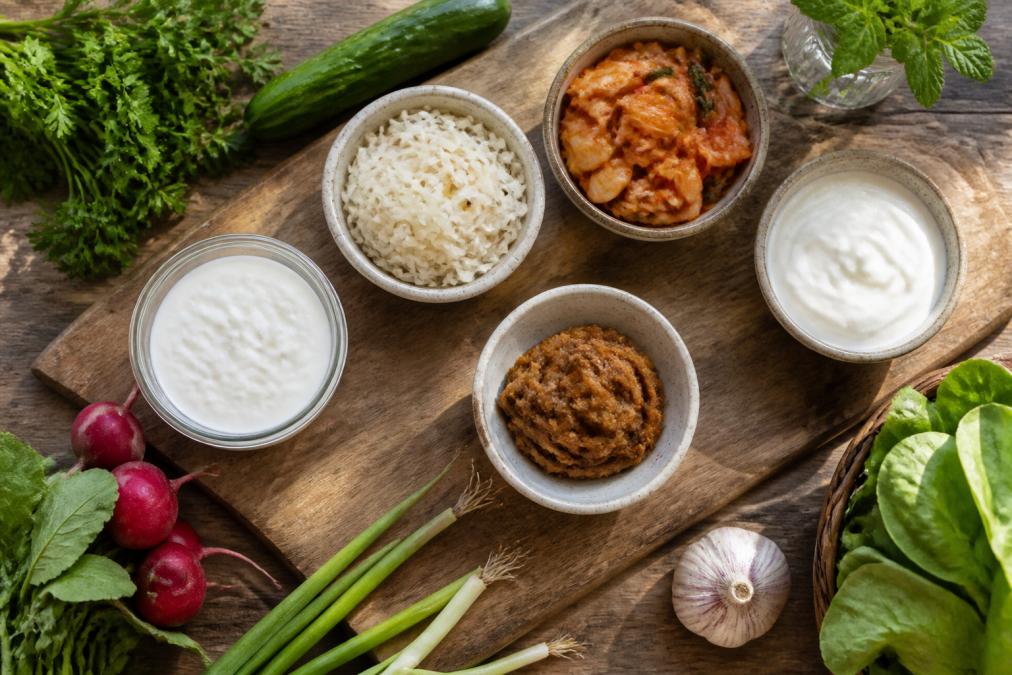
Not all fermented foods are created equal. Look for products labeled "live cultures" or "contains probiotics." Pasteurized versions have been heat-treated and contain no living bacteria, so they won't help restore your microbiota. Check the ingredient list to avoid added sugars, which feed harmful bacteria.
If you're dairy-free or vegan, focus on non-dairy options like sauerkraut, kimchi, miso, tempeh, and kombucha. These deliver real bacterial diversity without animal products.
Step 2: Add Prebiotic Foods for Microbiome Health
Probiotics alone aren't enough. You also need prebiotics, foods that feed your beneficial bacteria and help them thrive.
Prebiotics are types of fiber that your body can't digest, but your gut bacteria can (Prebiotics: Definition, Types, Sources, Mechanisms, and Clinical Applications). When you eat prebiotic foods, you're essentially feeding the good bacteria and encouraging them to multiply. This process supports short-chain fatty acid production, which strengthens your gut lining and reduces inflammation.
Include these prebiotic-rich foods in your daily diet:
- Legumes, Beans, lentils, and chickpeas contain fermentable fiber that feeds beneficial bacteria
- Garlic, Raw or cooked, garlic is high in inulin, a powerful prebiotic compound
- Onions, Another excellent source of inulin and other prebiotic fibers
- Asparagus, Contains inulin and supports bacterial diversity
- Bananas, Particularly green or slightly underripe bananas, which contain resistant starch
- Oats, Beta-glucan fiber feeds Bifidobacteria and other beneficial strains
- Chicory root, One of the most concentrated prebiotic sources available
- Flaxseeds and chia seeds, Provide soluble fiber that feeds your microbiota
The key is gradual reintroduction of dietary fiber. If your gut is still sensitive, start with small amounts of cooked vegetables and well-tolerated legumes. Raw vegetables and high-fiber foods can trigger bloating if introduced too quickly.
Step 3: Include Fermented Foods and Gut-Healing Beverages
Fermented foods deserve their own step because they're so powerful for microbiota recovery. Fermentation creates an environment where beneficial bacteria thrive, producing diverse strains and beneficial compounds.
Beyond the foods mentioned earlier, consider adding fermented beverages to your routine. These are convenient and deliver active cultures throughout the day.
Fermented beverages that support gut health:
- Water kefir, A dairy-free alternative to milk kefir, fermented with water kefir grains
- Kombucha, Fermented tea with probiotics and organic acids that support digestion
- Apple cider vinegar drinks, Raw, unpasteurized versions contain beneficial bacteria
- Rejuvelac, A sprouted grain drink with enzymes and nutrients that support gut healing
- Fresh vegetable juices, While not fermented, fresh-pressed juices from Roxberry Juice Co. deliver concentrated nutrients and enzymes that support digestive function
At Roxberry Juice Co., we understand that supporting your overall digestive health with nutrient-dense options is important. Our fresh-pressed juices and smoothies provide vitamins and minerals that complement your probiotic and prebiotic efforts.
Aim for one fermented beverage daily, preferably with meals. The beneficial bacteria in these drinks help your gut recolonize while the enzymes and organic acids support digestion.
How Long to Take Probiotics After Antibiotics
This is the question everyone asks: When can I stop focusing on probiotics?
Most people benefit from actively supporting their microbiota for 4-12 weeks after finishing antibiotics. This timeframe allows your gut bacteria population to rebuild and establish new microbial balance. However, the exact duration depends on several factors: which antibiotic you took, how long you took it, your age, and your overall health.
Broad-spectrum antibiotics (which kill many types of bacteria) cause more damage than narrow-spectrum ones. A two-week course requires less recovery time than a month-long treatment. Younger people with healthy immune systems typically recover faster than older adults or those with compromised immunity.
Here's a practical timeline:
- Weeks 1-2, Focus on probiotic-rich foods and gentle prebiotic sources. Keep portions small. Your gut is still recovering.
- Weeks 3-6, Increase variety and quantity of fermented foods and prebiotics. Your bacterial population is rebuilding.
- Weeks 7-12, Continue regular consumption of probiotic and prebiotic foods, but you can be less rigid. Your microbiota is approaching normal.
- Week 12+, Maintenance mode. Continue eating fermented and fiber-rich foods regularly, but you don't need to obsess over every meal.
Some people feel better after 4 weeks. Others need the full 12 weeks or longer. This isn't failure, it's individual variation.
Lifestyle Factors That Support Microbiota Recovery
Food is crucial, but it's not the whole story. Your lifestyle choices either support or undermine your gut healing.
When to Consult a Healthcare Professional
Most people recover from antibiotic-related dysbiosis with dietary and lifestyle changes. But some situations warrant professional guidance.
| Recovery Phase | Timeline | Key Focus | Foods to Emphasize |
|---|---|---|---|
| Initial Recovery | Weeks 1-2 | Gentle probiotics, small portions | Kefir, plain yogurt, small amounts of sauerkraut |
| Active Rebuilding | Weeks 3-6 | Increase variety, introduce prebiotics | Fermented foods, legumes, garlic, onions |
| Stabilization | Weeks 7-12 | Maintain diversity, larger portions | Full range of fermented and prebiotic foods |
| Maintenance | Week 12+ | Consistency, not perfection | Regular fermented and fiber-rich foods |
Frequently Asked Questions
How long does it take to restore gut flora after antibiotics?
Recovery timelines vary, but most people see improvement in 1-3 months with consistent dietary changes and probiotic supplementation. Full microbiota diversity may take 6-12 months to recover completely. Factors like antibiotic type, duration of treatment, diet quality, and stress levels all influence recovery speed. Tracking your symptoms, digestive comfort, energy levels, and bowel regularity, helps gauge your personal progress.
What are the best probiotic foods for gut recovery after antibiotics?
Fermented foods rich in beneficial bacteria include kefir, sauerkraut, kimchi, miso, tempeh, and unsweetened yogurt with live cultures. These foods contain strains like Lactobacillus and Bifidobacterium that help restore bacterial diversity. Start with small portions (1-2 tablespoons daily) and gradually increase to avoid digestive upset. Pair them with prebiotic fiber sources like garlic, onions, and legumes to feed the beneficial bacteria.
How long should I take probiotics after finishing antibiotics?
Begin probiotics during your last few days of antibiotic treatment and continue for at least 2-3 months afterward. Some people benefit from longer supplementation, especially after broad-spectrum antibiotics. Work with a healthcare provider to determine the right duration and strain for your specific situation, as individual needs vary based on antibiotic type and your health status.
Can I restore my gut microbiome naturally without probiotic supplements?
Yes, food-based probiotics and prebiotics can support recovery, but supplementation often accelerates the process. Fermented foods provide beneficial bacteria, while prebiotic fiber (from vegetables, legumes, and whole grains) feeds existing colonies. Many people use both approaches together for best results. However, if you experience persistent digestive issues, antibiotic-associated diarrhea, or have a compromised immune system, probiotic supplements may be necessary, consult your doctor before deciding.