 listicle
Best Acai Bowls Near Me: 10 Spots Ranked for 2026
Table of Contents
- Quick Comparison: Best Acai Bowls Near Me
- 1. Roxberry Juice Co.: Fresh-Pressed Transparency in Every Bowl
- 2. Alohana Acai Bowls: Hand-Blended Bases With a Local Following
- 3. Everbowl: Consistent Superfood Bowls, Wherever You Are
- 4. Vitality Bowls Superfood Cafe: 14 Acai Options for Every Diet
- 5. Rush Bowls: Fast, Customizable Fuel for Busy Days
- 6. Huriyali: All-Organic Bowls With a Local Sourcing Promise
- 7. Berry Hill: Where Fresh-Pressed Juice Meets Hand-Crafted Bowls
- What Are the Benefits of Acai Bowls?
- Best Toppings for Acai Bowls
- How to Choose Between These Shops
- Frequently Asked Questions
Last Updated: September 14, 2026
Quick Comparison: Best Acai Bowls Near Me
Finding the best acai bowls near me means knowing which shops blend bases fresh, pile on real fruit instead of syrups, and respect dietary needs. At Roxberry Juice Co., we've watched this category evolve from a niche health trend into a daily breakfast habit for busy professionals, parents, and athletes.
Acai bowls near me are only as good as their base. A smoothie bowl built on frozen pulp and blended to order tastes completely different from one made with shelf-stable puree. That distinction drives everything in this ranking.
Below, we compare popular options, highlighting what matters when you're ordering in a hurry.
Quick Picks:
- Best Overall: Roxberry Juice Co., fresh-pressed transparency and signature granola in every bowl
- Best for Dietary Variety: Vitality Bowls Superfood Cafe, 14 acai options, allergy-aware kitchens
- Best Budget Pick: Alohana Acai Bowls, hand-blended bases starting around $9
| Shop | Starting Price | Best For | Standout Feature |
|---|---|---|---|
| Roxberry Juice Co. | Varies by location | Fresh-pressed transparency | Signature Roxberry Granola |
| Alohana Acai Bowls | $9.00 | Local, hand-blended bowls | Customizable toppings |
| Everbowl | $10.00 | Consistent national menu | Multiple base options |
| Vitality Bowls | $11.00 | Dietary restrictions | 14 acai bowl options |
| Rush Bowls | $9.95 | Speed and convenience | Protein and vitamin boosts |
1. Roxberry Juice Co.: Fresh-Pressed Transparency in Every Bowl
Roxberry Juice Co. earns the top spot because its entire model rests on traceable ingredients. Every bowl starts with real fruits and vegetables, blended to order rather than scooped from a pre-made tub, and the signature Roxberry Granola adds crunch that holds up against a frozen base instead of turning soggy.
What "fresh-pressed transparency" actually means
Most acai shops buy one of three base formats, and the format changes everything:
- Frozen acai pulp or puree packs: fruit is harvested, pulped, and frozen close to the source, which locks in color and flavor without added sugar. This is the closest thing to fresh acai you can get outside the growing regions.
- Shelf-stable puree or concentrate: cheaper, shelf-stable, and often sweetened or cut with other juices. It pours fast and tastes flat.
- Powder or sorbet-style bases: convenient, but frequently bulked with added sugar, guar gum, or other thickeners to mimic the texture real pulp gives you naturally.
Roxberry's juice bar backbone is the tell. Fresh-pressed juices and smoothies share the same produce supply as the acai bowls, so the fruit topping your bowl is the same fruit going into the press next to it. A shop pressing juice daily can't hide behind a shelf-stable base, the produce has to move, forcing a fresher supply chain.
Why this matters for dietary needs
For dairy-free or gluten-free needs, sourcing transparency matters more than a menu label. A base of just fruit and water is naturally dairy-free; one thickened with yogurt or milk powder is not, even if the menu calls the bowl "acai." Same with granola, oats are naturally gluten-free, but cross-contamination is common unless the supplier controls for it. Ask what's in the base and where the granola is made.
The locally owned and operated stores also mean the person behind the counter often knows the regulars by name, quick-service, but not transactional.
2. Alohana Acai Bowls: Hand-Blended Bases With a Local Following
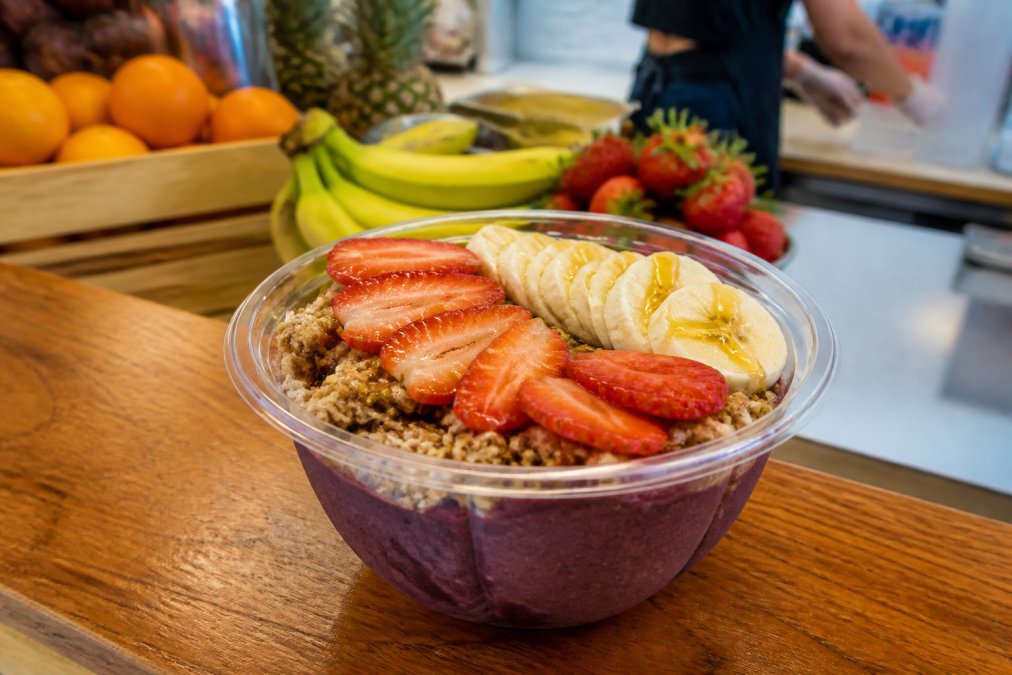
Alohana Acai Bowls built its reputation on hand-blended bases and a tightly curated topping bar. Blend consistency keeps regulars coming back. The trade-off is reach: it's a single-market operation.
3. Everbowl: Consistent Superfood Bowls, Wherever You Are
Everbowl's strength is standardization. With a national footprint, it delivers the same bowl in every market, useful when you're traveling and don't want to gamble on an unfamiliar shop. The downside: the formula is locked, so seasonal or hyper-local toppings rarely appear. This predictable environment serves as a reliable backdrop for productivity, much like the quiet atmosphere found in various cafes for studying.

4. Vitality Bowls Superfood Cafe: 14 Acai Options for Every Diet
Fourteen acai bowl configurations is genuine menu depth, not a marketing number. Vitality Bowls also runs allergy-aware kitchens and sources organic, non-GMO ingredients. For a household with mixed dietary needs, it's the easiest menu to navigate.
5. Rush Bowls: Fast, Customizable Fuel for Busy Days
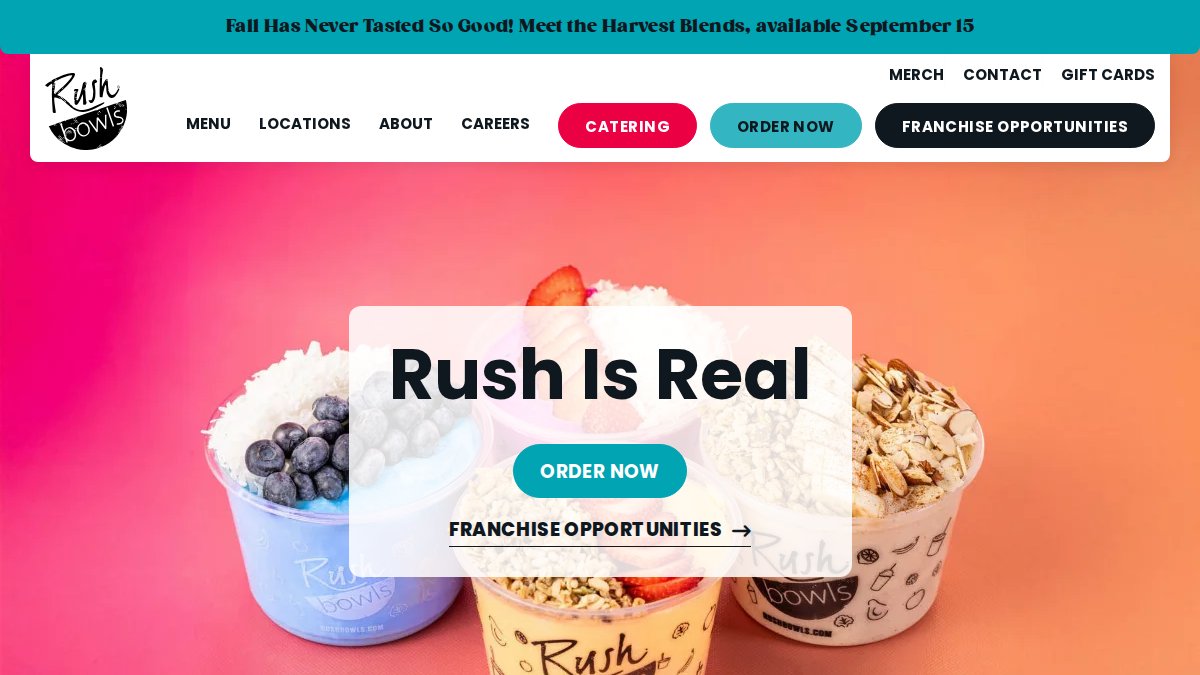
Rush Bowls targets the lunch-rush crowd with a quick-service model. Customization is the draw: protein and vitamin boosts turn a snack into a post-workout meal without ordering a second item. Standardized flavor profiles are the cost of that speed.
6. Huriyali: All-Organic Bowls With a Local Sourcing Promise
Huriyali commits fully to organic sourcing, with an all-organic acai base and seasonal toppings from local growers. It has a limited footprint. For eco-conscious diners who want to know where the fruit came from, the premium is the point.
7. Berry Hill: Where Fresh-Pressed Juice Meets Hand-Crafted Bowls
Berry Hill pairs fresh-pressed juice with hand-crafted bowls. Satisfaction scores run high because nothing sits pre-made. The single-market presence is the limitation, but within its home city it's a strong daily option.
What Are the Benefits of Acai Bowls?
The benefits of acai bowls come down to what you put in the bowl, and the honest answer is that the acai itself is a smaller factor than most menus imply. Acai is a nutrient-dense fruit rich in antioxidants, particularly anthocyanins, the compounds responsible for its deep purple color. According to USDA FoodData Central nutrient database, acai pulp delivers fiber and healthy fats alongside those antioxidants. But the acai is usually a thin layer at the bottom of a much larger bowl, and the base and toppings decide the rest.
A rough nutritional breakdown of a typical bowl
Exact numbers vary by shop, portion, and toppings, but a standard 16-ounce bowl on an unsweetened frozen pulp base generally lands in this range:
| Component | Typical range | What it contributes |
|---|---|---|
| Unsweetened acai base (8 oz) | 100-140 calories | Healthy fats, fiber, anthocyanins |
| Granola (1/4 cup) | 120-160 calories | Crunch, some fiber, often added sugar |
| Sliced banana | 90-110 calories | Potassium, natural sugar |
| Strawberries or blueberries (1/2 cup) | 25-45 calories | Vitamin C, antioxidants, low sugar |
| Nut butter (1 tbsp) | 90-100 calories | Protein, healthy fats, satiety |
| Honey drizzle (1 tbsp) | 60-65 calories | Pure added sugar |
| Hemp or chia seeds (1 tbsp) | 50-60 calories | Plant protein, omega-3s, fiber |
A bowl with an unsweetened base, fresh fruit, seeds, and a light nut butter lands around 400-500 calories with meaningful fiber and protein. The same bowl with a sweetened base, candied granola, honey, and a juice-sweetened drizzle can push past 700 calories and 50 grams of sugar, more than a fast-food dessert, and with far less protein to blunt the blood-sugar spike.
The sugar math most menus hide
The catch is sugar, and it hides in three places: the base, the granola, and the drizzle. A sweetened sorbet-style base can carry 20-plus grams of sugar before a single topping goes on, and candied granola, honey, agave, and fruit-juice concentrates stack on top (the FDA). The bowl's profile depends almost entirely on the blended base and toppings, unsweetened pulp with hemp seeds, chia seeds, and fresh fruit reads very differently from sweetened sorbet.
A useful rule: if the base tastes sweet on its own, it's sweetened. Real acai pulp is tart and earthy, closer to unsweetened cranberry than to a berry smoothie.
How to build a genuinely healthy bowl
- Start with an unsweetened base. Ask, or look for "unsweetened" on the menu.
- Pick two fruits, not four. Fresh berries and banana cover the flavor without stacking sugar.
- Add protein and fat. Nut butter, hemp seeds, chia seeds, or a protein boost turn a snack into a meal and slow sugar absorption.
- Treat granola and honey as condiments. A quarter-cup and a light drizzle, not a mountain.
- Skip the juice-sweetened drizzle. It's the single easiest place to cut 60-100 calories of pure sugar.
Acai bowl vs smoothie: an acai bowl is a thick, spoonable blend served in a bowl with layered toppings, while a smoothie is a drinkable blend designed to be consumed through a straw. The bowl format generally delivers more fiber and more sustained satiety because you eat it slowly and the toppings add texture and volume, but a smoothie with the same ingredients and no toppings is usually the lower-calorie, lower-sugar choice.
Best Toppings for Acai Bowls
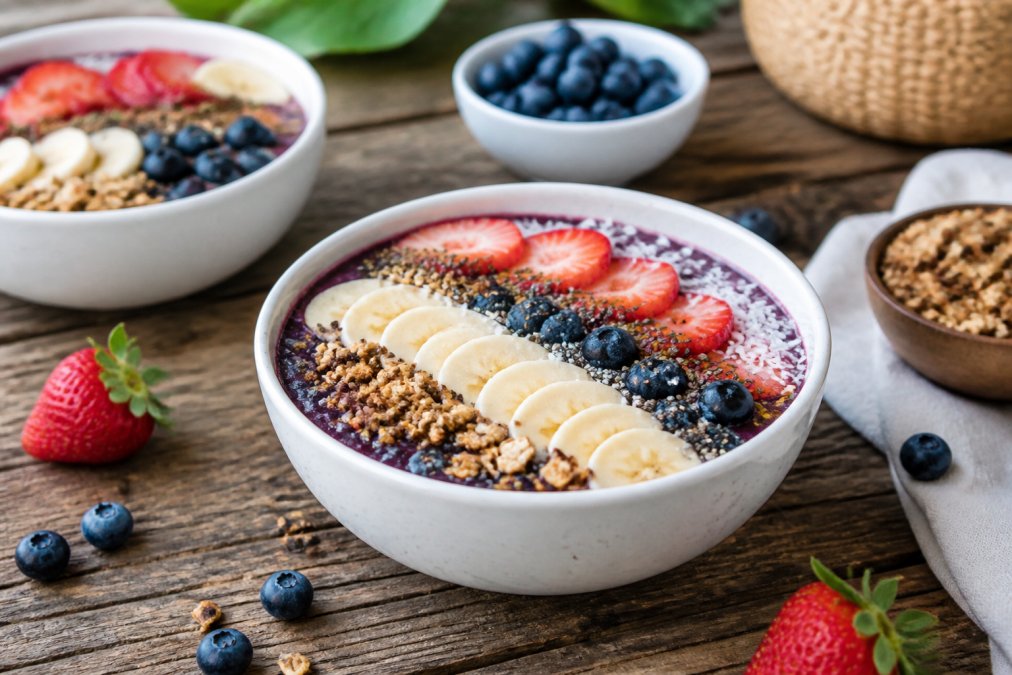
The best toppings for acai bowls balance texture, flavor profile, and nutrition rather than piling on sweetness. A good bowl has something crunchy, something fresh, and something rich.
- Granola: provides the crunch that keeps a bowl from feeling like soup. Look for low-sugar varieties.
- Fresh fruit toppings: sliced banana, strawberry, blueberry, and mango add natural sweetness and vitamins.
- Hemp seeds and chia seeds: deliver plant-based protein, omega-3s, and fiber with almost no flavor interference.
- Honey drizzle: a small amount amplifies the fruit without overwhelming it.
- Nut butter: adds healthy fats and makes the bowl more filling as a meal.
- Coconut flakes: a lighter crunch alternative to granola for gluten-free eaters.
How to Choose Between These Shops
Choosing comes down to three filters: dietary needs, speed, and how much you care about sourcing. If you need dairy-free, vegan, or gluten-free options with clear labeling, prioritize shops that publish their ingredient standards, like FDA guidance on gluten-free food labeling. If you're eating in the car between meetings, speed beats sourcing. If you're feeding a family with mixed preferences, menu depth wins.
A common mistake is assuming every acai bowl is automatically healthy. It isn't. The base and the toppings decide that, not the fruit on the label.
Frequently Asked Questions
Are acai bowls actually healthy?
Acai bowls can be a nutrient-dense choice when made with real fruit and minimal added sugar. The acai base provides antioxidants, and toppings like fresh fruit, chia seeds, and granola add fiber and healthy fats. Watch portion sizes and added sweeteners, since some bowls can carry as much sugar as a dessert. Choosing a spot that blends to order with whole ingredients, like Roxberry Juice Co., helps you get the benefits of acai bowls without hidden syrups.
What ingredients should you look for in a high-quality acai bowl?
Start with the base: it should be made from frozen acai pulp or a signature blend, not a pre-sweetened mix. Look for fresh fruit toppings, nuts, seeds, and granola rather than candy or syrups. If you have dietary needs, ask whether the base is dairy-free, vegan, or gluten-free. Transparency matters, so pick a shop that can tell you what is in the blend and where toppings come from.
What are the best toppings for acai bowls?
The best toppings for acai bowls balance texture and flavor. Fresh fruit like banana, strawberry, and blueberries add natural sweetness. Granola, hemp seeds, and chia seeds bring crunch and nutrients. A honey drizzle or nut butter adds richness. If you want a nutrient-dense bowl, lean on seeds and fresh fruit, and use granola as a garnish rather than the main event. Many shops let you customize ratios, so you control the final flavor profile.
How is an acai bowl different from a smoothie?
An acai bowl uses a thicker blended base, often topped with granola, fruit, and seeds, so you eat it with a spoon. A smoothie is drinkable and usually lighter in texture. In an acai bowl vs smoothie comparison, the bowl tends to be more filling because of the toppings and thicker consistency. If you want a quick sip on the go, a smoothie works; if you want a sit-down, customizable meal, choose the bowl.
Are acai bowls a good option for a post-workout meal?
Yes, acai bowls can work well after a workout because the fruit provides carbohydrates to replenish energy, and toppings like nut butter, hemp seeds, or protein boosts add muscle-repairing nutrients. Choose a bowl with a dairy-free base and add a protein source if you want extra recovery support. The key is picking a shop that blends to order and lets you customize, so you can match the bowl to your training needs without excess sugar.