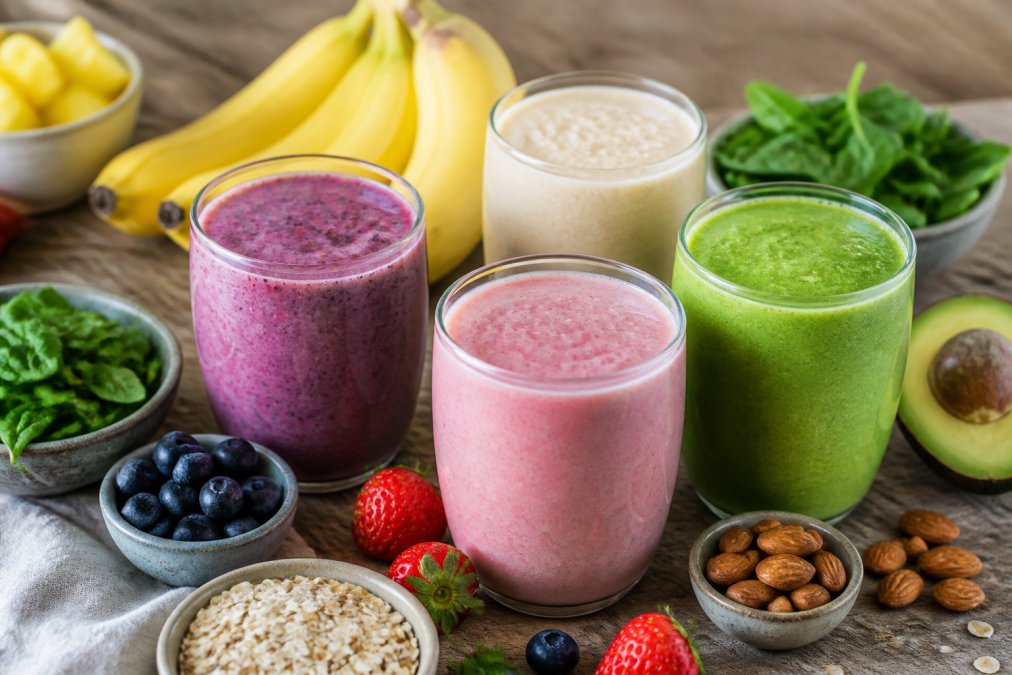
 listicle
Best Dairy Free Smoothies for Energy: 2026 Guide
Table of Contents
- What Makes a Dairy Free Smoothie Actually Energizing
- Quick Comparison: Best Dairy Free Smoothies for Energy
- High Protein Dairy Free Smoothie Recipes to Try
- Best Dairy Free Milk for Smoothies: How to Choose Your Base
- Natural Energy Boosters for Smoothies That Keep You Full
- How to Build a Creamy Dairy Free Smoothie Without Dairy
- Meal Prep, Cost, and Equipment Tips for Daily Smoothies
- Conclusion
- Frequently Asked Questions
Last Updated: September 16, 2026
What Makes a Dairy Free Smoothie Actually Energizing
A dairy free smoothie is a blended drink made without milk, yogurt, or other dairy ingredients, relying on plant-based liquids and whole-food add-ins for texture and nutrition. The ones that sustain energy share three traits: protein, fiber, and fat.
Quick Comparison: Best Dairy Free Smoothies for Energy
The table below maps each option to its best use.
| Option | Base | Key Energy Ingredients | Best For |
|---|---|---|---|
| Roxberry Juice Co. | Blended to order | Real fruit, vegetables, signature granola | Grab-and-go energy |
| Tropical Hemp Heart Recovery Blend | Hemp milk | Hemp hearts, frozen mango, spinach | Post-workout recovery |
| Chocolate Almond Butter Power Smoothie | Almond milk | Almond butter, cacao, banana | Morning satiety |
| Homemade base recipe | Oat or soy milk | Chia seeds, flaxseed, leafy greens | Budget daily routine |
| Shelf-stable sachets | Water or plant milk | Freeze-dried fruit and vegetable blends | Travel and desk drawers |
High Protein Dairy Free Smoothie Recipes to Try
High protein dairy free smoothie recipes replace whey and Greek yogurt with plant sources like hemp hearts, almond butter, and pea protein. These blends deliver protein, fiber, and fat in one glass.
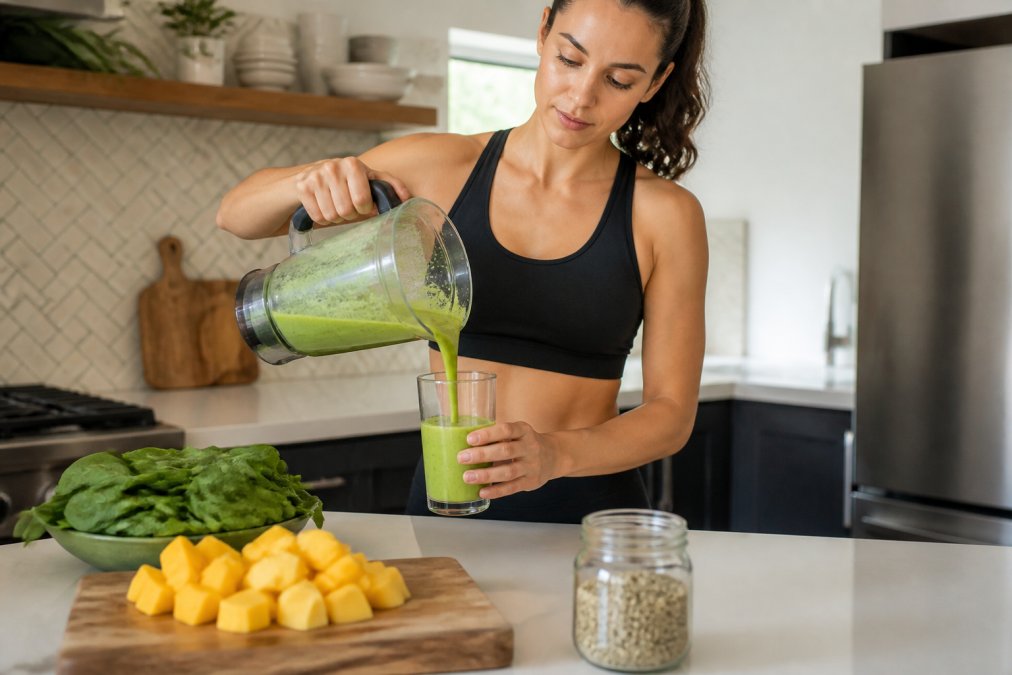
Tropical Hemp Heart Recovery Blend
Hemp hearts are the workhorse here: three tablespoons supply plant protein and omega-3s, and they blend smooth without the grit of some seeds.
- Add 1 cup hemp milk, 1 cup frozen mango, and 1 handful fresh spinach to the blender.
- Add 3 tablespoons hemp hearts and 1 tablespoon chia seeds.
- Blend on high for 45 seconds, then pause and scrape down the sides.
- Blend another 20 seconds until the texture turns uniform.
- Pour and drink within 15 minutes for the best texture.
Chocolate Almond Butter Power Smoothie
Almond butter carries this one: two tablespoons add healthy fats and enough richness that you won't miss dairy cream.
- Combine 1 cup unsweetened almond milk, 1 frozen banana, and 2 tablespoons almond butter.
- Add 1 tablespoon cacao nibs and 1 scoop plant-based protein powder.
- Blend 60 seconds, adding a splash of almond milk if the mixture stalls.
- Taste and adjust with a pitted date if you want more sweetness.
Best Dairy Free Milk for Smoothies: How to Choose Your Base
The best dairy free milk for smoothies matches your goal: oat for creaminess, soy for protein, almond for neutral flavor, coconut for richness. The base decides texture and how long you feel full.
Here's how the common options compare:
- Oat milk: Creamiest texture, mild sweetness, moderate protein. Best all-rounder.
- Soy milk: Highest protein of the group. Ideal if satiety is the priority.
- Almond milk: Low calorie, thin body, neutral taste. Good for fruit-forward blends.
- Coconut milk: Rich and thick, but low protein. Use half-and-half with another milk.
- Hemp milk: Nutty flavor, good omega-3 content. Pairs well with greens.
Natural Energy Boosters for Smoothies That Keep You Full
Natural energy boosters for smoothies work by slowing digestion rather than spiking it. Carbohydrates raise blood glucose, and the speed of that rise depends on how much fiber, fat, and protein travel alongside them. Pair a fast carb with enough of the slow stuff and the curve flattens, a gentle rise instead of a spike-and-crash. That flat curve is what "sustained energy" means.
How the common boosters compare:
- Chia seeds (1 tbsp): About 5 g fiber and 2 g protein. Forms a gel that thickens the blend and slows sugar release. Soak 5 minutes before blending.
- Ground flaxseed (1 tbsp): About 2 g fiber plus omega-3s. Grind fresh; pre-ground flax oxidizes and turns rancid quickly.
- Hemp hearts (3 tbsp): Roughly 10 g plant protein and 3 g fiber. Soft enough to blend smooth in a standard blender, no soaking required.
- Almond butter (2 tbsp): About 7 g protein and 15 g fat. The fat stretches the fuel window past the two-hour mark.
- Coconut cream (1-2 tbsp): Almost pure fat, minimal protein. Use it for body and mouthfeel, not as your protein source.
- Rolled oats (1/4 cup): About 4 g fiber and 5 g protein. A slow-digesting carb that pairs well with banana for a steadier rise than fruit alone.
- Ginger and turmeric: Bright flavor with antioxidants; a pinch goes far and neither adds meaningful sugar.
Matching the booster to the moment
Not every energy smoothie solves the same problem. Morning alertness and post-workout recovery call for different ratios:
- Morning alertness: Lean on slow carbs (oats, berries) and moderate fat. Keep total sugar under about 15 g to avoid a mid-morning slump.
- Post-workout recovery: Push protein to 20-25 g and add a faster carb like banana or mango. The insulin response helps shuttle nutrients into muscle, so a higher-sugar blend fits this window.
- Afternoon desk energy: Prioritize fat and fiber over carbs. A greens-forward blend with hemp hearts and almond butter tends to hold steadier than a fruit-heavy one.
What to avoid
Frozen fruit matters too: it thickens the smoothie without ice (which waters down flavor) and holds its micronutrients when frozen at peak ripeness. Frozen berries carry far more fiber per cup than their juiced equivalents.
How to Build a Creamy Dairy Free Smoothie Without Dairy
A creamy dairy free smoothie comes from fat and pectin, not milk. Frozen banana, avocado, coconut cream, and soaked cashews each deliver that thick, spoonable texture.
Use this ratio as your starting formula:
- Liquid (1 cup): plant-based milk or water.
- Frozen fruit (1 to 1.5 cups): banana, berries, or mango.
- Creamy element (2 to 4 tablespoons): avocado, coconut cream, or soaked cashews.
- Protein (1 to 3 tablespoons): hemp hearts, almond butter, or protein powder.
- Fiber (1 tablespoon): chia seeds or ground flaxseed.
- Greens (1 handful): spinach or kale, optional but recommended.
Meal Prep, Cost, and Equipment Tips for Daily Smoothies
Meal prepping smoothies cuts prep time and cost per serving. Portion dry and frozen ingredients into freezer bags ahead of time, then blend with liquid when ready.
A weekly prep system
- Bag frozen fruit, greens, and seeds together in single-serving portions
- Pre-portion nut butters into small containers or ice cube trays
- Freeze leftover ripe bananas before they turn
- Label each bag with the liquid amount needed
- Store bags flat so they stack and thaw evenly
- Keep a running list of what you used so you can restock before you run out mid-week
Cost per serving: where the money actually goes
Dairy-free energy ingredients vary wildly in cost, and the expensive ones aren't always doing the work. A few patterns:
- Frozen fruit in bulk is almost always cheaper per serving than fresh, and it's frozen at peak ripeness, so you're not trading nutrition for price.
- Hemp hearts, chia, and flax are the cheapest protein-and-fiber boosters per gram. A bag lasts weeks and a single serving costs pennies.
- Plant-based protein powders are the most expensive per serving in most builds. Convenient, but a scoop of pea protein can cost several times an equivalent protein dose from hemp hearts or almond butter.
- Nut butters sit in the middle. Buying a jar and portioning it yourself beats single-serve packets by a wide margin.
- Pre-made smoothie sachets and bottled blends are the most expensive per serving by far. They win on convenience, not cost.
Equipment: what your blender can and can't do
Equipment matters more than most guides admit, and the gap between standard and high-powered blenders shows up most with fibrous ingredients.
- High-powered blenders (marketed for smoothie bars) pulverize kale stems, frozen fruit, and whole seeds without straining, one pass, no chopping.
- Standard blenders handle frozen fruit and soft greens, but struggle with kale stems, whole flaxseed, and large frozen banana chunks. Fix it with sequencing: liquid first, then soft items, then frozen fruit on top, blending in stages.
- Personal blenders work for single servings but have less torque. Chop fibrous items like kale and ginger first, and don't overload the cup.
A few texture fixes that apply to any machine:
- If the blend stalls, stop and scrape down the sides rather than adding more liquid, extra liquid thins the smoothie permanently.
- If kale or spinach leaves flecks in the final texture, blend the greens with the liquid first, then add everything else.
- If seeds leave grit, soak chia and flax briefly, or switch to hemp hearts, which blend smooth in almost any machine.
The convenience trade-off
For days when there's no time to blend, Roxberry Juice Co. blends smoothies to order from real fruits and vegetables, keeping the ingredient list transparent and the texture fresh. For consistency on busy mornings, blended-to-order closes the gap. Maintaining this level of morning efficiency often requires balancing these nutrient-dense liquids with the right coffee for busy professionals to sustain focus throughout the day.
Conclusion
Building a smoothie that holds its energy comes down to one habit: stop treating fruit and juice as the whole recipe. Add protein, fiber, and fat, and the same blend carries you hours longer.
Frequently Asked Questions
What smoothie gives you the most energy?
The most energizing dairy free smoothies combine three things: plant protein (hemp hearts, almond butter, or protein powder), healthy fats (chia seeds, flaxseed, or coconut cream), and fiber-rich frozen fruit. This trio slows digestion and delivers steady energy instead of a quick spike. A blend with spinach, frozen berries, hemp hearts, and unsweetened almond milk covers all three bases in one glass.
What is the best dairy free milk for smoothies?
Unsweetened almond milk is the most popular base because it is low in calories and lets fruit flavors lead. Oat milk adds natural creaminess and works well with cacao or nut butters. Coconut milk (the carton kind, not canned) brings tropical flavor and healthy fats. For a thicker texture, use canned coconut cream in small amounts. Choose unsweetened versions to avoid added sugar that works against sustained energy.
How do you make a dairy free smoothie creamy?
Creaminess without dairy comes from fat and fiber. Add half a frozen banana, a quarter cup of coconut cream, a tablespoon of almond butter, or a scoop of dairy-free yogurt. Frozen fruit, especially mango and banana, thickens the blend naturally. Chia seeds and flaxseed also add body while supporting digestion. Blend on high for 60 seconds so the fats emulsify and the texture turns silky.
Are dairy free smoothies better for digestion?
For people with lactose intolerance or dairy sensitivity, dairy free smoothies often ease bloating, gas, and stomach discomfort. Plant-based bases like almond milk and coconut milk are naturally lactose-free, and ingredients like ginger, turmeric, and chia seeds support gut health. If you have IBS or another condition, introduce new ingredients one at a time to identify what works for your body.
Can I meal prep dairy free smoothies for the week?
Yes. Portion your fruit, greens, seeds, and powders into freezer bags or containers, then blend with your liquid of choice when ready. Prepped bags last up to three months in the freezer. For grab-and-go mornings, blend a full batch, pour into mason jars, and refrigerate for up to 24 hours. Shake well before drinking since separation is normal with natural ingredients.