 listicle
Best Healthy Grab and Go Options Near Me: 2026 Guide
Table of Contents
- Quick Comparison: Best Healthy Grab and Go Options
- Roxberry Juice Co.: Fresh-Pressed Juices and Açaí Bowls
- Sweetgreen: Customizable Salads and Warm Bowls
- CAVA: Mediterranean Bowls with Plant-Forward Toppings
- Flower Child: Scratch-Made Meals for Dietary Restrictions
- Healthy Lunch Options for Work: Fast, Portable Choices
- How to Choose Healthy Options at Restaurants
- Budget-Friendly Healthy Hacks
- Frequently Asked Questions
Last Updated: September 13, 2026
Quick Comparison: Best Healthy Grab and Go Options
Finding the best healthy grab and go options near me used to mean settling for a sad protein bar or a wilted salad. This guide from Roxberry Juice Co. breaks down the spots that deliver on nutrition, speed, and taste.
The shift toward cleaner convenience food is real: more chains publish full nutritional profiles, and customers expect transparency about what's in their bowl.
Below, we offer tips for reading menus, customizing orders, and keeping sodium and added sugars in check.
| Spot | Best For | Starting Price | Standout Feature |
|---|---|---|---|
| Roxberry Juice Co. | Fresh juices and açaí bowls | Varies by location | 100% natural, fresh-pressed juices |
| Sweetgreen | Customizable warm bowls | $12.00 | Seasonal, locally sourced produce |
| CAVA | Mediterranean protein bowls | $11.00 | Plant-forward topping selection |
| Flower Child | Dietary restriction filtering | $13.00 | Gluten-free, vegan, paleo menus |
| Modern Market Eatery | Macro tracking | $10.00 | Transparent nutritional labeling |
| Natural Pantry | Portion control | $9.00 | Self-serve hot and cold bars |
| Teriyaki Madness | Hot protein-heavy meals | $10.00 | Steamed vegetable sides |
Roxberry Juice Co.: Fresh-Pressed Juices and Açaí Bowls
Roxberry Juice Co. is the top pick for a genuinely fresh, nutrient-dense option in under five minutes. Everything starts with real fruits and vegetables, and smoothies are blended to order rather than poured from a premix.
The açaí bowls come topped with our signature Roxberry Granola, which adds fiber and crunch without added sugars. If you're dairy-free, the 100% natural juice lineup gives you a clean base with no mystery ingredients.
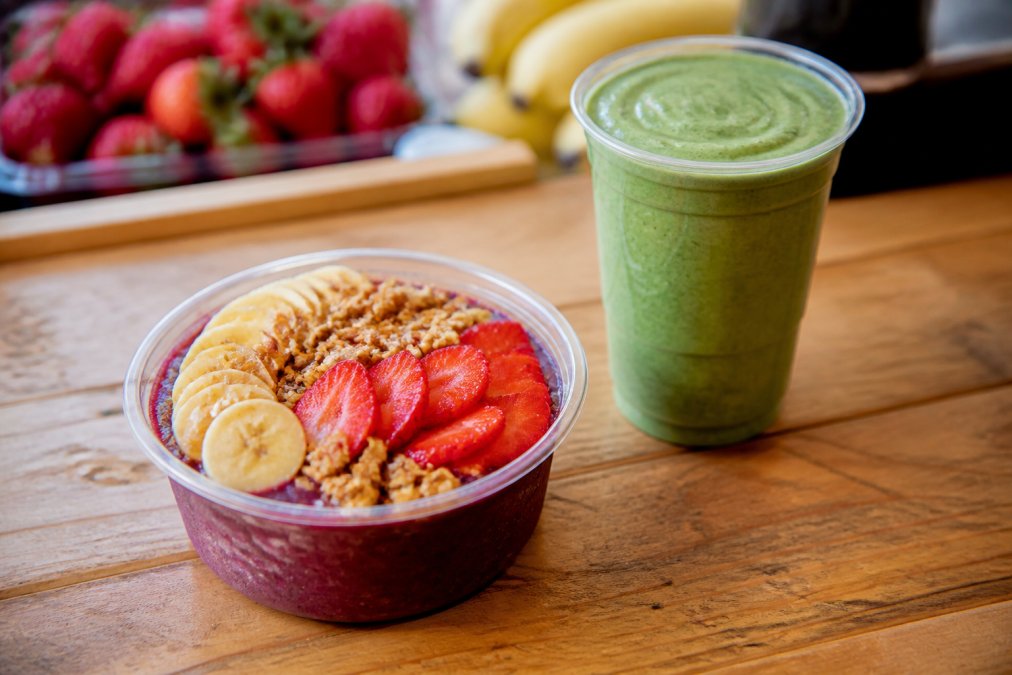
What sets Roxberry apart is the transparency: you can see the fruit going into the blender, so you never wonder whether a "fresh" juice was pressed that morning or sitting in a cooler since yesterday.
Sweetgreen: Customizable Salads and Warm Bowls
CAVA: Mediterranean Bowls with Plant-Forward Toppings
Flower Child: Scratch-Made Meals for Dietary Restrictions
Healthy Lunch Options for Work: Fast, Portable Choices
Healthy lunch options for work come down to speed, portability, and a nutritional profile you can trust. A grain bowl with grilled protein and steamed vegetables travels well and holds up without a microwave.
For desk lunches, look for these qualities:
- Protein-rich base: Grilled chicken, tofu, or legumes keep you full through the afternoon.
- Fiber-dense sides: Steamed vegetables or a small salad slow digestion and steady energy.
- Sauce on the side: Dressing packed separately prevents sogginess and lets you control sodium.
- Whole foods over processed ingredients: Fewer additives, better satiety.
How to Choose Healthy Options at Restaurants
Knowing how to choose healthy options at restaurants starts with reading the nutritional profile before you walk in. Most fast-casual chains publish calorie counts, sodium, and macronutrients online. The problem is that most people scan the calorie column and stop there, which is how a 500-calorie grain bowl with 1,400 mg of sodium ends up in the same mental bucket as one with 600 mg. True nutritional literacy requires looking beyond the surface numbers to understand how these ingredients impact your energy levels throughout the workday, which is essential for maintaining healthy habits while navigating the unique challenges of a remote professional environment.
A more useful framework is to run every candidate item through three filters in order: protein-to-calorie ratio, sodium load, and added-sugar load. Here's how each one works.
Filter 1: Protein-to-Calorie Ratio
This is the metric most grab-and-go guides skip, and it best predicts whether a meal will hold you until dinner. Divide grams of protein by total calories, then multiply by 100.
- Below 10%: Mostly carbs and fat. Fine as a snack, weak as a meal.
- 10-20%: Solid middle ground for a lunch that includes fiber and vegetables.
- Above 20%: Protein-dense. Common in grilled-chicken bowls, Greek-style plates, and tofu-and-legume builds.
A build-your-own bowl with double protein and light dressing lands in the 20-25% range, while the same bowl with creamy dressing and candied toppings drops under 12%, same restaurant, same base price, very different satiety curve.
Filter 2: Sodium Load
Sodium is where 'healthy' menus quietly fall apart. Sauces, cured meats (bacon, salami, prosciutto), pickled toppings, and most breads are the biggest contributors, not the salt shaker. Keep a single grab-and-go meal under roughly a third of the FDA's 2,300 mg daily limit for most adults, putting the ceiling around 750-800 mg (the FDA).
Three moves cut sodium fast without gutting flavor:
- Sauce on the side. Dressings and drizzle sauces routinely carry 300-600 mg of sodium per serving.
- Skip the cured meat. Swap bacon or salami for grilled chicken, roasted tofu, or chickpeas.
- Go easy on pickled and brined toppings. Olives, pickles, capers, and kimchi are sodium-dense by design.
Filter 3: Added-Sugar Load
This is an ingredient-transparency gap. 'Healthy-sounding' items, honey-lime dressings, teriyaki glaze, flavored yogurt, granola clusters, bottled smoothies, and most 'protein' bars, often carry more added sugar than a dessert. The FDA's updated Nutrition Facts label lists 'Added Sugars' on its own line, making this easy to check (the FDA).
A quick read: if an item lists more than one of these in the first five ingredients, treat the sugar number with suspicion, cane sugar, brown rice syrup, agave, honey, maple syrup, fruit juice concentrate, maltodextrin, and dextrose. They're all added sugars under the label rules, even when the front of the package says 'no high-fructose corn syrup.'
Putting the Three Filters Together
Run the filters in this order to cut a menu of 40 items down to a handful in under two minutes:
- Check the calorie count against your daily target, not against the menu average.
- Calculate protein-to-calorie ratio. Aim for 15% or higher for a meal.
- Scan sodium content. Under 800 mg per meal is a workable ceiling for most adults.
- Check added sugars. Under 10 g per meal keeps you inside the FDA's daily reference value of 50 g (the FDA).
- Look for whole-food ingredients. Grilled, roasted, or raw beats fried or breaded.
- Ask about customization. Most kitchens will swap a base, hold a sauce, or double the vegetables, and the app usually lets you do it before you arrive.
Budget-Friendly Healthy Hacks
Eating well doesn't require a premium price tag, but the trick isn't just 'buy from the grocery store.' It's knowing which grab-and-go formats deliver the best protein-to-calorie ratio per dollar. Here's how to run that calculation, plus the formats that consistently win.
The Cost-Per-Gram-of-Protein Test
Pick any grab-and-go item and divide its price by its grams of protein. That single number tells you more about value than the sticker price does.
- Under $0.50 per gram of protein: Excellent value. Common in rotisserie chicken, canned tuna, Greek yogurt, cottage cheese, and eggs.
- $0.50-$1.00 per gram: Reasonable. Typical of build-your-own bowls with a single protein and a value-menu grilled item.
- Over $1.00 per gram: Premium. Common in specialty smoothies, protein bars, and pre-portioned 'wellness' snacks.
A $4 rotisserie chicken quarter from a grocery store hot bar beats a $9 protein bowl on cost-per-gram by a wide margin, and beats most $3 protein bars by even more, since many bars deliver only 10-15 g of protein for the price of a full meal.
Formats That Win on Both Nutrition and Price
Grocery store hot bars and salad bars. Buy by weight, loading vegetables first, then a single protein. A pound of roasted vegetables plus a chicken thigh often lands under $8 and clears the 15% protein-to-calorie bar. Weigh the container first if the store charges by tare weight.
Rotisserie chicken. One bird typically yields 3-4 meals of shredded protein for under $10 at most grocery chains. Pair with a bag of pre-washed greens and a can of beans for a week of lunches under $4 each.
Canned and pouch fish. Tuna, salmon, and sardines in water are among the cheapest protein sources per gram and require no cooking. Look for 'in water' or 'in olive oil' rather than 'in oil' blends with added sugar.
Greek yogurt and cottage cheese. Single-serve cups run $1-$2 and deliver 12-20 g of protein. Check the added-sugar line, plain versions beat flavored ones on both sugar and price.
Eggs. Hard-boiled eggs at the grocery deli counter are often under $1 each and deliver 6 g of protein with no additives.
Value-menu grilled items at fast-casual chains. Many chains offer a smaller-portion grilled protein bowl or wrap on the value menu. The portion is smaller, but the protein-to-calorie ratio is often identical to the full-size version, you're paying less for less food, not worse food.
Dietary-Restriction Filtering on a Budget
Budget eating gets harder when you're filtering for gluten-free, vegan, or keto. Three rules help:
- Gluten-free: Rice bowls, corn tortillas, and lettuce wraps are usually the cheapest gluten-free bases. Skip the 'gluten-free' branded packaged snacks, they carry a premium for a label, not for nutrition.
- Vegan: Beans, lentils, tofu, and edamame are the cheapest plant proteins per gram. A can of chickpeas plus a bag of frozen vegetables plus a jar of tahini makes four meals for under $10.
- Keto: Eggs, canned fish, cheese, and rotisserie chicken cover most of the macro without the 'keto' branded markup. Read the added-sugar line on any 'keto' bar or shake, many carry 4-8 g of added sugar per serving.
Habits That Compound
- Buy by weight from a salad bar and load up on vegetables before proteins.
- Choose water or unsweetened tea over bottled smoothies with added sugars, a $4 bottled smoothie often carries 30+ g of added sugar.
- Split a large bowl into two meals if portions run big. Most fast-casual bowls are 800-1,000 calories, which is two sittings for many adults.
- Check loyalty programs in fast-casual apps. Many offer a free or discounted bowl after a set number of visits, which effectively cuts the per-meal cost by 10-20%.
- Buy frozen produce for smoothies and bowls at home. It's picked and frozen at peak ripeness, costs less than fresh, and holds nutrients longer.
The goal is a balanced diet you can sustain, not a perfect week followed by a crash. Running the cost-per-gram-of-protein test on your five most frequent grab-and-go purchases usually finds $20-$40 a week in savings without changing what you eat.
Frequently Asked Questions
What are some healthy grab and go meals?
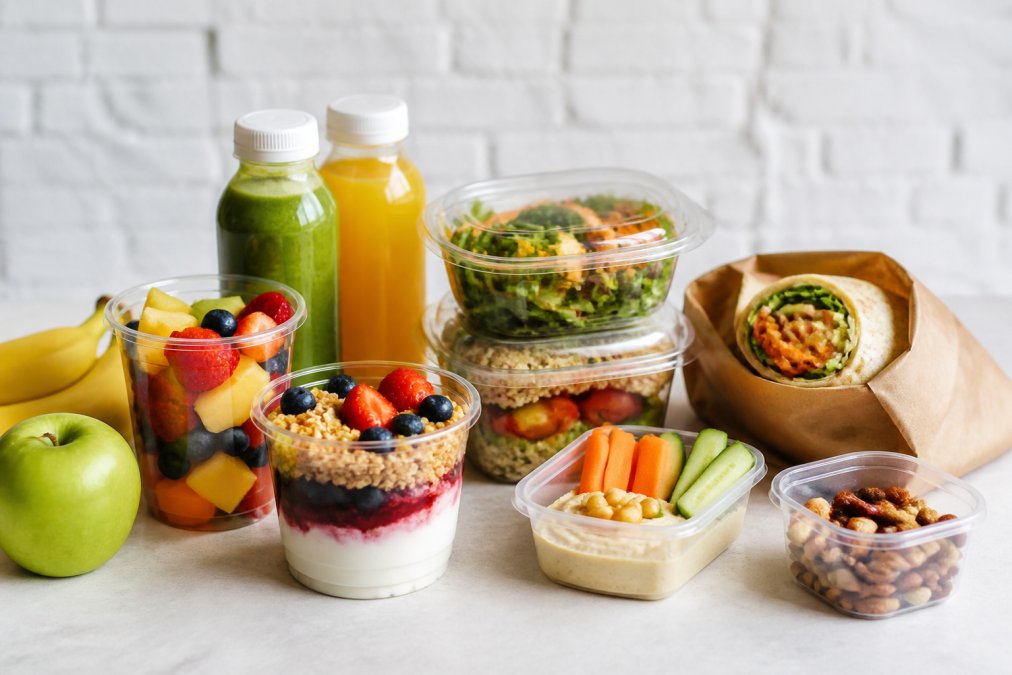
Healthy grab and go meals include açaí bowls topped with fresh fruit and granola, customizable salad bowls with lean protein, Mediterranean grain bowls with vegetables and hummus, and fresh-pressed juices or smoothies blended to order. Look for options with whole foods, fiber-dense ingredients, and minimal added sugars. Many fast-casual spots let you build your own bowl, so you control the portion size and ingredients.
What is the healthiest takeout I can get?
The healthiest takeout usually comes from fast-casual spots that build bowls to order with fresh produce, grilled proteins, and house-made dressings. Mediterranean bowls, salad-based meals, and smoothie or juice bars tend to offer more nutrient-dense choices than traditional fast food. Check the sodium content of sauces and dressings, and ask for them on the side so you control how much goes into your meal.
How can I find nutritious meals when I'm short on time?
Use mobile ordering apps to skip the line and pick up your meal without waiting. Choose spots with transparent nutritional labeling so you know the calorie count and macronutrients before you order. Pre-packaged grocery store options like fresh sushi, rotisserie chicken, and salad bars also work well when you need something fast. Planning two or three go-to spots near your home or office cuts down decision time.
How do I choose healthy options at restaurants when eating out?
Start by scanning the menu for items with grilled or steamed proteins, whole grains, and fresh vegetables. Ask for dressings and sauces on the side, and request extra vegetables instead of fries or chips. Look for menu transparency, many chains now list calorie counts and sodium content. If you have dietary restrictions, check whether the restaurant offers gluten-free, dairy-free, or vegan options before you go.
Are juice cleanses actually good for digestion?
Juice cleanses can support digestion by giving your system a break from processed ingredients and adding fiber-dense, nutrient-dense liquids to your diet. The key is choosing cleanses made from real fruits and vegetables rather than added sugars or concentrates. If you have a specific condition like IBS, talk to your doctor before starting a cleanse, and start with a shorter program to see how your body responds.