 listicle
Best Post Workout Recovery Drinks for 2026
Table of Contents
- How We Picked the Best Post Workout Recovery Drinks
- Quick Comparison: Top Recovery Drinks
- 1. Roxberry Juice Co.: Real Food Recovery Smoothies
- 2. Fairlife Chocolate 2% Ultra-Filtered Milk
- 3. Endurox R4: For Endurance Athletes
- 4. Muscle Milk Knockout Chocolate
- 5. Waterboy Workout Hydration: For Heavy Sweaters
- Post-Workout Nutrition Timing: When to Drink
- Frequently Asked Questions
Last Updated: September 7, 2026
How We Picked the Best Post Workout Recovery Drinks
The best post workout recovery drinks share one thing in common: they deliver the nutrients your muscles need within a practical window after training. We evaluated dozens of options against the physiology of recovery, not just marketing claims. Our criteria focused on the macronutrient ratio for glycogen replenishment and muscle protein synthesis, the micronutrient profile for electrolyte replacement, and whether the ingredients come from whole foods or a laboratory.
Most guides list products by popularity. We took a different approach. Each drink was assessed for how well it matches specific training demands, from heavy sweating sessions to endurance work. We also weighed dietary restriction compatibility heavily, since a recovery drink only works if you can actually drink it. We prioritized transparent ingredients and skipped anything relying on artificial sweeteners as a primary flavor source.
We also considered cost-per-serving and practical availability. The result is a short list covering real food smoothies, ultra-filtered milk, specialized endurance formulas, and hydration-focused mixes.
The Nutrient Thresholds That Matter
To make the cut, a drink needed to meet one of three physiological jobs. First, muscle repair: this requires 15 to 25 grams of high-quality protein, with an emphasis on leucine content. Leucine is the branched-chain amino acid that directly triggers muscle protein synthesis, and research commonly identifies 2 to 3 grams per serving as the effective trigger dose. Second, glycogen replenishment: this requires carbohydrates in a ratio that matches the training stress. For endurance athletes, a 3:1 or 4:1 carb-to-protein ratio is the standard pattern. For resistance training, a 1:1 or 2:1 ratio is typically sufficient. Third, rehydration: this requires sodium, potassium, and magnesium in meaningful amounts, not trace quantities. A drink claiming electrolyte support should contain at least 200mg of sodium per serving to be relevant for heavy sweaters.
Dietary Restriction Compatibility: The Missing Filter
Most recovery drink guides ignore the fact that dietary restrictions are not niche, they are mainstream. Roughly one in three adults in the United States actively tries to limit dairy or gluten. A recovery drink that contains whey protein is useless to someone who is vegan. A drink sweetened with honey is off-limits for a strict keto dieter. A product processed in a facility that handles wheat is a risk for someone with celiac disease.
We evaluated every option against three common dietary frameworks: vegan, keto, and allergen-free. Vegan options must contain no animal-derived ingredients, which eliminates whey and casein-based products. Keto compatibility requires low net carbohydrates, which rules out most traditional recovery drinks that rely on sugar for glycogen replenishment. Allergen-free means no dairy, gluten, soy, or tree nuts, and no cross-contamination risk in manufacturing. The Roxberry Juice Co. smoothies are a strong fit here because the menu is customizable, you can build a dairy-free smoothie with plant-based protein, or skip added sugars entirely by choosing whole fruit only.
Cost-Per-Serving: The Budget Reality
Recovery drinks range from under $1 per serving to over $5 per serving, and the price does not always correlate with effectiveness. A DIY smoothie made at home costs roughly $2 to $3 per serving and delivers whole-food nutrition. A commercial ready-to-drink shake like Muscle Milk typically costs $2.50 to $3.50 per serving. Ultra-filtered milk like Fairlife costs about $1.50 to $2.00 per serving, making it one of the most cost-effective protein sources available. Specialized endurance formulas like Endurox R4 run $2.50 to $4.00 per serving when bought in bulk tubs. The cheapest option is not always the best value, a $1 electrolyte mix that lacks protein does nothing for muscle repair, but the most expensive option is rarely necessary either. For most athletes, a rotation of a grocery store milk-based drink for everyday training and a specialized formula for hard sessions provides the best cost-to-benefit ratio.
Quick Comparison: Top Recovery Drinks
| Drink | Best For | Protein Focus | Carb Focus | Dietary Fit |
|---|---|---|---|---|
| Roxberry Juice Co. Smoothies | Whole-food recovery | Plant-based from real ingredients | Natural fruit sugars | Dairy-free options |
| Fairlife Chocolate 2% | Everyday muscle repair | 13g per serving, dairy-based | Naturally occurring | Contains dairy |
| Endurox R4 | Endurance athletes | 4:1 carb-to-protein ratio | Rapid glycogen replenishment | Mix powder |
| Muscle Milk Knockout | Convenient high protein | Protein blend | Moderate | Contains additives |
| Waterboy Workout | Heavy sweaters | None | Low sugar | Electrolyte focus |
The table above summarizes the landscape, but the details matter.
1. Roxberry Juice Co.: Real Food Recovery Smoothies
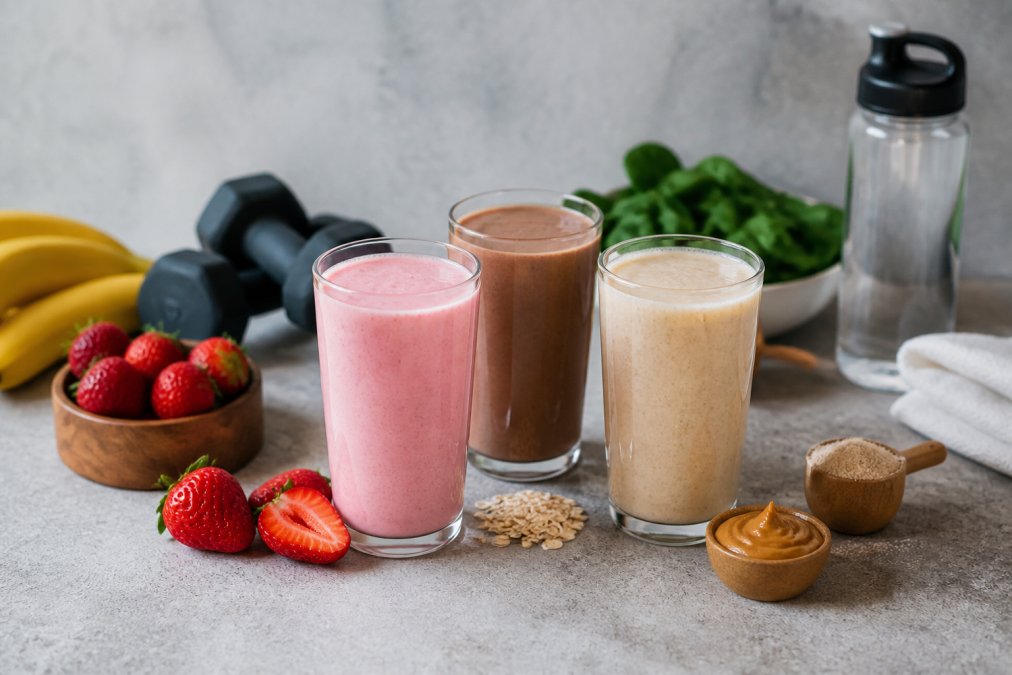
Our top pick for the best post workout recovery drinks is Roxberry Juice Co., and it comes down to one principle: real food beats processed supplements. Smoothies blended to order from 100% natural, fresh-pressed juices and real fruits and vegetables deliver fast-digesting carbohydrates for glycogen replenishment alongside the phytonutrients that support cellular repair. You are not consuming a lab-formulated powder; you are drinking whole ingredients your body recognizes.

For athletes with dietary restrictions, this is where Roxberry stands apart. Dairy-free options are built into the menu, and the locally owned and operated stores make it easy to ask exactly what goes into your cup. The signature Roxberry Granola adds texture and healthy fats when you want extra staying power. The honest limitation: recovery smoothies work best when you can visit a store after training, so they suit people who train near one of their locations rather than someone needing a shelf-stable powder for the gym bag.
2. Fairlife Chocolate 2% Ultra-Filtered Milk
Fairlife Chocolate 2% is a strong option for anyone who wants a natural, whole-food recovery drink without the hassle of mixing powders. The ultra-filtration process concentrates protein while reducing sugar, delivering 13g of protein per serving alongside essential electrolytes like calcium and potassium. That protein supports muscle protein synthesis, while the naturally occurring carbohydrates help restore glycogen.
This is a grocery store staple, widely available and reasonably priced. The taste is consistently rated as excellent, and the satiety factor makes it a solid choice for post-exercise hunger. The catch is the dairy. Anyone with lactose intolerance or a dairy-free diet needs to look elsewhere, and the protein content, while solid, is lower than dedicated recovery formulas.
3. Endurox R4: For Endurance Athletes
Endurox R4 targets a specific problem: the metabolic recovery of endurance athletes. Its 4:1 carbohydrate-to-protein ratio is designed to accelerate glycogen replenishment while the protein component addresses muscle tissue repair. The formula also includes antioxidants aimed at reducing exercise-induced muscle damage, and electrolytes for rehydration.
This is a specialized tool, not a general-purpose shake. If you are logging long runs, cycling centuries, or doing high-intensity interval training, the science behind this ratio has real merit. The drawbacks are the higher price point and the fact that it is a powder you need to mix, which adds friction to the post-workout window. non-alcoholic recovery options.
4. Muscle Milk Knockout Chocolate
Muscle Milk Knockout is a convenient option for athletes who need a high-protein drink immediately after training and cannot blend anything themselves. The ready-to-drink format delivers a consistent protein blend formulated for sustained muscle support, fortified with vitamins and minerals. It is the kind of option you keep in the car or gym bag for the moments when timing matters more than culinary quality.
The tradeoff is ingredient transparency. Muscle Milk relies on artificial sweeteners and additives to achieve its taste and shelf stability. For athletes who prioritize a clean micronutrient profile and natural ingredients, this is a meaningful drawback. It is a functional choice, not a wholesome one.
5. Waterboy Workout Hydration: For Heavy Sweaters
Waterboy Workout Hydration solves a different problem than the rest of this list. It is not a protein drink, and it makes no claim to support muscle protein synthesis. Instead, it is a high-dose electrolyte blend designed for rapid absorption, formulated for people who lose significant minerals through sweat. The low sugar formulation focuses on hydration status and rehydration efficiency.
If you train in high heat, sweat heavily, or find yourself cramping during sessions, this is the targeted fix. The clean ingredient profile is a plus. The limitation is structural: without protein or carbohydrates, it does nothing for muscle recovery or glycogen replenishment. It is a complement to a recovery drink, not a replacement for one.
Post-Workout Nutrition Timing: When to Drink
Post-workout nutrition timing is less about a mythical 30-minute "anabolic window" and more about matching nutrient delivery to the type of stress your muscles just endured. Exercise creates a temporary state of insulin sensitivity and muscle protein breakdown. Consuming protein and carbohydrates in the hours after training shifts that balance toward synthesis and repair. But how aggressively you need to pursue that window depends entirely on what you did.
Light Cardio and Low-Intensity Sessions
A 30-minute jog, a casual bike ride, or a yoga class does not deplete muscle glycogen stores significantly, nor does it create substantial muscle protein damage. For these sessions, the recovery drink is optional. A normal meal containing protein and carbohydrates within two to three hours is sufficient. Forcing a recovery shake after a light walk is unnecessary calorie intake, not optimization.
Moderate Resistance Training and Circuit Work
When you move into moderate resistance training, think 45 to 60 minutes of compound lifts or a circuit class, the calculus changes. Muscle glycogen is partially depleted, and microtears in muscle fibers initiate the repair cascade. Consuming 20 to 40 grams of protein alongside 30 to 60 grams of carbohydrates within 60 to 90 minutes post-exercise supports muscle protein synthesis and begins glycogen restoration. This is where a drink like Fairlife Chocolate 2% or a Roxberry smoothie earns its place.
Heavy Resistance Training and High-Volume Hypertrophy Work
Heavy resistance training, low reps, high load, or high-volume bodybuilding-style splits, creates significant mechanical stress on muscle tissue. The post-workout window here is more critical. Research on muscle protein synthesis consistently shows that consuming fast-digesting protein within 60 minutes of finishing this type of session produces a greater anabolic response than waiting several hours. The leucine content matters; approximately 2 to 3 grams per serving is a common threshold for triggering the mTOR pathway that drives muscle building.
Endurance Work and Glycogen Depletion
Endurance sessions lasting over 90 minutes, or high-intensity interval work, deplete glycogen stores more profoundly than resistance training. Here, the priority shifts toward carbohydrate. The 4:1 carb-to-protein ratio found in products like Endurox R4 exists for this reason. Consuming that ratio within 30 to 60 minutes post-exercise accelerates glycogen resynthesis at a rate that whole-food meals often cannot match, simply because liquid carbohydrates empty from the stomach faster and are absorbed more rapidly. If you have another hard session within 24 hours, this timing becomes non-negotiable.
The Practical Protocol
A practical approach that most sports dietitians recommend is to structure your post-workout intake around your next training session rather than a stopwatch. If you train again within 8 hours, consume a recovery drink within 60 minutes. If your next session is tomorrow or later, a balanced meal within two hours is adequate. The exception is the athlete training twice a day or doing back-to-back endurance events.
For athletes who want to understand the physiological basis of recovery, the American College of Sports Medicine guidelines on nutrition and athletic performance provide a solid foundation on macronutrient needs. The distinction between whole-food recovery and supplement-based approaches is covered well in research on protein timing and muscle adaptation. And for anyone tracking hydration, the National Athletic Trainers' Association position statement on fluid replacement outlines why electrolyte balance matters for rehydration.
Frequently Asked Questions
What is the best drink to drink after exercising for recovery?
The best drink combines protein and carbohydrates within 30 to 60 minutes after exercise. This mix supports muscle protein synthesis and replenishes glycogen stores. A fruit smoothie with protein is a solid choice, as is ultra-filtered milk or a commercial recovery shake. For intense sessions, adding electrolytes helps restore hydration status. Your specific choice depends on your dietary needs and workout intensity.
What is a good after-training recovery drink for muscle soreness?
A drink with a 3:1 or 4:1 carbohydrate-to-protein ratio is effective for reducing muscle soreness. The carbohydrates speed up glycogen replenishment, while the protein aids in tissue repair. Natural options like a blended smoothie with fruit and Greek yogurt also work well to support metabolic recovery and ease delayed onset muscle soreness.
What should I drink for faster muscle recovery after a heavy workout?
For faster recovery, prioritize a drink with fast-digesting carbohydrates and a quality protein source like whey or soy isolate. Consuming it within the post-workout nutrition timing window of 45 minutes is key. For overall rehydration and cellular repair, ensure your drink also contains electrolytes like sodium and potassium.
Are natural recovery drinks like smoothies as effective as commercial supplements?
Yes, for many people, natural options are just as effective. A smoothie made with real fruit and a protein source delivers the same macronutrient ratio as a commercial shake, plus beneficial micronutrients and fiber. The main advantage of commercial drinks is convenience and precise dosing. If you are dairy-free or have dietary restrictions, a homemade smoothie or a fresh-pressed juice blended with plant protein gives you full control over the ingredients.