 listicle
Dairy Free Smoothie Recipes: Healthy & Creamy
Table of Contents
- Why Dairy Free Smoothies Work Better Than You'd Expect
- Best Dairy Free Milk for Smoothies
- How to Make Smoothies Creamy Without Dairy
- Dairy Free Protein Smoothie Recipes
- Budget-Friendly Swaps and Allergy-Safe Alternatives
- Smoothie Prep and Storage Tips That Save Time
- Macro-Nutrient Customization: Build Your Ideal Blend
- Frequently Asked Questions
Last Updated: August 15, 2026
Why Dairy Free Smoothies Work Better Than You'd Expect
Dairy free smoothie recipes healthy enough to replace a full meal are more achievable than most people realize. At Roxberry Juice Co., we blend smoothies to order daily using real fruits, vegetables, and whole-food ingredients.
Dairy can work against you in a smoothie. Cow's milk adds saturated fat and lactose without contributing much in the way of antioxidants, fiber, or micronutrients. Plant-based alternatives bring their own nutritional benefits and often create a creamier, more satisfying texture than milk ever could.
Dairy free smoothies are also genuinely inclusive. They work for people with lactose intolerance, IBS, dairy allergies, or anyone following a vegan or plant-based lifestyle. According to the Academy of Nutrition and Dietetics position paper on plant-based diets, well-planned plant-based eating patterns are nutritionally adequate and associated with health benefits across multiple conditions.
Below, we'll cover the best dairy-free milk options, how to build a creamy texture without any animal products, three protein-packed recipes, and a system for customizing your macros so every blend works for your specific goals.
Best Dairy Free Milk for Smoothies
Choosing the right non-dairy base is the single biggest decision you'll make when building a dairy free smoothie. The milk you choose affects creaminess, flavor, calorie density, and how well other ingredients blend together.
Oat Milk: The Creamiest All-Rounder
Oat milk is the best all-purpose dairy-free base for smoothies. Its naturally mild, slightly sweet flavor doesn't compete with fruit or greens, and its thicker consistency mimics whole milk more closely than most alternatives. Some oat milk varieties are vegan, non-GMO, and fortified with calcium, vitamins A, D, B12, and riboflavin. The one drawback: some oat milk varieties contain added sugars. Check the label and opt for unsweetened versions when watching your sugar intake.
Almond, Coconut, and Hemp: When to Use Each
These three each have a specific job to do:
- Almond milk works best in lighter, fruit-forward smoothies. It's low in calories and has a neutral flavor that lets berries and citrus shine.
- Coconut milk (from a carton, not a can) adds a subtle tropical richness that pairs well with mango, pineapple, and banana.
- Hemp milk contains natural omega-3 and omega-6 fatty acids, blends smoothly, and has a slightly earthy flavor that complements green smoothies well.
| Milk Type | Best For | Flavor Profile | Protein Level |
|---|---|---|---|
| Oat milk | All-purpose, everyday smoothies | Mild, slightly sweet | Low-medium |
| Almond milk | Light, fruit-forward blends | Neutral, slightly nutty | Low |
| Coconut milk | Tropical, creamy blends | Rich, tropical | Low |
| Hemp milk | Green smoothies, omega boost | Earthy, mild | Medium |
How to Make Smoothies Creamy Without Dairy
Creaminess in a dairy free smoothie comes from fat, starch, and fiber, not from milk. Once you understand that, the options open up considerably.
Frozen Fruit as a Thickener
Frozen fruit is the most underused smoothie thickener in home kitchens. Frozen banana creates a texture nearly indistinguishable from a milkshake when blended properly. Frozen cauliflower florets are virtually tasteless but add significant thickness without affecting flavor or adding sugar.
The technique matters: always blend your liquid and leafy greens first, then add frozen fruit last. This prevents air pockets and produces a smoother, more uniform consistency.
Chia Seeds, Hemp Hearts, and Avocado
These three ingredients add healthy fats and slow-digesting fiber that extend satiety for hours.
- Chia seeds absorb liquid and swell, creating a gel-like consistency. Add one tablespoon and blend immediately for a smooth result.
- Hemp hearts blend invisibly into any smoothie and contribute plant-based protein alongside omega fatty acids. Two tablespoons per serving is a practical starting point.
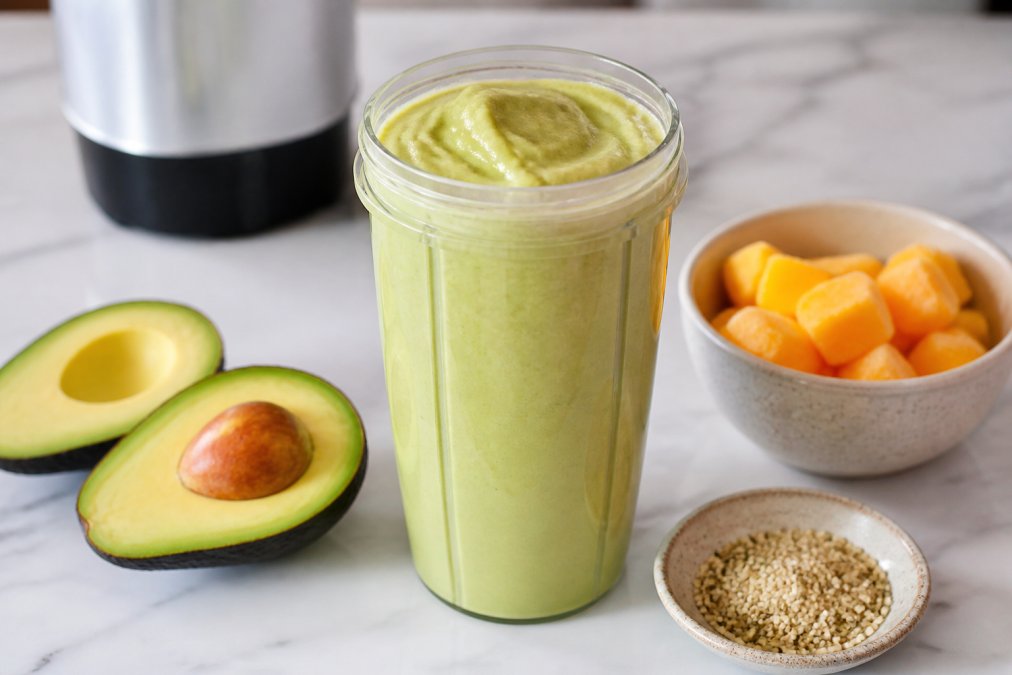
- Avocado is the gold standard for dairy-free creaminess. Half an avocado transforms a watery blend into something genuinely luscious without adding any detectable flavor.
Dairy Free Protein Smoothie Recipes
Protein is where dairy-free smoothies often fall short, but only if you're not thinking strategically. These three recipes are designed around real whole-food protein sources, each targeting a different need: post-workout recovery, a filling breakfast, and a kid-approved option.
Post-Workout Chocolate Hemp Smoothie
This smoothie delivers plant-based protein from hemp hearts and an optional protein powder, with cocoa for antioxidants and banana for fast-digesting carbohydrates to replenish glycogen after exercise.
Ingredients:
- 1 cup unsweetened oat milk
- 1 frozen banana
- 2 tablespoons hemp hearts
- 1 tablespoon unsweetened cocoa powder
- 1 scoop plant-based protein powder (such as Orgain or Vega Protein & Greens)
- 1 tablespoon almond butter
- Pinch of sea salt
Steps:
- Add oat milk to the blender first.
- Add frozen banana, hemp hearts, cocoa powder, and almond butter.
- Add protein powder last to prevent clumping.
- Blend on high for 45-60 seconds until completely smooth.
Why it works: Hemp hearts and a quality plant protein powder together provide a complete amino acid profile. The banana provides natural sweetness so you're not relying on added sugars.
Green Protein Breakfast Smoothie
Most breakfast smoothies are fruit bombs with almost no protein. This one flips that script.
Ingredients:
- 1 cup unsweetened almond milk
- 1 large handful of fresh spinach or kale
- ½ frozen banana
- ½ avocado
- 1 tablespoon chia seeds
- 1 scoop Vega Protein & Greens
- 1 teaspoon fresh ginger (optional)
Steps:
- Blend almond milk and leafy greens first until no leaf pieces remain.
- Add frozen banana, avocado, and chia seeds.
- Add protein powder and ginger.
- Blend on high for 60 seconds.
Why it works: Avocado and chia seeds provide slow-digesting healthy fats and fiber, which means this smoothie keeps you full until lunch. The greens add micronutrients and antioxidants without any grassy taste when blended properly.
Kid-Friendly Strawberry Banana Smoothie
This is the dairy free smoothie recipe parents come back to every week. No hidden greens (unless you want them), no unfamiliar ingredients, and a flavor kids actually ask for.
Ingredients:
- 1 cup coconut milk (carton, not canned)
- 1 cup frozen strawberries
- 1 frozen banana
- 1 tablespoon chia seeds
- ½ teaspoon vanilla extract
- Optional: 1 small handful of spinach
Steps:
- Add coconut milk and vanilla to blender.
- Add frozen strawberries and banana.
- Add chia seeds.
- Blend on high for 45 seconds.
Why it works: Coconut milk creates a naturally creamy, slightly sweet base that pairs perfectly with strawberry. The chia seeds add fiber and omega-3s invisibly. According to dietary fiber guidance from the USDA's MyPlate, most children fall short of their daily fiber needs; this smoothie helps close that gap without a fight.
Budget-Friendly Swaps and Allergy-Safe Alternatives
A common objection to dairy-free eating is cost. Plant-based milks and specialty protein powders can add up, but the ingredients that do the most work in a smoothie are often the cheapest ones.
Budget-friendly swaps that don't sacrifice quality:
- Frozen spinach instead of fresh: costs a fraction of the price and has the same nutritional profile.
- Frozen banana instead of fresh: overripe bananas can be frozen in batches.
- Sunflower seed butter instead of almond butter: significantly less expensive and nut-free.
- Canned coconut milk (diluted 1:1 with water) instead of carton coconut milk: much lower cost per serving.
- Rolled oats blended with water: a budget-friendly homemade oat milk that takes under two minutes to make.
Allergy-safe alternatives by restriction:
| Restriction | Avoid | Safe Swap |
|---|---|---|
| Nut allergy | Almond milk, almond butter | Oat milk, sunflower seed butter |
| Soy allergy | Soy milk, many protein powders | Hemp milk, ALOHA protein powder |
| Gluten sensitivity | Some oat milks | Certified gluten-free oat milk |
| Seed allergy | Chia seeds, hemp hearts | Avocado, banana for thickness |
The Food Allergy Research & Education resource on tree nut allergies is a reliable starting point for understanding cross-reactivity between common smoothie ingredients and tree nut allergens.
Smoothie Prep and Storage Tips That Save Time
The biggest reason people abandon their smoothie habit isn't lack of motivation. It's the daily friction of washing, chopping, and measuring ingredients at 7 a.m.
The fix is batch prepping your smoothie packs. Spend 20 minutes on Sunday portioning your ingredients into individual freezer bags or containers. Each bag holds one serving: frozen fruit, leafy greens, seeds, and any powders. In the morning, dump the bag into the blender, add your liquid, and blend. Total active time: under two minutes.
Practical prep tips:
- Freeze bananas in chunks, not whole.
- Pre-measure protein powder into small containers or use single-serve packets.
- Store smoothie packs flat in the freezer so they stack efficiently.
- Pre-blended smoothies keep in a sealed jar in the refrigerator for up to 24 hours.
- Add chia seeds to pre-blended smoothies only if drinking within the hour, as they continue to absorb liquid.
A compact personal blender like the NutriBullet Pro 900 is well-suited to this routine. Its 900-watt motor handles frozen fruit and leafy greens in under 60 seconds, and the cups are dishwasher-safe.
Macro-Nutrient Customization: Build Your Ideal Blend
A dairy free smoothie should be built around your actual nutritional goals, not just thrown together. The difference between a smoothie that keeps you full for four hours and one that leaves you hungry by 10 a.m. comes down to macro balance.
Use this framework to build your blend:
| Goal | Protein Target | Fat Target | Carb Target | Key Ingredients |
|---|---|---|---|---|
| Post-workout recovery | High (25-30g) | Low-moderate | Moderate-high | Protein powder + banana + oat milk |
| Sustained breakfast | Moderate (15-20g) | High | Low-moderate | Avocado + hemp hearts + greens |
| Weight management | High (20-25g) | Moderate | Low | Protein powder + chia + almond milk |
| Kid-friendly energy | Low-moderate | Moderate | Moderate | Frozen fruit + coconut milk + chia |
To increase protein: Add a scoop of plant-based protein powder. Orgain Organic Plant Based Protein provides 21 grams per serving with zero grams of sugar and blends smoothly.
To increase healthy fats: Add half an avocado, two tablespoons of hemp hearts, or a tablespoon of nut or seed butter. These also slow glucose absorption, preventing blood sugar spikes.
To increase fiber: Chia seeds, flaxseed, and frozen leafy greens are the most efficient sources. According to dietary guidelines from the NIH Office of Dietary Supplements, adequate fiber intake supports digestive health and helps maintain satiety.
To reduce sugar: Swap high-sugar fruits like mango and pineapple for lower-sugar options like berries, which are also higher in antioxidants. Use unsweetened plant milks and skip added sweeteners when your fruit provides enough natural sweetness.
Building a genuinely satisfying dairy free smoothie at home is straightforward once you have the right system, but on the days when you don't have time to blend, Roxberry Juice Co. has you covered. Our smoothies are blended to order using 100% real fruits and vegetables, with no artificial additives and full ingredient transparency. Whether you need a post-workout protein boost, a nourishing breakfast on the go, or a wholesome option for your kids, our team crafts every blend with the same whole-food philosophy covered in this guide. Download our app to explore the full menu and make ordering even faster on your busiest mornings.
Frequently Asked Questions
What can I use instead of milk in a smoothie?
Oat milk, almond milk, coconut milk, and hemp milk all work well as dairy-free bases. Oat milk produces the creamiest texture and blends smoothly with both fruit and protein powders. Coconut milk adds richness and healthy fats, making it ideal for post-workout blends. For a nut-free option, oat or hemp milk are your safest choices. Each plant-based milk has a different nutritional profile, so match your pick to your goals.
How do you make a smoothie creamy without yogurt or milk?
Frozen banana is the most effective dairy-free smoothie thickener, one frozen banana gives a milkshake-like consistency. Half an avocado adds creaminess and healthy fats without changing the flavor much. Chia seeds and hemp hearts also thicken blends while adding fiber and protein. Coconut milk yogurt is another option if you want that tangy, thick texture. Blending on high speed for 45 to 60 seconds ensures everything fully incorporates.
What are the best dairy-free protein sources for smoothies?
Plant-based protein powders made from pea, brown rice, or hemp protein are the most convenient option, delivering 20 to 25 grams of protein per scoop. Hemp hearts add about 10 grams per 3-tablespoon serving and blend invisibly. Chia seeds contribute around 5 grams per 2 tablespoons. Nut butters like almond or sunflower seed butter add 7 to 8 grams per 2-tablespoon serving, along with healthy fats that support satiety.
Are dairy-free smoothies actually healthier?
For people with lactose intolerance, dairy sensitivities, or specific dietary restrictions, dairy free smoothies are a genuinely better fit. Plant-based milks are typically lower in saturated fat than whole dairy milk, and many are fortified with calcium, vitamin D, and B12. The health value of any smoothie depends more on what you add, whole fruits, leafy greens, fiber-rich seeds, and quality protein, than on whether it contains dairy or not.