 listicle
Healthy Breakfast for Busy Professionals: 15-Minute Ideas
Table of Contents
- Why Your Morning Meal Sets the Tone for Your Workday
- The 10-Minute Rule: Quick Breakfast Ideas for Hectic Mornings
- Make-Ahead Breakfast Recipes for a Stress-Free Week
- High-Protein Breakfast for Energy That Lasts Until Lunch
- Grab-and-Go Options for the Commuter
- Meal Prep Mistakes That Sabotage Your Breakfast Plan
- Your Weekly Healthy Breakfast Blueprint
- Frequently Asked Questions
Last Updated: September 9, 2026
Why Your Morning Meal Sets the Tone for Your Workday
The search for a healthy breakfast for busy professionals often stalls at the same obstacle: time. When your alarm goes off and the first meeting is in 45 minutes, the drive-thru and the vending machine become dangerously appealing options. Yet the choice you make in those early minutes influences your focus, your mood, and your productivity for hours afterward.
A healthy breakfast is the fuel your brain needs to handle complex decisions, creative work, and difficult conversations before noon. At Roxberry Juice Co., we offer options designed to help you trade the mid-morning crash for steady, clear-headed energy simply by changing how you start the day. Eating well on a tight schedule does not require culinary skill or extra sleep. It requires a system.
This guide covers strategies that fit into real professional lives: quick-fix meals, make-ahead recipes, high-protein choices, and grab-and-go solutions. We will also address common meal prep mistakes and show you how to structure a full week of effortless, nutrient-dense mornings. The goal is simple: a morning routine that supports your performance without adding stress.
The 10-Minute Rule: Quick Breakfast Ideas for Hectic Mornings
Most professionals can spare ten minutes, even on their busiest days. The 10-minute rule is simple: if a breakfast takes longer to prepare than your coffee brews, it doesn't make the weekday rotation. This threshold prevents the "no time" excuse from winning. But speed shouldn't come at the cost of nutrition. The goal is a meal that delivers sustained energy, not just something to fill the void.
Here are three quick-fix templates that meet the 10-minute standard. The key is to think in terms of components, not recipes.
The Savory Plate (5-7 minutes)
This option leans on the toaster and the microwave for speed. Start with two slices of whole-grain toast (look for at least 3 grams of fiber per slice). While they toast, crack two eggs into a small, microwave-safe bowl, add a splash of water, season, and whisk. Microwave on high for 45 seconds, stir, then microwave for another 30-45 seconds until just set. Mash half an avocado onto the toast and top with the eggs. This delivers roughly 20 grams of protein and 10 grams of fiber, a combination that stabilizes blood sugar and keeps you full until lunch (peer-reviewed research). For a no-cook variation, swap the eggs for a ½ cup of cottage cheese.
The No-Cook Parfait (3 minutes)
This is the fastest option, but it requires a strategic shopping list. In a tall glass or jar, layer ¾ cup of plain, whole-milk Greek yogurt (look for one with no added sugar and at least 15 grams of protein per serving) with ½ cup of frozen berries. The frozen berries will thaw slightly by the time you eat, releasing their juices to create a natural syrup. Top with 2 tablespoons of chopped nuts or seeds. The combination of protein, fat, and fiber from the berries and nuts is what prevents the mid-morning crash. Avoid flavored yogurts, which often pack in 15-20 grams of added sugar.
The Blender Smoothie (5 minutes, plus cleanup)
The most efficient smoothie strategy is to prep "smoothie packs" on the weekend. In individual freezer bags, combine 1 cup of frozen fruit (like mango or mixed berries), a handful of fresh spinach, and 1 tablespoon of chia seeds. In the morning, empty the bag into the blender, add 1 cup of unsweetened almond milk and one scoop of your preferred protein powder, and blend until smooth. This approach eliminates the morning decision-making and the mess of measuring. The chia seeds add a surprising amount of fiber and omega-3 fatty acids, which are often lacking in a rushed diet.
The trick is keeping the ingredients visible and accessible. When your fridge and pantry are organized around speed, you stop deliberating and start eating. A common mistake is treating breakfast as a daily decision rather than a default. Remove the choice, and the habit follows. If you find yourself consistently skipping breakfast, it's not a willpower problem; it's a systems problem. The 10-minute rule is the system that solves it.
Make-Ahead Breakfast Recipes for a Stress-Free Week
Batch cooking transforms your mornings from chaotic to calm. Dedicate 30 to 45 minutes on Sunday to preparing five identical breakfasts, and the rest of the week becomes a simple matter of grab, heat, and go. This approach is the backbone of any reliable healthy breakfast for busy professionals.
Overnight oats are the easiest entry point. Combine rolled oats, milk or a dairy-free alternative, chia seeds, and a touch of maple syrup in a jar, then refrigerate overnight. In the morning, the mixture is thick, creamy, and ready to eat cold. Chia pudding follows the same logic with a different texture, while egg muffins offer a savory, high-protein alternative that reheats well.
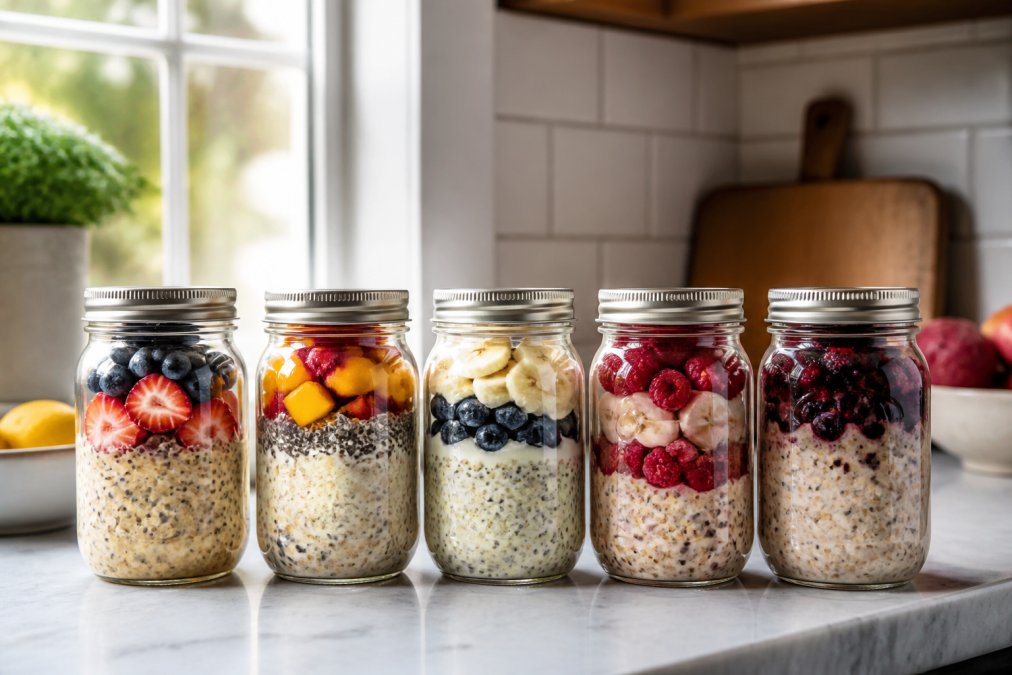
The key to successful batch cooking is variety within repetition. Make two flavors of oats and one batch of egg muffins so you don't tire of the same meal by Thursday. Portion control matters here, too: individual jars and muffin tins enforce reasonable serving sizes without extra thought.
High-Protein Breakfast for Energy That Lasts Until Lunch
Protein is the single most important nutrient for staving off mid-morning hunger. Meals built around protein and fiber keep blood sugar steady, which prevents the energy dips that send you reaching for a second coffee or a sugary snack by 10:30 a.m. A high-protein breakfast for energy should target roughly 20 to 30 grams to carry you comfortably to lunch. But the type of protein matters as much as the amount.
The Science of Satiety
Protein is the most satiating macronutrient (PubMed). It triggers the release of peptide YY (PYY) and glucagon-like peptide-1 (GLP-1), hormones that signal fullness to the brain (peer-reviewed research). It also has a higher thermic effect than carbohydrates or fats, meaning your body burns more calories digesting it. This is why a 300-calorie breakfast with 25 grams of protein will keep you satisfied longer than a 500-calorie breakfast that is mostly refined carbohydrates.
Choosing Your Protein Source
Not all proteins are created equal for a rushed morning. Here is a practical breakdown of the most effective options:
- Eggs: A three-egg scramble delivers about 18 grams of protein. The key advantage is the fat-soluble vitamins (A, D, E, K) and choline, which supports brain function. Cook them in a non-stick pan with a small amount of olive oil or butter to avoid sticking.
- Greek Yogurt: A single-serving cup of plain, non-fat Greek yogurt contains 15-18 grams of protein. It also provides probiotics for gut health. Choose plain and add your own fruit to control sugar intake.
- Cottage Cheese: Often overlooked, cottage cheese is a protein powerhouse. A ½ cup serving delivers 12-14 grams of protein, and it's incredibly versatile. Pair it with black pepper and cherry tomatoes for a savory option, or with pineapple for a sweet one.
- Protein Powder: This is the most efficient way to hit a high-protein target, especially in smoothies. A scoop of whey or plant-based protein isolate can add 20-25 grams of protein for under 150 calories. Look for products with minimal ingredients.
- Tofu: For plant-based professionals, a tofu scramble is the most effective egg replacement. A ½ block of firm tofu contains about 20 grams of protein. Crumble it and sauté with turmeric, nutritional yeast, and vegetables for a savory, satisfying meal.
The Cognitive Performance Angle
Most articles stop at "energy," but for a professional, the real goal is cognitive performance. The brain requires a steady supply of glucose, and protein helps regulate that supply. When you eat a high-carb, low-protein breakfast, your blood sugar spikes and then crashes. A high-protein breakfast can help prevent this cascade. wellness products for professionals.
Furthermore, certain amino acids are direct precursors to neurotransmitters. By choosing protein sources rich in these amino acids, you are fueling your brain for the complex cognitive demands of the workday.
A Practical Target
To put this into practice, aim for a breakfast that contains at least 20 grams of protein and 5 grams of fiber. This combination can be effective for maintaining satiety. If you are consistently falling short, a protein shake is a reliable and efficient way to close the gap. A high-protein breakfast is about optimizing your mental performance for the day ahead.
Grab-and-Go Options for the Commuter
Commuter-specific ergonomics matter more than most guides acknowledge. A breakfast that requires a bowl, a spoon, and a stable surface fails the moment you step onto a train or into a car. The best grab-and-go options are engineered for one-handed eating in confined spaces.
Hard-boiled eggs, protein bars, and whole fruit are the classic fallbacks, but they can get monotonous. Smoothies in sealed bottles travel well and pack substantial nutrition into a drinkable format. The key is choosing blends with protein and healthy fats rather than fruit juice masquerading as a meal.
For professionals who prefer a hot breakfast, a thermos of overnight oats or a breakfast burrito wrapped in foil stays warm for hours. The common thread across all grab-and-go options is preparation. None of these work if you are assembling them while running out the door.
Meal Prep Mistakes That Sabotage Your Breakfast Plan
Even a well-intentioned meal prep routine can fail quietly. The most common mistake is preparing too much variety at once, which leads to waste and discouragement. Start with one recipe and scale it once it becomes habit.
Food safety is another frequent oversight. Cooked egg dishes and dairy-based preparations last three to four days in the refrigerator. If you are prepping for a full five-day work week, freeze portions meant for later in the week, and move them to the fridge the night before. Overnight refrigeration is safest, while the microwave works in a pinch but can alter texture.
A third mistake is ignoring your actual schedule. If you never eat breakfast at home on Tuesdays because of an early client meeting, prep a grab-and-go option for that day instead of a sit-down meal. The best plan accommodates your real life, not an idealized version of it.
Your Weekly Healthy Breakfast Blueprint
A practical framework outperforms abstract advice. Here is a simple blueprint that balances convenience, nutrition, and variety across a standard work week.
| Day | Breakfast Strategy | Prep Time | Prep Method |
|---|---|---|---|
| Monday | Overnight oats with berries and chia | 5 min Sunday | Make-ahead |
| Tuesday | Greek yogurt parfait with granola | 3 min | Quick-fix |
| Wednesday | Egg muffin with whole-grain toast | 20 min Sunday | Make-ahead |
| Thursday | High-protein smoothie | 5 min | Blended to order |
| Friday | Avocado toast with poached egg | 8 min | Quick-fix |
This structure keeps your mornings varied without demanding daily decisions. The make-ahead items are prepared in one Sunday session, while the quick-fix days rely on staple ingredients you keep stocked.
For the days when even this plan feels like too much, remember that a healthy breakfast for busy professionals does not have to be homemade. A fresh-pressed juice or a smoothie blended from real fruits and vegetables, like those crafted to order at Roxberry Juice Co., delivers nutrient-dense fuel without any prep on your part. The goal is consistent, quality nutrition that supports your focus and energy, whether you make it yourself or grab it on the way to work.
Eating well on a busy schedule comes down to preparation and honest assessment of your constraints. The professionals who succeed are not the ones with more willpower or more time; they are the ones who build a system that works within their real mornings. Roxberry Juice Co. makes that system easier with 100% natural juices, smoothies blended to order from real fruits and vegetables, and nourishing snacks designed to restore digestion, increase energy, and improve mental clarity. Download our app and find your nearest store to make your next healthy breakfast effortless.
Frequently Asked Questions
What is the best breakfast for office workers to maintain energy?
Office workers need a breakfast that combines complex carbohydrates with protein and healthy fats to sustain blood sugar levels. A high-protein breakfast for energy might include Greek yogurt with berries and chia seeds, or overnight oats with nut butter. These options provide steady fuel without the crash that comes from sugary pastries or refined cereals. Pairing your breakfast with a fresh-pressed juice or a blended smoothie adds vitamins and helps you stay hydrated through long meetings.
How can I prepare healthy breakfasts in advance for a busy work week?
Start with make-ahead breakfast recipes that store well in the refrigerator. Overnight oats and chia puddings take 5 minutes to assemble and keep for up to 4 days in airtight jars. Egg muffins bake in 20 minutes and reheat in 30 seconds. Smoothie packs with pre-portioned frozen fruit save you time on busy mornings. Batch cooking on Sunday gives you 5 grab-and-go breakfasts ready by Monday.
Are smoothies a good breakfast option for busy professionals?
Smoothies work well when they are balanced. A smoothie that relies only on fruit spikes your blood sugar, but one built with Greek yogurt or protein powder, leafy greens, healthy fats like chia seeds, and a handful of berries delivers protein and fiber. Blending takes under 5 minutes, and you can drink it during your commute. For zero prep, visit a juice bar that blends to order so you know your drink is made fresh from real ingredients.
What are the top 5 healthiest breakfasts for mental clarity?
The best breakfasts for mental clarity combine slow-digesting carbs, protein, and omega-3 fats. Overnight oats with chia seeds support steady glucose levels. Egg muffins with spinach deliver choline for brain function. Greek yogurt parfaits with walnuts and berries provide protein and antioxidants. Açaí bowls topped with granola offer complex carbohydrates. A green smoothie with nut butter keeps you full and focused during your morning routine.
What makes a healthy breakfast different from a regular breakfast?
A healthy breakfast is nutrient-dense rather than calorie-dense. It prioritizes whole grains, lean protein, and healthy fats while limiting added sugar and refined flour. A typical breakfast pastry provides quick energy followed by a crash, while a balanced meal with eggs, oats, or yogurt sustains your energy for hours. Check sugar content on packaged items. A breakfast with 10 grams of protein and 5 grams of fiber keeps you satisfied much longer than one with empty calories.