 comparison
Herbal Remedies vs Smoothies for Mental Clarity
Table of Contents
- How Herbal Remedies and Smoothies Differ for Mental Clarity
- Best Herbs for Brain Fog: What the Research Shows
- Brain-Boosting Smoothie Recipes You Can Blend at Home
- Natural Ways to Boost Energy Without a Crash
- Synergistic Stacking: Combining Herbs and Smoothies
- Contraindications and Drug Interactions to Know Before You Start
- Conclusion: Choosing Your Mental Clarity Routine
- Frequently Asked Questions
Last Updated: September 25, 2026
How Herbal Remedies and Smoothies Differ for Mental Clarity
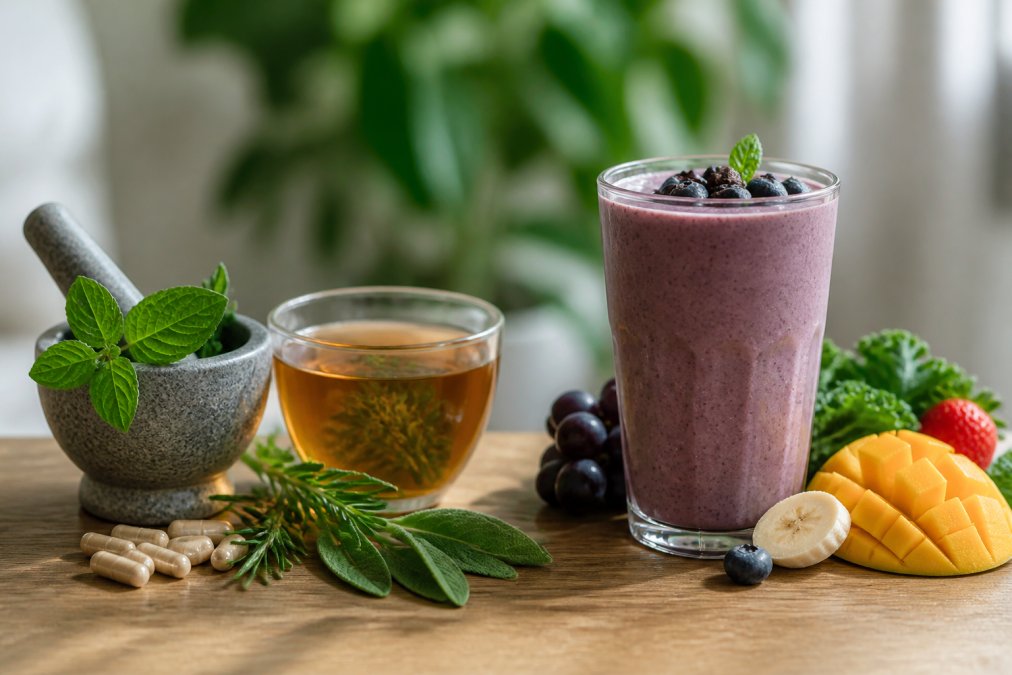
Herbal remedies and smoothies take two different paths to the same destination. Herbal remedies deliver concentrated plant compounds in small, measured doses, while smoothies provide whole-food nutrition, fiber, and hydration in a single blended drink. For anyone chasing mental clarity, the real question isn't which one wins. It's how each one works, and when to reach for which.
Herbal Remedies: Concentrated Botanicals
Herbal remedies are dietary supplements built around concentrated plant extracts, standardized to deliver a consistent dose of active compounds. A capsule of lion's mane or ginkgo delivers far more of a specific botanical than any food source could.
Smoothies: Whole-Food Hydration and Nutrition
Smoothies deliver nutrition the way food was designed to be consumed: bundled. Blend spinach, avocado, and kiwi with a probiotic base, and you get iron, vitamin E, fiber, and hydration in one glass.
Best Herbs for Brain Fog: What the Research Shows
The best herbs for brain fog are those with documented effects on circulation, stress response, and neuroprotection, including ginkgo, lion's mane, ashwagandha, and rhodiola. Each works through a different mechanism, and the right pick depends on what's driving your fog. Below is what the research actually supports, how the common extract forms differ, and where the marketing outruns the evidence.
Ginkgo biloba
Ginkgo is traditionally used to support blood flow, which matters because your brain consumes a disproportionate share of your circulation. The standardized extract most studied is labeled EGb 761, and it is standardized to 24% flavone glycosides and 6% terpene lactones. That ratio is the marker to look for on a label, because raw ginkgo leaf powder is not equivalent to the extract used in trials.
Lion's mane
Lion's mane is a functional mushroom studied for its role in nerve growth factor, the protein behind neuron maintenance. The two forms you will see on shelves are fruiting body and mycelium-on-grain. Fruiting body extracts are generally higher in the beta-glucan compounds researchers focus on, while mycelium products are often diluted with the grain they were grown on.
Ashwagandha
Ashwagandha is classified as an adaptogen, meaning it helps the body manage stress, a common fog trigger. The two extract types you will encounter are KSM-66 and Sensoril, both of which are standardized root extracts with published research behind them. Studied ranges commonly fall between 300 and 600 mg per day. Ashwagandha is the best fit when your fog tracks with a stressful stretch rather than a sleep deficit, and it is the herb most likely to cause drowsiness in some people, which is why timing matters.
Rhodiola rosea
Rhodiola is often taken for fatigue and focus during demanding work periods. The extract is standardized to rosavins and salidroside, and the ratio most studied is roughly 3% rosavins to 1% salidroside. Studied ranges commonly fall between 200 and 400 mg per day, often taken in the morning. Rhodiola leans stimulating for many people, so it is a poor fit for evening dosing.
What most guides miss: form, ratio, and third-party testing
Dosage and standardization vary wildly between products, and a tincture, a capsule, and a powder can behave very differently even when they carry the same herb name. Three practical checks before you buy:
- Stated extract ratio or standardization. "10:1 extract" tells you how much raw plant went in, not how much active compound came out. A percentage standardization (like 24% flavone glycosides) is more useful.
- Third-party testing. Look for a certificate of analysis or a seal from an independent testing program. This is your only real protection against heavy metals and mislabeled species, which are documented problems in the supplement supply chain.
- Serving size versus dose. A bottle may list 500 mg per serving but define a serving as three capsules. Read the panel, not the front label.
Brain-Boosting Smoothie Recipes You Can Blend at Home
A brain-boosting smoothie combines a liquid base, leafy greens, healthy fat, and fruit in proportions that keep the sugar load reasonable. The formula below is built around four jobs: hydrate, feed the gut, deliver fat-soluble nutrients, and avoid a blood-sugar spike. Here is why each slot exists, followed by two recipes.
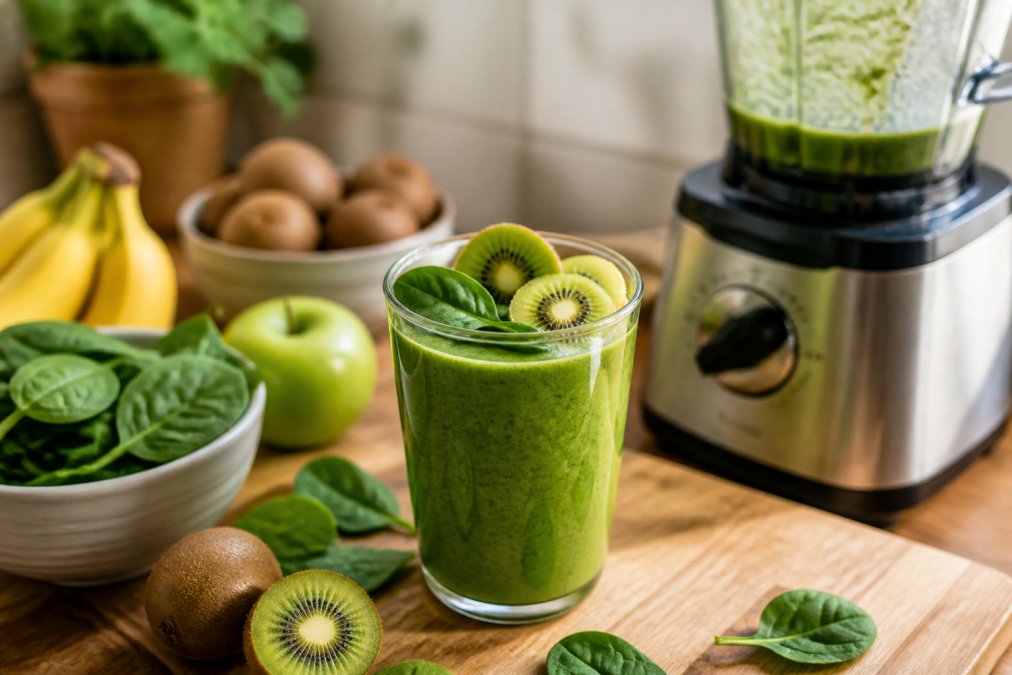
Why the ratios matter
- 1 cup liquid covers hydration, which supports alertness and concentration. Water and coconut water keep the sugar load lowest; kefir or a dairy-free yogurt adds probiotics for the gut-brain connection.
- 2 cups greens is the volume that gets you a meaningful dose of folate and vitamin K without turning the drink bitter. Baby spinach is the mildest starting point; kale and Swiss chard are stronger in flavor.
- 1/4 avocado supplies fat, and fat is not optional here. Vitamins A, D, E, and K are fat-soluble, meaning they absorb poorly without a fat source in the same glass. Avocado also adds creaminess without added sugar.
- 1 cup fruit is the sweetness ceiling. Going much beyond a cup pushes the drink toward a dessert-level sugar load, which works against the steady-energy goal.
- Optional boosters are where you add a targeted herb or seed without changing the base flavor much.
Green Clarity Blend
- Add 1 cup unsweetened kefir or a dairy-free alternative
- Add 2 cups baby spinach
- Add 1/4 avocado for vitamin E and creaminess
- Add 1 peeled kiwi for fiber and vitamin C
- Blend 45 seconds until smooth
This blend leans on the kefir for probiotics and the avocado for fat-soluble vitamin absorption. Kiwi adds vitamin C, which supports iron uptake from the spinach.
Berry Focus Blend
- Add 1 cup water or coconut water for hydration
- Add 1 cup frozen mixed berries for antioxidants
- Add 1 tablespoon ground flaxseed for fatty acids
- Add 1/2 banana for potassium and texture
- Blend until pourable
Frozen berries are picked and frozen at peak ripeness, so their antioxidant content holds up well compared to fresh berries that have spent days in transit. Ground flaxseed is used instead of whole because whole flaxseed passes through largely undigested.
Adding an herbal booster
If you want to stack an herb into either recipe, the fat in the avocado or flaxseed is what makes it work. Fat-soluble compounds absorb better when they arrive with fat, so blending a lion's mane or rhodiola powder into a smoothie that already contains avocado is a more sensible delivery method than chasing it with water. Start with the lower end of the studied range and add it to the blender, not on top.
Natural Ways to Boost Energy Without a Crash
Natural ways to boost energy without a crash come down to steady fuel, not spikes. Caffeine and sugar both deliver a fast lift followed by a dip. The strategies below work on a slower curve.
- Pair carbs with fat and protein. A smoothie with avocado or kefir digests more gradually than juice alone.
- Hydrate before you caffeinate. Mild dehydration reads as fatigue long before it reads as thirst.
- Eat on a rhythm. Blood sugar stability beats any single "energy food."
- Move for five minutes. A short walk raises alertness more reliably than a second coffee.
- Guard your sleep window. No supplement compensates for a chronic shortfall.
Synergistic Stacking: Combining Herbs and Smoothies
A practical stack looks like this: a green smoothie every weekday morning for baseline nutrition and hydration, plus one adaptogen taken during a genuinely stressful stretch rather than year-round.
Contraindications and Drug Interactions to Know Before You Start
Herbs are not automatically safe because they're natural, and several common ones interact with prescription medication. This is the section most comparison articles skip, and it's the one that matters most.
- Ginkgo may increase bleeding risk and interacts with blood thinners such as warfarin and aspirin
- Ashwagandha is generally avoided during pregnancy and by people on thyroid medication or sedatives
- Rhodiola can interact with antidepressants and stimulants
- St. John's wort is a well-documented interactor with antidepressants, birth control, and several other drug classes
Conclusion: Choosing Your Mental Clarity Routine
The honest answer is that most people don't need to choose. A daily smoothie covers hydration, fiber, and micronutrients reliably. A targeted herb covers a specific gap that food alone struggles to fill. Stack them with intention, and you get the best of both approaches.
Frequently Asked Questions
Are herbal remedies more effective than smoothies for brain fog?
Neither is universally better. Herbal remedies deliver concentrated compounds like adaptogens that may support neuroprotection and focus, while smoothies provide hydration, fiber, and micronutrients that address brain fog caused by poor diet or dehydration. Many people get the best results by using both: a daily smoothie for baseline nutrition and targeted herbs when they need sharper mental acuity.
What ingredients in smoothies help improve mental clarity?
Look for ingredients rich in antioxidants, fatty acids, and vitamin E. Spinach provides iron and phytonutrients, avocado delivers vitamin E, and kiwi adds fiber content. Kefir or yogurt supports the gut-brain axis. Berries contribute antioxidants that help reduce oxidative stress, which is linked to cognitive decline and brain fog.
Can herbal supplements interact with my current medications?
Yes. Some botanicals used for focus and stress reduction can interact with blood thinners, antidepressants, or thyroid medications. Always check with your healthcare provider before adding dietary supplements to your routine, especially if you take prescription drugs. Bring the specific product label so your provider can review the dosage and ingredients.
How do I incorporate both herbs and smoothies into a daily routine?
Start your morning with a brain-boosting smoothie that includes leafy greens and healthy fats. Take herbal supplements with food, either at breakfast or lunch, to support alertness and concentration through the afternoon. Keep a consistent schedule so you can track how each affects your focus and adjust dosage as needed.