 comparison
Is Juice Better Than Soda? A Nutritional Breakdown
Table of Contents
- The Sugar Reality: Juice vs. Soda Head-to-Head
- How Juice and Soda Affect Blood Sugar and Insulin Response
- Nutritional Value: Fresh Pressed Juice vs. Store Bought and Soda
- The Fiber Factor: Why Whole Fruit Wins Over Liquid Calories
- Benefits of Daily Green Juice for Metabolic Health
- How to Transition From Soda to Juice Responsibly
- Glycemic Load vs. Glycemic Index: The Technical Difference
- The Satiety Question: Which Keeps You Fuller Longer
- Frequently Asked Questions
Last Updated: September 2, 2026
The Sugar Reality: Juice vs. Soda Head-to-Head
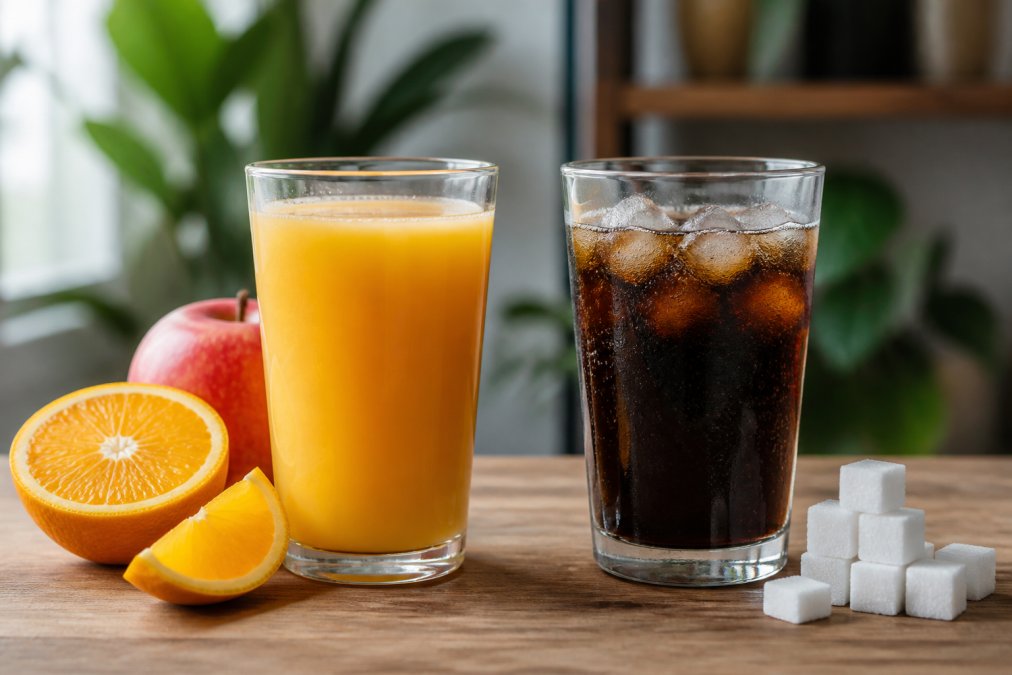
A typical glass of orange juice contains roughly the same amount of sugar as a can of soda, sometimes more. Soda's sugar comes from added sources, while juice's sugar arrives naturally from fruit. That distinction matters less than you'd think when it hits your bloodstream, both deliver a rapid glucose spike and trigger an insulin response that, when consumed regularly, can contribute to weight gain and metabolic stress.
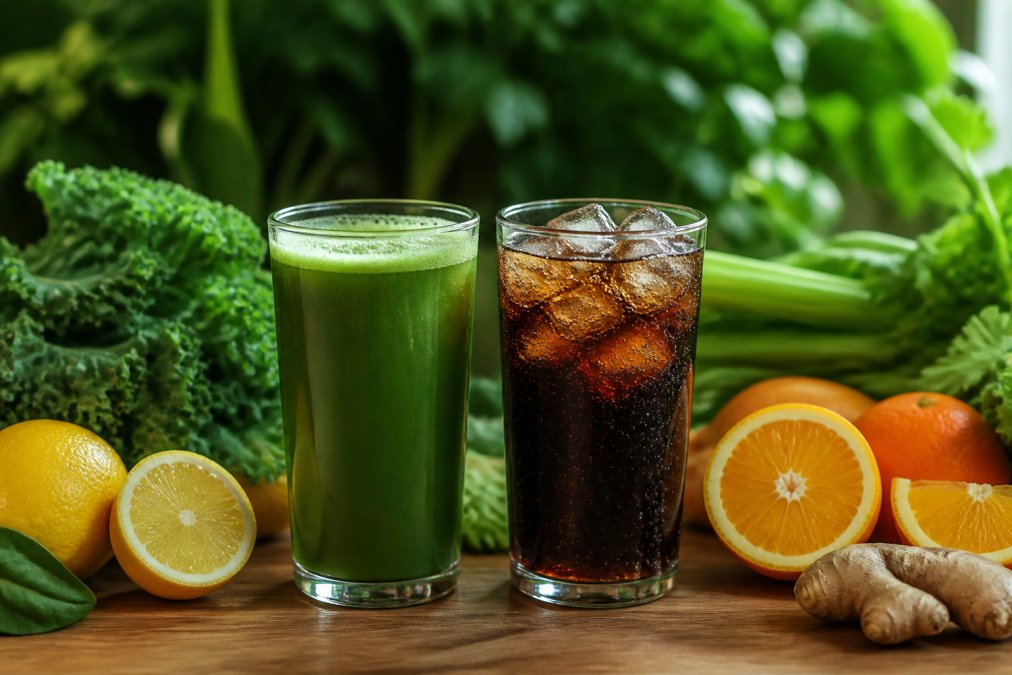
The real difference lies in what else comes with the sugar. Soda delivers empty calories, sugar, water, carbonation, and artificial flavoring. Juice carries micronutrients, antioxidants, and phytonutrients that your body can use. However, those micronutrients don't offset the metabolic damage of consuming liquid sugar in large quantities. Store-bought juice has another problem: pasteurization and processing strip away heat-sensitive vitamins and enzymes, and commercial juice oxidizes over weeks in storage. Fresh-pressed juice begins losing nutrients the moment it's made, which is why Roxberry Juice Co. emphasizes immediate consumption and minimal processing.
If you're choosing between them, juice offers a nutritional edge that soda cannot match. But the real question is whether either belongs in your daily routine at all.
How Juice and Soda Affect Blood Sugar and Insulin Response
Your body treats liquid sugar fundamentally differently than solid food. When you drink juice or soda, you bypass the mechanical digestion that whole fruits require. The fructose and glucose hit your small intestine rapidly, triggering an immediate insulin response.
Insulin resistance develops over time through repeated blood sugar spikes. Soda drinkers face this risk daily, while juice drinkers who consume large quantities face a similar risk, though micronutrients and antioxidants may offer some protective benefit. Glycemic load, which accounts for portion size and total carbohydrate content, tells the more important story than glycemic index alone. A single glass of juice might have a moderate glycemic index, but two glasses daily creates a significant cumulative glycemic load.
Liquid calories don't trigger the same fullness signals as solid food. You can drink 200 calories of juice and still feel hungry an hour later. This means juice drinkers often consume more total calories without realizing it. Fresh-pressed juice with pulp intact slows glucose absorption slightly, producing a gentler blood sugar response than clarified juice.
Nutritional Value: Fresh Pressed Juice vs. Store Bought and Soda
Fresh-pressed juice made minutes before consumption retains most of its vitamin C, enzymes, and heat-sensitive phytonutrients. Oxidation begins immediately after pressing, so juice loses measurable nutritional value within days. This is why juice bars like Roxberry Juice Co. emphasize freshness as a core value.
Store-bought juice undergoes pasteurization, which destroys some heat-sensitive vitamins and enzymes. By the time you drink it, vitamin C content may be 30-50% lower than fresh-pressed juice (peer-reviewed research). Soda contains virtually no vitamins, minerals, or phytonutrients, it's pure sugar, water, carbonation, and flavoring chemicals.
If you're going to drink juice, make it fresh-pressed and consumed immediately. Cold-pressed juice retains more nutrients than pasteurized juice. Juice with pulp contains more fiber than clarified juice. Between store-bought juice and soda, juice wins nutritionally, but the margin is closer than most assume.
The Fiber Factor: Why Whole Fruit Wins Over Liquid Calories
Dietary fiber slows glucose absorption, feeds beneficial gut bacteria, and creates satiety. Juice removes most fiber by straining away the pulp. When you eat an apple, you consume roughly 4 grams of fiber (usda.gov). Apple juice contains less than 1 gram. That fiber slows digestion, stabilizes blood sugar, and keeps you full.
Fresh-pressed juice made with pulp intact retains some fiber and produces a gentler blood sugar response than clarified juice. If you want the nutritional benefits of fruit, eat the fruit. If you want to drink something, fresh-pressed juice with pulp is a reasonable compromise, but the whole fruit always wins from a fiber and satiety perspective.
Benefits of Daily Green Juice for Metabolic Health
Green juice is typically lower in sugar than fruit juice and packed with micronutrients and phytonutrients. A green juice made primarily from leafy greens, celery, and cucumber delivers vitamins, minerals, and antioxidants without the glucose spike that fruit juice produces. Leafy greens contain magnesium, which regulates blood sugar, and chlorophyll, which has anti-inflammatory properties.
The problem with "daily green juice" is that it often becomes a substitute for eating vegetables rather than a complement. A 16-ounce green juice might contain the nutrient equivalent of a salad but lacks the fiber and satiety of that same salad. You'd be better off eating the vegetables and drinking water.
Green juice has a role if you're traveling, managing a demanding schedule, or struggling to eat enough vegetables. Keep portions reasonable, 8 to 12 ounces, not 16 or 20, and treat it as a supplement to whole food, not a replacement. Roxberry Juice Co. offers green juice options specifically formulated to support energy and digestion without excess sugar. A juice heavy on leafy greens and vegetables is metabolically different from one heavy on fruit.
How to Transition From Soda to Juice Responsibly
If you're a regular soda drinker considering a switch to juice, gradual transition matters. Start by reducing soda volume rather than eliminating it overnight. If you drink three sodas daily, cut to two for a week, then one, then replace it with juice. This gives your body time to adjust to lower caffeine intake.

Don't assume juice will satisfy the same craving as soda. Soda offers carbonation, caffeine, and intense sweetness. Juice offers natural sweetness and nutrition but lacks the fizz and stimulant effect. Consider alternatives like sparkling water with fresh juice or green juice with matcha or green tea.
Pay attention to portion size. A typical soda is 12 ounces, while a typical juice serving is 8 ounces. Many people maintain 12 or 16-ounce servings when switching to juice, which actually increases sugar intake. Use smaller glasses and drink water alongside your juice. Monitor your energy and digestion, some people feel better immediately after cutting soda, while others experience a transition period where energy dips before improving.
Understand that juice is not a long-term substitute for soda. It's a bridge. The ultimate goal is drinking water as your primary beverage, with juice as an occasional treat.
Glycemic Load vs. Glycemic Index: The Technical Difference
The glycemic index measures how quickly a food raises blood sugar on a scale of 0 to 100, but it ignores portion size. Glycemic load accounts for both the glycemic index and total carbohydrate content: (glycemic index × grams of carbohydrate) ÷ 100.
A food can have a high glycemic index but a low glycemic load if the serving size is small. Juice typically has a high glycemic index, but glycemic load depends on portion size. An 8-ounce glass of juice might have a moderate glycemic load, while a 16-ounce glass has a much higher one. When evaluating whether juice is better than soda, look at glycemic load, not just glycemic index. Portion control matters more than the source of the sugar.
The Satiety Question: Which Keeps You Fuller Longer
Satiety is triggered by mechanical fullness, nutrient density, fiber content, and consumption time. Both juice and soda fail on most of these fronts, they provide minimal mechanical fullness, are consumed quickly, and don't suppress hunger as effectively as solid food.
Studies consistently show that liquid calories don't suppress hunger as effectively as solid food calories (peer-reviewed research). You can drink a 200-calorie juice and feel hungry an hour later, but eating 200 calories of solid food keeps you satisfied for hours.
The one exception is juice with substantial fiber content or blended juice smoothies, which retain all fiber and pulp and produce greater satiety than pressed juice. If you're choosing between juice and soda for satiety, juice wins marginally because of its micronutrient content. But neither is a good choice for keeping you full. Water, whole fruit, or a smoothie would be superior options.
| Factor | Juice | Soda |
|---|---|---|
| Sugar Content | High (natural) | High (added) |
| Micronutrients | Moderate to High | None |
| Dietary Fiber | Low to Moderate | None |
| Satiety | Low | Very Low |
| Blood Sugar Impact | Moderate to High | High |
| Caloric Density | Moderate | Moderate |
Juice is technically better than soda, it offers genuine nutritional advantages that soda cannot match. But both are better consumed occasionally, not daily. If you're a regular soda drinker, switching to fresh-pressed juice is a meaningful upgrade. The real goal should be transitioning beyond both toward water as your primary beverage, with whole fruit and vegetables as your primary source of nutrition. At Roxberry Juice Co., we believe fresh-pressed juice has a place in a health-conscious lifestyle as a nutrient-dense supplement, not as a substitute for whole food or a daily habit. The best beverage choice is the one that supports your long-term health.
Frequently Asked Questions
What is healthier, soda or juice?
Juice is generally healthier than soda because it contains vitamins, minerals, and antioxidants from real fruits and vegetables, whereas soda offers empty calories with no nutritional benefit. However, both contain significant sugar. Fresh-pressed juice retains more micronutrients and lacks the artificial additives and caffeine found in soda. The key difference is that juice provides some nutritional value, while soda provides none, but portion control matters for both due to their sugar content and impact on blood sugar levels.
Does fruit juice spike blood sugar like soda?
Yes, juice can spike blood sugar similarly to soda because both deliver liquid sugar directly into the bloodstream without the fiber that slows glucose absorption. However, the glycemic load differs: a 12-ounce serving of juice typically contains 24-36 grams of natural sugar, while soda contains similar amounts of added sugar. The critical difference is that whole fruit includes fiber, which moderates the insulin response. Freshly pressed juice without added sugars is slightly better than soda because it retains some micronutrients, but neither should be consumed in large quantities if you're managing blood sugar or insulin resistance.
Can I replace soda with juice?
Replacing soda with juice is a step toward better health, but it's not a perfect swap. Juice eliminates artificial additives, caffeine, and phosphoric acid from soda, and provides vitamins and minerals. However, juice still contains concentrated natural sugars without the fiber of whole fruit, so it can affect weight management and metabolic health similarly. A better approach is to transition gradually: start by mixing juice with water to reduce sugar intake, then move toward whole fruits, green vegetables, and water as your primary beverages. This protects your teeth, stabilizes blood sugar, and supports satiety better than juice alone.
Is it healthy to drink fresh-pressed juice every day?
Daily fresh-pressed juice consumption can be part of a healthy diet, but moderation is essential. A single 8-ounce serving of fresh-pressed juice provides concentrated nutrients and antioxidants without added sugars or artificial ingredients. However, drinking multiple servings daily introduces excessive natural sugars, which can contribute to weight gain, insulin resistance, and type 2 diabetes risk. For optimal health, limit fresh-pressed juice to one serving per day as a supplement to whole fruits and vegetables, not a replacement. Pair juice with protein or healthy fats to slow sugar absorption and improve satiety.