 comparison
Smoothie King vs Tropical Smoothie Cafe: Nutrition Differences
Last Updated: November 6, 2026
Quick Summary
Nutritional differences between smoothie chains come down to standard recipes, cup sizes, and add-ins, not the fruit itself. To compare fairly, hold serving size constant at 20 ounces and check calories, total and added sugar, protein, and fiber per ounce, since published panels reflect only the default build.
- A meal-replacement smoothie should carry at least 20 grams of protein and 400 to 800 calories.
- Going from a 20-ounce to a 24-ounce cup adds roughly 20 percent more of everything.
- Blending keeps the fiber that juicing removes with the pulp and skin.
- Order lower-sugar by choosing a smaller size and skipping honey, agave, or syrup.
- Published nutrition panels reflect the default recipe at the default size, so recalculate after customizing.
Table of Contents
- Why Smoothie Chain Nutrition Varies So Much
- Smoothie King Nutrition Facts: What the Menu Data Shows
- Tropical Smoothie Cafe Nutrition: Calories, Sugar, and Protein
- Smoothie Chain Calories and Sugar: A Side-by-Side Look
- Fiber, Whole Fruit, and What Blending Does to Nutrients
- How to Order a Low-Sugar Smoothie at Any Chain
- Comparing Smoothie Chains by Dietary Need and Use Case
- Download the Roxberry App to Build Your Next Order
- Frequently Asked Questions
Why Smoothie Chain Nutrition Varies So Much
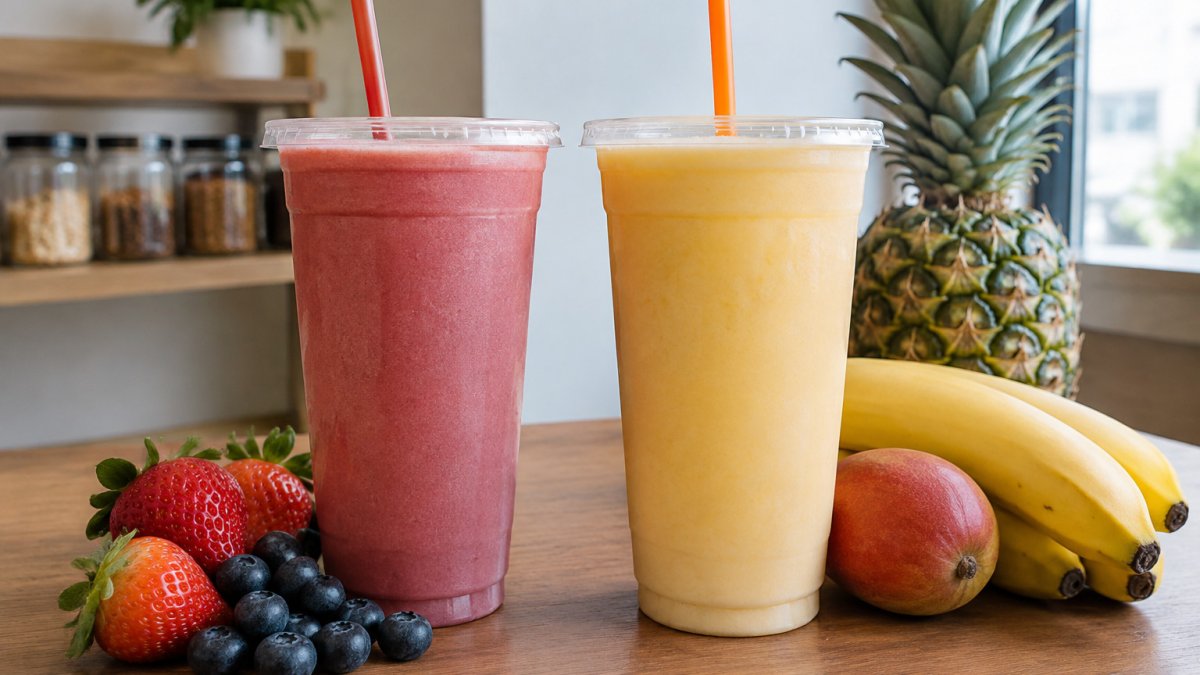
Nutritional differences between smoothie chains start with the recipe, not the fruit. Two shops can list the same mango-pineapple smoothie and deliver wildly different calories, sugar, and protein because each uses its own standard recipe, cup size, and add-ins. At Roxberry Juice Co., we blend real fruits and vegetables to order, which is why we encourage customers to read the numbers before assuming any chain's drink is "healthy."
A smoothie is a blended beverage made from fruit, vegetables, dairy or plant milk, ice, and often sweeteners or protein powder. Because the ingredients and proportions change from shop to shop, a chain name alone tells you almost nothing about what's in the cup.
Standard Recipes, Serving Sizes, and What Labels Leave Out
Chain nutrition panels usually reflect a standard recipe at a set size, often 20 ounces. Change the size or add protein, honey, or granola, and the totals move. Houston Methodist's guidance on healthy smoothies notes that a meal-replacement smoothie should carry at least 20 grams of protein and 400 to 800 calories, which shows how much a "smoothie" can vary depending on what goes in it. The label is a starting point, not the whole story.
Smoothie King Nutrition Facts: What the Menu Data Shows
Some chains publish per-item nutrition panels and calculators that recalculate totals when you change cup size or add a booster. Those tools are useful, but they only answer half the question. It tells you what is in one Smoothie King drink; it does not tell you how that drink stacks up against an equivalent cup at another chain.
To make the data comparable, hold two variables constant: the serving size and the base recipe. A 20-ounce standard blend at one shop is not the same drink as a 32-ounce "large" at another, and a fruit-and-juice base is not the same as a fruit-and-yogurt base. When you line up equivalent sizes, three numbers do most of the work:
- Calories per 20 ounces, the fastest way to compare energy density across chains.
- Total sugar and added sugar per 20 ounces, total sugar includes fruit; added sugar is the syrup, juice base, or sweetener poured in.
- Protein and fiber per 20 ounces, the two numbers that most affect fullness and how quickly sugar hits the bloodstream.
A useful habit is to divide the menu number by the ounce count and compare per-ounce values. A drink that lists 300 calories at 20 ounces is 15 calories per ounce; the same 300 calories at 32 ounces is about 9.4 per ounce. The per-ounce figure is what lets you compare a 20-ounce standard blend to a 24-ounce medium at a different chain without being fooled by cup size.
Watch out: the calculator updates totals for size and add-ins, but it does not separate naturally occurring sugar from added sugar for you. You still have to read the ingredient list to see whether the sweetness comes from fruit, a juice base, or a syrup.
If you want to line up our numbers against theirs, our own nutritional information gives you the starting point, and the same per-ounce method applies.
Tropical Smoothie Cafe Nutrition: Calories, Sugar, and Protein
Smoothie menus across chains often rely on fruit-forward blends plus add-ins such as protein, supplements, and sweeteners, and published nutrition panels generally reflect a default build at a set size. The practical takeaway is that calories and sugar climb quickly once sweeteners, extra fruit, or protein blends enter the cup, but the size of that climb depends on which add-in you choose, so it is worth breaking down.
Three levers move a Tropical Smoothie Cafe order the most:
- Cup size. Going from a 20-ounce to a 24-ounce cup adds roughly 20 percent more of everything in the drink. Standardizing to 20 ounces is a fair way to compare drinks across chains.
- The base. A blend built on juice or a sweetened base carries more added sugar than one built on whole fruit and ice. The ingredient list, not the front-of-menu description, tells you which you are getting.
- Add-ins. Protein powder, yogurt, and supplements add calories and protein; honey, agave, and syrups add sugar without protein or fiber. Counting boosts and sweeteners separately is the difference between a 300-calorie snack and a 600-calorie meal replacement.
That last point is where most guides stop short. A smoothie's sugar is not all the same. Some comes from the fruit itself and some is added during blending, and the two read differently on a label and behave differently in your body. For a closer look at spotting the difference on a label, our guide to signs of added sugar in fruit juice walks through what to scan for.
Watch out: published panels reflect the default recipe at the default size. If you customize, extra fruit, a different milk, a booster, the menu number no longer describes your cup, so recalculate rather than trusting the posted figure. Such modifications often lead customers toward alternative sources of stimulation like organic energy drinks to sustain their focus without relying on the hidden sugar content of a modified smoothie.
To compare Tropical Smoothie Cafe fairly against another chain, pull the 20-ounce standard-recipe numbers for calories, total sugar, added sugar, protein, and fiber, then divide by 20 to get per-ounce values. That is the same method you would use on any chain's menu, and it is the only way to keep a 24-ounce medium from being compared to a 20-ounce standard blend.
Smoothie Chain Calories and Sugar: A Side-by-Side Look
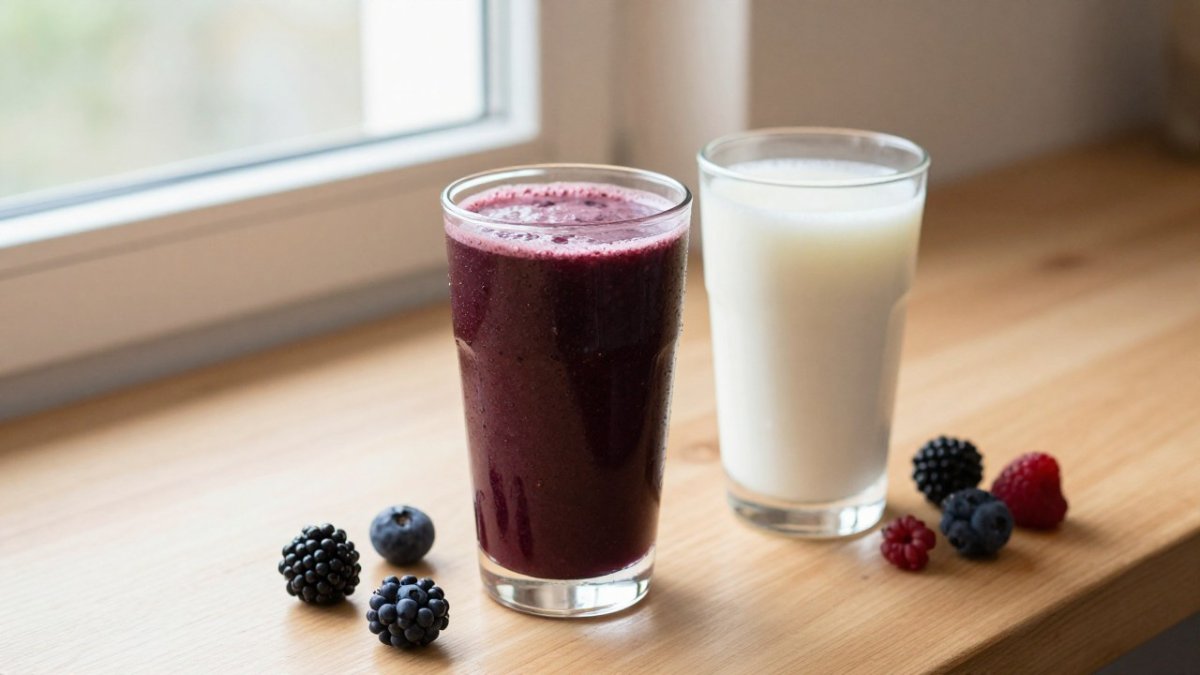
Comparing smoothie chain calories and sugar fairly means holding the serving size constant. A 20-ounce standard recipe at one chain is not the same drink as a 32-ounce "large" at another, so a raw calorie number can mislead. Line up equivalent sizes and the picture gets clearer.
| What to Compare | Why It Matters | What to Check |
|---|---|---|
| Serving size | Larger cups add calories and sugar fast | Standardize to 20 oz |
| Added sugar | Drives blood-sugar spikes | Read the ingredient list |
| Protein | Supports fullness | Aim for 20g+ per meal drink |
| Fiber | Slows sugar absorption | Look for whole fruit, not juice |
| Add-ins | Hidden calories and sugar | Count boosts and sweeteners |
Added Sugar vs. Naturally Occurring Sugar
Added sugar is sweetener put into a drink during preparation, while naturally occurring sugar comes from the fruit itself. The two behave differently in your body and read differently on a label. A smoothie can be high in total sugar and still contain no added sweeteners, or moderate in sugar and loaded with syrup.
For a closer look at spotting the difference on a label, our guide to signs of added sugar in fruit juice walks through what to scan for.
Fiber, Whole Fruit, and What Blending Does to Nutrients
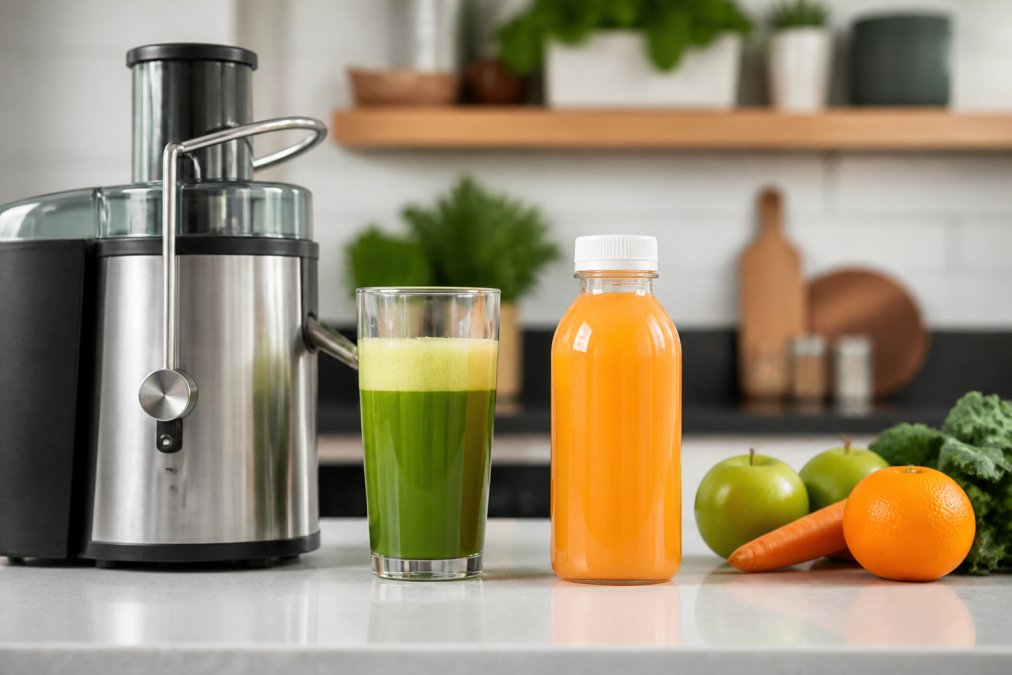
Blending keeps fiber that juicing removes. When you juice, the pulp and skin are stripped away, taking much of the fiber with them; when you blend whole fruit, that fiber stays in the cup. research published in Frontiers in Nutrition suggests fruit smoothies may have higher nutrient bioavailability than solid fruit because blending breaks down cell walls, though the same research notes smoothies are not automatically a nutritionally equal substitute for whole fruit or a solid meal.
That fiber is the reason a thick, blended smoothie tends to keep you fuller than a thin juice. It also slows how quickly sugar hits your bloodstream (The Effects of Soluble Dietary Fibers on Glycemic Response). Blending to order rather than pouring from a concentrate keeps more of that structure intact.
How to Order a Low-Sugar Smoothie at Any Chain
Ordering a lower-sugar smoothie comes down to three moves: pick a smaller size, skip the added sweeteners, and lean on vegetables and protein over extra fruit. These swaps work at any chain, including ours.
- Choose the smallest size that still satisfies you
- Ask for no added honey, agave, or syrup
- Add protein or Greek-style yogurt for fullness
- Blend in spinach or greens for fiber with little sugar
- Skip granola and sweetened toppings, or ask for them on the side
- Request whole fruit instead of juice or concentrate as the base
For a deeper list of ingredients and swaps, see our guide to low-sugar smoothie ingredients for weight loss.
Comparing Smoothie Chains by Dietary Need and Use Case
The best smoothie chain depends on what you need from the cup. A post-workout recovery drink calls for protein; a quick breakfast for a busy parent calls for fiber and staying power; a dairy-free customer needs a base that fits their diet.
Best for a protein-forward recovery drink: a shop that lets you add protein and shows the updated totals. Best for whole-fruit fiber: a shop that blends whole fruit rather than pouring concentrate. Best for dietary restrictions: a menu with clear ingredient lists and easy substitutions. If you're managing restrictions, our guide to customizing restaurant meals for dietary restrictions shows how to adjust an order without losing flavor.
Download the Roxberry App to Build Your Next Order
Reading labels is step one; building a drink that fits your day is step two. At Roxberry Juice Co., we blend smoothies to order from real fruits and vegetables, press our juices fresh, and top our açaí bowls with our signature Roxberry Granola, so you can see and taste what goes in. Our locally owned shops serve people who want a quick, nourishing breakfast or lunch with transparent ingredients.
The next time you're comparing smoothie chains, start with the numbers, then build the cup you actually want. Download the Roxberry app to customize your order and make your next stop a fast one.
Frequently Asked Questions
What is the healthiest smoothie chain?
There is no single healthiest chain because nutritional value depends on the ingredients used and how a drink is prepared, . A 20-ounce smoothie with whole fruit, leafy greens, and added protein can be nutrient-dense, while one built on fruit concentrates and sweeteners can be calorie-dense. Compare smoothie chains by reading menu nutrition for the exact size and add-ins you plan to order, not by the brand name alone.
How do smoothie chain calories and sugar compare across menus?
Calories and sugar shift with size, base, and add-ins, so the same drink name can land in very different ranges from one chain to another. Many chains publish nutrition for menu items, and some offer calculators that update totals when you change size or add-ins. Use the published numbers as your baseline, then check the equivalent drink at another chain at the same ounce size before deciding which fits your day.
Are smoothies from chain restaurants actually healthy?
Not automatically. Smoothies may provide less satiety than solid food with similar energy, and some store-bought smoothies can be high in calories and added sugars. A smoothie is not a nutritionally equivalent substitute for whole fruit or a solid meal. It can still be a useful option when it includes real fruits and vegetables, a protein source, and a portion size that matches your needs.
How can I order a low-sugar smoothie at a chain?
Start with an unsweetened base such as water, unsweetened almond milk, or fresh-pressed juice instead of a sweetened blend. Ask for no added sweeteners, syrups, or frozen yogurt, and choose whole fruit over fruit concentrate or sorbet. Add protein through whey, plant-based powder, or collagen where offered, and pick the smallest size that satisfies you.
The gap between a "healthy" smoothie and a sugary one often comes down to a single add-in. Build your next order with real fruit, fresh-pressed juice, and ingredients you can see, and let the cup do the work. Get started with Roxberry Juice Co. and blend a smoothie that fits your goals.