 how-to
How to Pack a Balanced Lunch for Toddlers: 7 Easy Steps
Last Updated: October 22, 2026
Quick Summary
A balanced lunch for toddlers combines five parts: a protein, a whole grain or starchy food, a fruit, a vegetable, and a calcium-rich or healthy-fat food. Portions should be small, since a toddler's stomach is about the size of their fist, so a few tablespoons of each food is a full serving. Pack one extra safe food your child always eats to protect against a full lunch rejection.
- Build quick lunches from a short list of easy-to-pack meals and rotate them.
- Check your daycare's written food policy before packing, since rules change every school year.
- Use an insulated lunchbox with a frozen gel pack to keep cold foods cold.
- Quarter grapes and cherry tomatoes lengthwise and slice hot dogs lengthwise into strips.
- Pack smaller portions and track what comes back for a week to cut waste.
Table of Contents
- The 5-Part Formula for a Balanced Packed Lunch for Toddlers
- Healthy Toddler Lunch Ideas That Cover Every Food Group
- Quick Toddler Lunch Ideas for Busy Mornings
- Daycare Lunch Ideas for Toddlers That Follow Center Rules
- Food Safety and Temperature Control in the Lunchbox
- Choking-Risk Preparation and Toddler-Friendly Portions
- Reducing Waste and Handling Uneaten Food
- Frequently Asked Questions
The 5-Part Formula for a Balanced Packed Lunch for Toddlers
A balanced lunch for toddlers is a packed meal that combines five parts: a protein, a whole grain or starchy food, a fruit, a vegetable, and a calcium-rich or healthy-fat food, and that is exactly what a balanced lunch means. That is the whole formula. Everything else is detail. Mastering these components becomes much simpler when you incorporate effective meal planning into your weekly routine to ensure that every lunchbox remains consistently nutritious.
At Roxberry Juice Co., we think about real food the same way: simple parts, put together well. That mindset makes lunch packing faster.
Here is the structure we use:
- Protein - eggs, beans, chicken, fish, or yogurt
- Whole grain or starch - bread, pasta, crackers, or rice
- Fruit - fresh, soft, and easy to hold
- Vegetable - cooked soft or cut small
- Healthy fat or dairy - avocado, cheese, or nut butter (if allowed)
You do not need all five in equal amounts. You need all five to show up.
How Much Food Toddlers Actually Need
Portions should be small. A toddler's stomach is about the size of their fist, so a few tablespoons of each food is a full serving. Many parents pack too much and then worry when food comes home.
Appetite swings wildly at this age. A child who eats a huge lunch on Monday may pick at Tuesday's. That is normal, not a failure.
Serve small amounts and offer more if your child asks. A packed lunch with small portions across all five groups beats one giant sandwich.
Healthy Toddler Lunch Ideas That Cover Every Food Group
Start with the main meal, then build sides around it. A high-protein entree anchors the box. Everything else fills the gaps.
Protein, Whole Grains, and Produce: What to Include
Protein keeps a toddler full and supports growth. Good options include:
- Hard-boiled egg, sliced
- Shredded chicken
- Soft beans or lentils
- Flaked fish, checked for bones
- Full-fat yogurt
Whole grains and starchy foods supply steady energy. Try whole-grain bread, small pasta shapes, brown rice, or whole-grain crackers. These travel well and hold up in a lunchbox.
Fruit and vegetables bring color and nutrients. Soft options work best: berries, banana, cooked carrot, peas, or avocado. Cut everything small.
Dairy and healthy fats round out the meal. Cheese cubes, yogurt, avocado, and nut butter (where allowed) all work.
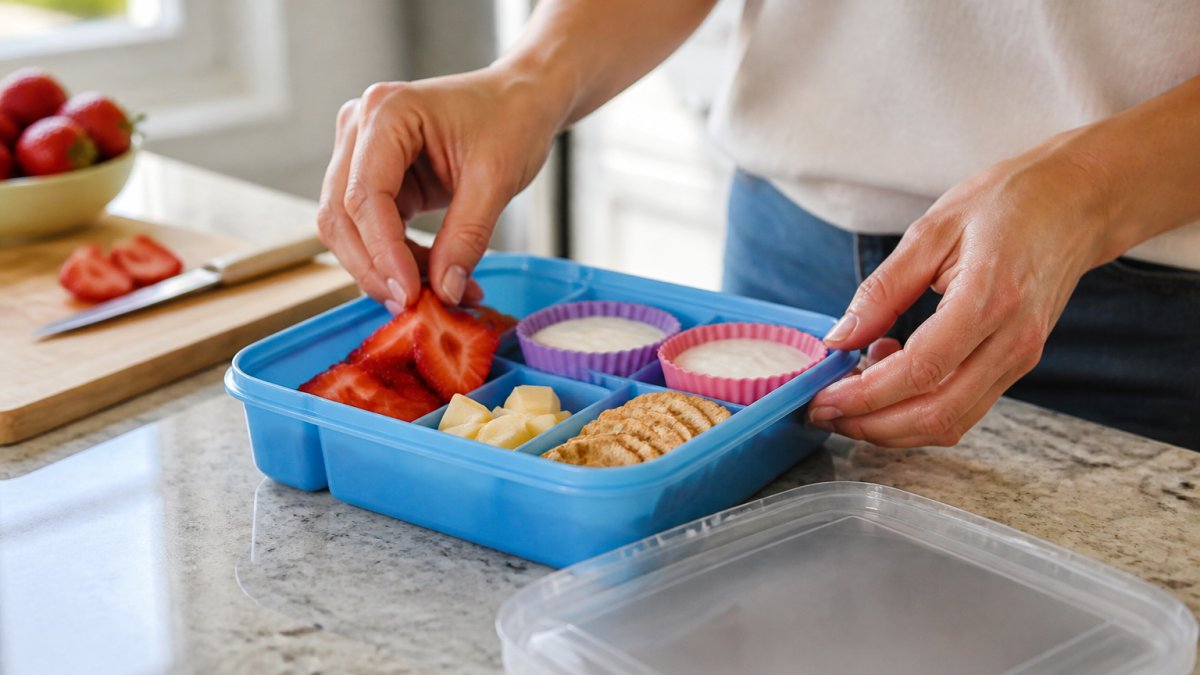
A simple example: chicken strips, whole-grain pasta, strawberries, soft peas, and a cheese stick. Five parts, one box.
Quick Toddler Lunch Ideas for Busy Mornings
Speed comes from repetition, not creativity. Build a short list of easy-to-pack meals and rotate them.
Here are quick toddler lunch ideas for mornings when you have five minutes:
- Egg and toast box: sliced hard-boiled egg, whole-grain toast strips, berries, cucumber
- Pasta and pea bowl: small pasta, peas, cheese cubes, pear slices
- Cracker plate: whole-grain crackers, cheese, turkey slices, grapes (quartered)
- Yogurt and dip box: yogurt, soft veggie sticks, hummus, banana
- Leftover dinner: shredded chicken, rice, cooked broccoli, apple slices
Cook once, pack twice. Extra pasta or chicken from dinner becomes tomorrow's lunch with zero morning effort.
Daycare Lunch Ideas for Toddlers That Follow Center Rules
Daycare lunch ideas for toddlers have to clear two hurdles: the center's food policy and your child's ability to eat independently. Check the rules before you pack a single box.
Most centers hand out a written policy. Read it once and keep a copy on the fridge. Common rules cover:
- Nut-free bans - many centers prohibit peanuts and tree nuts entirely
- No choking-risk foods - whole grapes, hot dogs, and hard candy are often banned
- No glass containers - most require plastic or bento boxes
- Labeling - every container needs your child's name
Allergies, Nut-Free Policies, and Safe Substitutions
If your child has an allergy, talk to the daycare director before the first day. Ask how they handle substitutions and cross-contact.
Safe swaps for common allergens:
- Nut butter -> sunflower seed butter or cream cheese
- Cow's milk yogurt -> coconut or soy yogurt
- Egg -> beans, chicken, or soft tofu
- Wheat bread -> gluten-free crackers or rice cakes
Pack a small ice pack if the center does not refrigerate lunches. Label it clearly.
Food Safety and Temperature Control in the Lunchbox
Bacteria grow fast between 40°F and 140°F, so keep cold foods cold. An insulated lunchbox with a frozen gel pack keeps food safe for a normal school day.
Follow these basics:
- Use an insulated bag with a gel ice pack for yogurt, cheese, and meat
- Pack hot foods in a thermos, and preheat it with boiling water first
- Keep the lunchbox out of direct sun
- Discard uneaten dairy and meat after lunch
Wash the lunchbox and its containers every single day. Bacteria hide in seams and corners.
A simple rule: if you would not eat it after four hours on the counter, do not send it.
Choking-Risk Preparation and Toddler-Friendly Portions
Cut food small and soft, and change the shape, not just the size. Choking happens when a round, firm piece plugs the airway, so the goal is to remove roundness and firmness before the food goes in the box.
Follow these steps:
- Grapes and cherry tomatoes: quarter them lengthwise, not crosswise, so they are no longer round
- Hot dogs and sausages: slice lengthwise into strips first, then cut small, never leave coin-shaped rounds
- Carrots and apples: cook soft, grate, or cut into thin matchsticks
- Nut butter: spread thin on bread or crackers, never in a thick spoonful
- Popcorn, whole nuts, hard candy, and marshmallows: skip them entirely for toddlers
- Chunks of cheese or meat: cut into thin strips or small dice rather than cubes
Finger foods should be easy to pinch. Aim for pieces about the size of a pea or a small bean, and test softness with your thumb, if you can mash a piece easily, your toddler can too.
Why Shape and Firmness Matter
A round, firm food can seal the airway like a plug. Quartering a grape lengthwise breaks that seal; slicing a hot dog lengthwise removes the coin shape. Softening carrots and apples changes firmness so a toddler can chew them with a limited set of molars. These are the same preparation steps many childcare centers require, which is why they often appear in daycare food policies.
Eating Environment Rules
Preparation is only half the job. Choking risk rises when a child eats while moving, laughing, or lying down.
- Have your child sit down to eat, not walk or run with food
- Supervise meals and snacks, especially with new foods
- Keep portions small so your child is not trying to manage a mouthful
- Offer water with the meal, and encourage small bites
Reducing Waste and Handling Uneaten Food
Uneaten food is normal. Toddlers are learning to eat, and a full box coming home does not mean the lunch failed.
Track what comes back for a week. Patterns show up fast. If carrots always return, swap them for a vegetable your child eats.
Ways to cut waste:
- Pack smaller portions and add more if asked
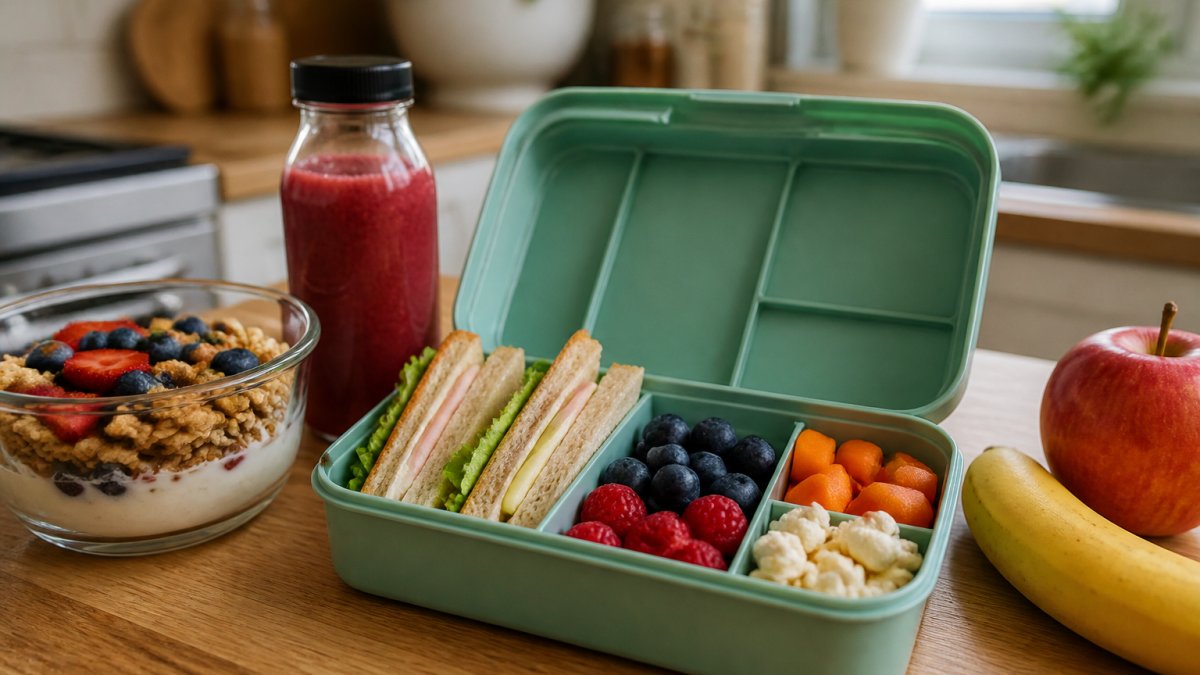
- Use a bento box with compartments so foods stay separate
- Avoid soggy foods that sit all morning
- Send a reusable water bottle instead of juice boxes
Talk to your child about lunch without pressure. Ask what they liked, not what they ate.
At Roxberry Juice Co., we see the same thing with grown-ups: real fruit and simple ingredients get eaten, complicated food gets left behind.
Frequently Asked Questions
How much food should I pack for a toddler's lunch?
Start with roughly one tablespoon of each food per year of age as a rough guide, so a two-year-old might get two tablespoons of pasta, two of protein, and a small handful of fruit. Appetite varies day to day, so pack small portions and add a backup snack rather than filling the box. A balanced lunch should include a protein, a whole grain or starchy food, a fruit, a vegetable, and a dairy or calcium source. Offer water alongside and let your toddler decide how much to eat.
What is a balanced packed lunch for toddlers?
A balanced packed lunch for toddlers combines all five food groups in toddler-sized portions: a protein such as shredded chicken or beans, a whole grain like whole-grain bread or pasta, a fruit, a vegetable, and a dairy or calcium-rich food such as yogurt or cheese. Add a small source of healthy fat like avocado or nut butter where allowed. The mix matters more than any single item, and a lunch that hits most groups most days is a win.
How can I pack a toddler lunch that stays fresh until lunchtime?
Use an insulated lunchbox with a freezer pack for anything that needs to stay cold, like yogurt, cheese, or cut fruit. Keep hot foods in a separate thermos and fill it with boiling water for a few minutes before adding food. Pack cut produce dry and add a separate dip container so it does not get soggy. Avoid packing foods that spoil quickly in warm conditions, and check your daycare's rules on what can be sent and how it must be stored.
What are safe finger foods to pack for toddlers?
Safe finger foods are soft, easy to chew, and cut small. Quarter grapes and cherry tomatoes lengthwise, cut hot dogs into thin strips rather than coins, and shred or finely chop raw vegetables. Soft options like banana slices, avocado chunks, steamed carrot, cheese cubes, and whole-grain crackers work well. Avoid whole nuts, popcorn, and hard raw chunks for children under four, and always supervise eating. These choking-risk preparation steps matter as much as the food choices themselves.
Packing lunch every morning is a grind, and some days it falls apart. That is where a quick backup helps. When the lunchbox plan fails, our fresh-pressed juices, blended-to-order smoothies, and açaí bowls give parents a real-food option on the way out the door. Every drink starts with real fruits and vegetables, and our signature Roxberry Granola tops the bowls for a little extra substance. Download our app and order ahead, so a rushed morning still ends with something wholesome.