 blog
blog
Nekter Juice Bar vs Competitors: A 2026 Comparison
Table of Contents
- Why Nekter Juice Bar Dominates the Market
- Fresh Pressed Juice Benefits: What Sets Quality Chains Apart
- Best Açaí Bowls Near Me: How Competitors Stack Up
- Ingredient Sourcing and Transparency Across Chains
- Price-to-Value: What You Actually Get for Your Money
- Dietary-Specific Options: Finding What Works for You
- Local Ownership vs. Chain Growth: The Real Difference
- Frequently Asked Questions
Last Updated: August 24, 2026
Why Nekter Juice Bar Dominates the Market
The cold-pressed juice category has exploded over the past five years. When comparing nekter juice bar vs competitors, you're asking which chain delivers the freshest ingredients, most transparent sourcing, and best value.
Nekter Juice Bar built its reputation on fresh-pressed juices made from real fruits and vegetables, blended to order, with zero artificial additives. The real differentiator is operational: Nekter has scaled aggressively without compromising ingredient quality, a balance many chains struggle to maintain.
Health-conscious consumers aren't just buying a product, they're buying confidence in that product. Winners in this space understand that chains prioritizing speed over sourcing transparency lose customers the moment a competitor emphasizes ingredient quality. Chains charging premium prices without explaining costs see lower repeat purchase rates.
Fresh Pressed Juice Benefits: What Sets Quality Chains Apart
Fresh-pressed juice delivers nutrients your body absorbs quickly. Unlike pasteurized juice that's been heat-treated for shelf stability, cold-pressed juice retains enzymes and heat-sensitive vitamins that support digestion and energy levels.
Quality cold-pressed juice differs from mass-produced alternatives in three ways: extraction method, ingredient sourcing, and time-to-consumption. Hydraulic presses extract more juice from the same volume of produce compared to centrifugal methods, yielding higher nutrient density per ounce (peer-reviewed research). Organic or locally-sourced produce contains higher micronutrient levels than conventional alternatives. Juice consumed within 24-48 hours of pressing maintains enzyme activity far better than juice sitting in a cooler for a week (the FDA).
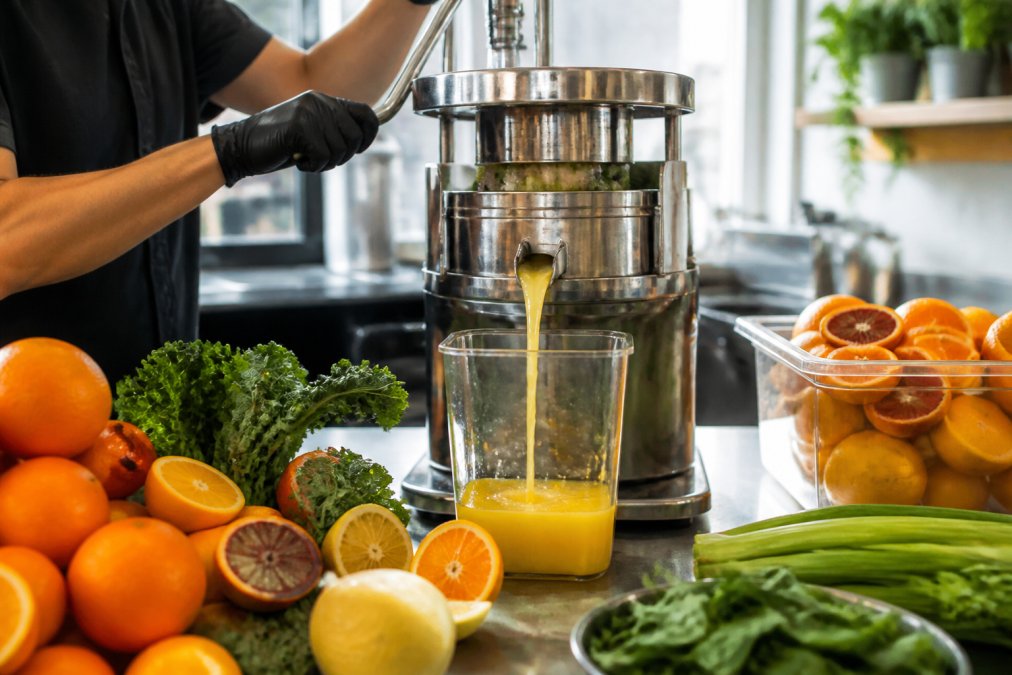
Nekter Juice Bar emphasizes cold-pressed extraction and sources produce regionally where possible. This increases per-unit costs compared to chains using centrifugal presses and nationally-distributed produce, but translates to juice that tastes noticeably brighter and delivers the nutrient profile customers expect at premium pricing.
Health-conscious professionals and fitness enthusiasts seek transparency about what they're consuming. A juice chain that can explain its sourcing, pressing method, and storage protocols has a significant advantage over one that cannot.
Best Açaí Bowls Near Me: How Competitors Stack Up
When comparing açaí bowl offerings, you're evaluating three dimensions: base quality, topping variety, and price-to-portion ratio. The base is where most chains either commit to quality or cut corners.
Authentic açaí comes from the Amazon region and is perishable. Chains sourcing genuine açaí and freezing it properly maintain the fruit's nutritional profile and taste. Chains using açaí concentrate or blended bases with added sugars deliver cheaper products that don't justify premium positioning.
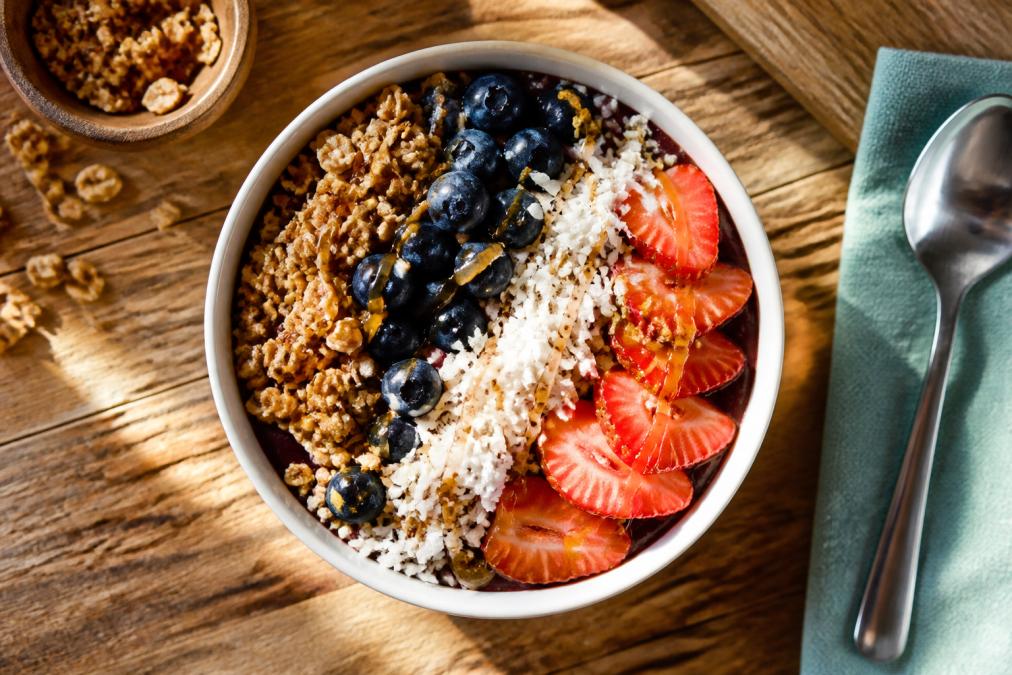
Nekter Juice Bar offers açaí bowls with multiple base options and customizable toppings, emphasizing base quality and topping freshness. Competitors vary widely, some offering authentic açaí bases, others using blended alternatives with added sugars not disclosed on ingredient labels.
Chains offering superfoods like goji berries, hemp seeds, and raw almonds target health-conscious customers willing to pay for premium ingredients. Chains standardizing toppings around granola and honey optimize for volume and speed.
Roxberry Juice Co. tops its açaí bowls with signature Roxberry Granola, combining house-made granola with fresh fruit and natural toppings. This differentiates the bowl experience beyond just the açaí base.
The best açaí bowl depends on your dietary priorities. Bowls with nuts and seeds deliver more nutritional density for satiety. Bowls emphasizing raw fruit and probiotic toppings support digestive health. Budget-conscious options exist but typically don't compete on ingredient quality.
Ingredient Sourcing and Transparency Across Chains
This is where nekter juice bar vs competitors reveals the sharpest divisions. Transparency about sourcing is a proxy for operational rigor.
Chains committing to ingredient transparency disclose: produce origin (local, regional, national, international), whether produce is organic or conventional, and storage duration before use. Chains avoiding these details either don't track them systematically or don't want customers asking questions.
Nekter Juice Bar publishes sourcing information and emphasizes regional produce partnerships where feasible. This transparency costs more operationally, but builds customer trust and justifies premium pricing. healthy energy alternatives.
Many chains claim "natural" ingredients without defining what that means. Natural can mean anything from organic and locally-sourced to conventionally grown with synthetic pesticides. Chains not distinguishing are banking on customers not asking follow-up questions.
Roxberry Juice Co. emphasizes 100% natural ingredients and real fruits and vegetables, ensuring customers know exactly what they're consuming.
Ingredient sourcing directly affects taste, nutrient density, and consistency. Locally-sourced seasonal produce tastes noticeably better than produce shipped nationally and stored for weeks. If a juice chain sources from multiple suppliers at different times of year, the product tastes different seasonally. Chains acknowledging and explaining this variation demonstrate operational honesty.
Price-to-Value: What You Actually Get for Your Money
The real question most customers evaluate constantly: am I getting what I'm paying for?
Juice chain pricing ranges across a spectrum. Budget chains compete on volume and speed, charging less per item but using faster extraction methods and less expensive sourcing. Mid-market chains balance quality and accessibility. Premium chains optimize for ingredient quality and sourcing transparency, accepting lower transaction volume for higher margins.
The price-to-value calculation depends on what you're measuring. If measuring cost-per-ounce, budget chains win. If measuring nutrient density per dollar, premium chains often win because they extract more nutrients from the same produce volume. If measuring convenience and speed, mid-market chains frequently deliver the best balance.
Nekter Juice Bar positions itself in the premium segment, with pricing reflecting cold-pressed extraction, regional sourcing, and operational consistency. The value proposition is juice that tastes noticeably better and delivers higher nutrient density than cheaper alternatives.
Roxberry Juice Co. competes on freshness and transparency. Smoothies blended to order cost more than pre-made alternatives, but customers receive customized products with visible ingredient quality.
The real pricing question isn't "how much does this cost?" but "how much am I willing to pay for what I value?" A budget-conscious customer might visit weekly prioritizing cost. A fitness enthusiast might visit three times weekly prioritizing post-workout nutrient density. A parent might prioritize ingredient transparency over price.
Many customers compare juice chain prices without accounting for portion size, ingredient quality, or customization options. A 16-ounce cold-pressed juice from a premium chain contains more extracted nutrients than a 20-ounce centrifugal juice from a budget chain, even if the budget option costs less per ounce.
| Factor | Budget Chains | Mid-Market Chains | Premium Chains |
|---|---|---|---|
| Extraction Method | Centrifugal | Mixed | Cold-pressed |
| Sourcing Transparency | Minimal | Moderate | Detailed |
| Price per Item | Lower | Moderate | Higher |
| Nutrient Density | Lower | Moderate | Higher |
| Customization | Limited | Moderate | Extensive |
Dietary-Specific Options: Finding What Works for You
Not all juice chains accommodate dietary restrictions equally. Chains winning customer loyalty in this segment make customization obvious and easy.
Dairy-free options are standard across most chains, as juice and smoothie bowls are naturally dairy-free unless the chain specifically adds milk or yogurt. Chains vary in handling nut allergies, sugar content, and ingredient substitutions.
Sugar content is where transparency becomes critical. A 16-ounce juice made from fruit contains natural sugars, typically 20-35 grams depending on fruit selection (usda.gov). Chains disclosing sugar content per item help customers make informed choices. Chains hiding this information are betting customers won't ask.
Nekter Juice Bar offers options for customers managing blood sugar levels, including juice blends with added fiber and smoothies with protein, with menu transparency allowing customers to identify options fitting their dietary needs.
For customers with IBS or digestive sensitivities, juice quality matters enormously. Cold-pressed juice from high-quality produce is gentler on sensitive digestive systems than pasteurized alternatives or juices with added sugars. Enzyme content in fresh juice actually supports digestive function for many people, with sourcing and freshness being key.
Roxberry Juice Co. emphasizes digestive support as a core benefit. Smoothies blended to order allow customers to specify ingredients working for their digestive systems and avoid those triggering sensitivity.
The mistake many customers make is assuming all juice cleanses work the same way. A cleanse using high-quality, cold-pressed juice with balanced nutrition supports energy and digestion. A cleanse using cheap juice with high sugar content often produces headaches and fatigue. If you've tried a juice cleanse and felt terrible, the problem likely wasn't the concept, it was the juice quality.
Local Ownership vs. Chain Growth: The Real Difference
This distinction directly affects what you experience when you walk into a store.
Locally-owned juice chains typically maintain tighter quality control because ownership is directly invested in reputation. When something goes wrong, the owner knows about it immediately.
Chain growth introduces operational complexity. As a brand scales from 5 to 50 to 500 locations, maintaining consistency becomes harder. Sourcing decisions shift from "what's best" to "what's scalable." Staffing quality varies by location.
Nekter Juice Bar has scaled while maintaining a reputation for quality, suggesting they've invested in operational systems preserving consistency across locations.
Roxberry Juice Co. operates as locally-owned and operated stores, meaning each location maintains direct accountability for quality and customer experience.
The practical difference: at locally-owned chains, staff typically know the menu deeply and can answer sourcing questions. At larger chains, staff training varies by location. At locally-owned chains, you're more likely to see the owner or long-term manager. At larger chains, management turnover is higher.
Both models have trade-offs. Local ownership offers accountability and consistency. Chain scale offers reliability and operational sophistication. Your choice depends on what you value more.
Choosing between juice chains ultimately comes down to your priorities. If you prioritize nutrient density and ingredient transparency, premium chains like Nekter Juice Bar deliver that value despite higher pricing. If you prioritize local accountability and customization, locally-owned options like Roxberry Juice Co. offer that experience directly.
The mistake most customers make is choosing based on location convenience alone. A closer chain might not deliver the quality or dietary accommodation you actually need. Spend a few visits evaluating what matters to you, taste, ingredient quality, dietary accommodation, price, or local ownership, and let that guide your decision.
Roxberry Juice Co. offers 100% natural, fresh-pressed juices and smoothies blended to order, with signature Roxberry Granola topping every açaí bowl. If you're seeking transparent ingredients, digestive support, and the accountability that comes with locally-owned operations, visit Roxberry Juice Co. to explore menu options and find a location near you. Download our app to track your favorite orders and discover new combinations that work for your dietary needs.
Frequently Asked Questions
What makes fresh pressed juice better than blended smoothies?
Fresh pressed juice extracts liquid directly from fruits and vegetables, removing fiber while preserving water-soluble nutrients and enzymes. Blended smoothies retain all fiber and create a thicker consistency. For nutrient absorption and digestive rest, fresh pressed juice offers faster nutrient delivery. For sustained energy and satiety, smoothies work better. The choice depends on your goal: quick nutrient boost or meal replacement.
Are Nekter Juice Bar and competitors' açaí bowls actually healthier than store-bought snacks?
Quality matters significantly. Açaí bowls from specialty juice bars typically use real açaí puree, fresh toppings, and whole-grain granola, avoiding added sugars and artificial ingredients common in packaged snacks. However, some chains add sweetened granola or honey that increases sugar content. Compare ingredient labels and ask about sourcing. Locally-focused chains often emphasize transparency about their produce origins, making it easier to verify nutritional quality.
How do I know if a juice bar's ingredients are truly fresh and not pre-made?
Ask about their juice pressing schedule and cold storage methods. Fresh-pressed juice should be made to order or pressed daily and refrigerated immediately. Chains emphasizing 100% natural ingredients without preservatives typically press fresh. Request to see their produce sourcing practices, locally-owned operations often highlight their suppliers. If a chain can't explain their process or uses concentrate-based juices, that's a red flag for quality.
Why should I choose a locally-owned juice bar over a national chain?
Locally-owned chains maintain direct relationships with produce suppliers, allowing better quality control and fresher ingredients. They often customize menu items based on community preferences and dietary needs. National chains prioritize consistency and scalability, which can mean standardized recipes and sourced ingredients. Local ownership also means profits stay in your community and operations adapt faster to customer feedback about health trends and ingredient transparency.