 listicle
Best Superfood Bowls for Energy: 7 Recipes
Table of Contents
- Why Superfood Bowls Deliver Sustained Energy
- The Energy Difference: Balanced Nutrition vs. Sugar Crash
- Are Acai Bowls Healthy? What the Nutrition Actually Shows
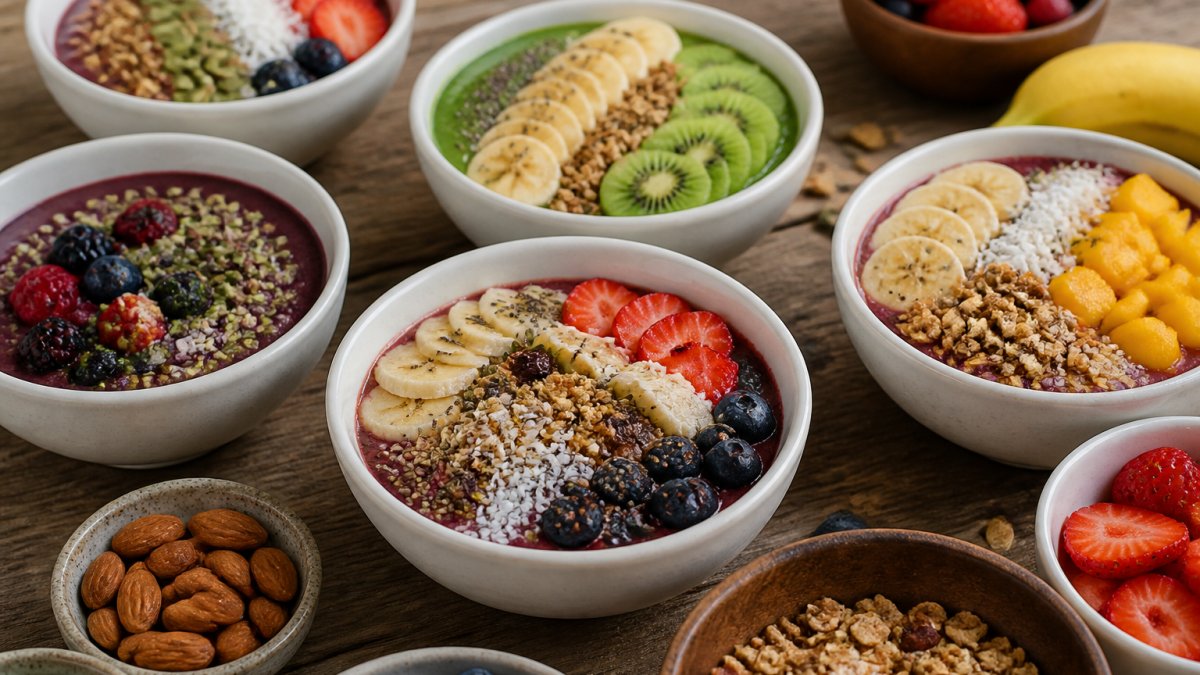
- Healthy Acai Bowl Toppings That Support Energy
- High-Protein Smoothie Bowls for Post-Workout Recovery
- Healthy Grain Bowl Recipes for Lasting Energy
- Assembly, Portion Control, and On-the-Go Prep
- Conclusion
- Frequently Asked Questions
Last Updated: October 15, 2026
Why Superfood Bowls Deliver Sustained Energy
Superfood bowls for energy work because they combine whole grains, protein, and healthy fats in one meal, slowing digestion and preventing the blood sugar spikes that leave you crashing by mid-afternoon.
Most people chase energy through caffeine or sugary snacks, which deliver a quick hit followed by a hard drop.
At Roxberry Juice Co., we've built our açaí bowls around this principle: real fruits, nutrient-dense toppings, and our signature granola create meals that keep you going.
The Energy Difference: Balanced Nutrition vs. Sugar Crash
Energy crashes happen when a meal spikes your blood sugar, your body releases insulin to manage it, overcorrects, and leaves you depleted.
Balanced superfood bowls break this cycle: carbohydrates your brain needs, paired with protein and fiber that slow absorption for steady glucose. The ratio matters most, a bowl that's 50% fruit with minimal protein is still just a fancy smoothie, while a true energy bowl balances all three macronutrients.
Are Acai Bowls Healthy? What the Nutrition Actually Shows
Açaí bowls get mixed reviews, and for good reason. Frozen açaí pulp is genuinely nutrient-dense, with anthocyanins, fiber, and healthy fats, but the bowl is only as healthy as what you put on top.
What the base actually contributes
Unsweetened frozen açaí pulp is mostly water and carbohydrate, with a few grams of fiber and a little fat per serving, it is not a protein food. If a menu lists açaí, banana, and apple juice as the base, the carbohydrate load climbs quickly because juice adds sugar without whole fruit's fiber. Read the base like a smoothie label: if the first three items are fruit, juice, or sweetener, it's a carbohydrate delivery system; if it includes Greek yogurt, kefir, silken tofu, or neutral protein powder, it can carry real protein.
Where the sugar actually comes from
Most of the sugar in a typical açaí bowl comes from the add-ins, not the açaí:
- Sweetened granola. Conventional granola is often 20-30% sugar by weight, and a half-cup scoop can add 10-15 grams of sugar on its own.
- Honey, agave, maple, or date syrup. A single drizzle is easy to eyeball at 1-2 tablespoons, which is 17-35 grams of sugar depending on the syrup.
- Juice-based bases. A cup of apple or orange juice is roughly 24 grams of sugar with almost no fiber.
A transparent estimate for three common bowls
Numbers below are reasonable estimates for a medium bowl, not lab measurements.
| Bowl style | Calories | Protein | Fiber | Added sugar (est.) |
|---|---|---|---|---|
| Fruit-forward açaí bowl (juice base, sweetened granola, honey, banana, berries) | 500-650 | 6-10 g | 6-9 g | 25-40 g |
| Balanced açaí bowl (unsweetened base, Greek yogurt or protein powder, hemp seeds, nut butter, unsweetened granola) | 450-600 | 20-30 g | 10-14 g | 5-10 g |
| Savory grain bowl (quinoa or farro, beans, roasted vegetables, tahini or olive oil) | 450-600 | 15-22 g | 10-15 g | 0-3 g |
The pattern is consistent: fruit-forward and balanced bowls can land in the same calorie range while differing by 20 grams of protein and 20-plus grams of added sugar.
How to read a menu without a nutrition panel
Most independent bowl shops don't publish full nutrition data. You can still estimate the important parts:
- Ask what's in the base. If the answer includes juice or a sweetener, assume 20-plus grams of sugar before any toppings.
- Count the sweet components. Granola, honey, dried fruit, sweetened coconut, and chocolate each count as one. Two or more is a dessert-leaning bowl.
- Look for a protein anchor. Greek yogurt, protein powder, nut butter, hemp seeds, or cottage cheese. Without one, the bowl is mostly carbohydrate.
- Check the granola. Ask whether it's sweetened and roughly how much sugar per serving. If the staff don't know, assume conventional sweetened granola.
The honest answer
Açaí itself is a fine ingredient, but it is not a magic energy food and not the reason a bowl crashes you. The bowl's effect comes down to total carbohydrate, added sugar, protein, fiber, and fat. A bowl with 8 grams of protein and 35 grams of added sugar behaves like a pastry; one with 25 grams of protein, 12 grams of fiber, and under 10 grams of added sugar behaves like a meal.
Healthy Acai Bowl Toppings That Support Energy
The toppings make the bowl. A plain açaí base is just frozen fruit.
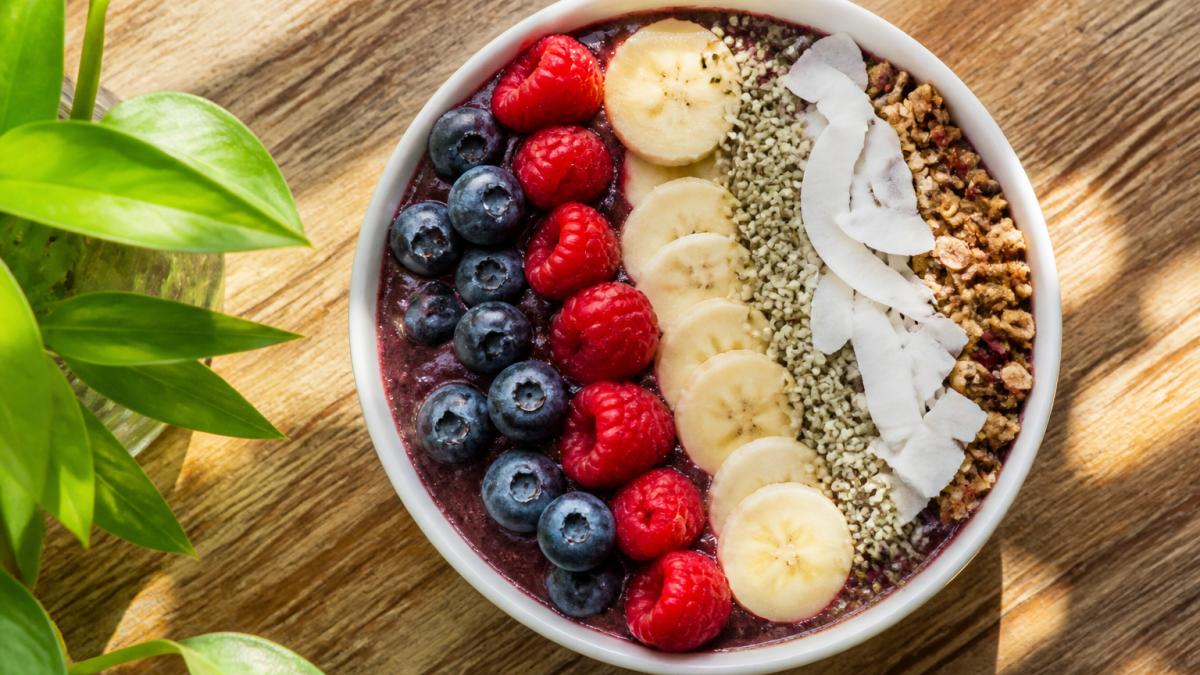
Coconut flakes add healthy saturated fats that slow carbohydrate absorption, plus texture and satiety. Choose unsweetened.
Cacao nibs provide antioxidants and a slight caffeine boost without coffee's crash, and their bitterness balances the fruit's sweetness.
Avoid: granola heavy on honey or refined sugar, sweetened coconut, chocolate chips labeled as "candy," and dried fruit with added sugar.
High-Protein Smoothie Bowls for Post-Workout Recovery
Smoothie bowls differ from açaí bowls in one key way: the base is blended, not frozen solid, making them faster to prepare and easier to customize for macronutrient targets.
For post-workout recovery, your goal is simple: protein and carbohydrates within 30-60 minutes of training. Protein repairs muscle, carbohydrates replenish glycogen stores, and a high-protein smoothie bowl delivers both.
Base Recipe:
- 1 cup Greek yogurt (20g protein)
- ½ cup frozen berries
- ½ banana
Blend until thick but pourable, thicker than a drinkable smoothie, thinner than soft serve.
Toppings for recovery:
- Granola (adds carbs for glycogen)
- Hemp seeds (amino acids)
- Sliced almonds (protein and fat)
This bowl delivers roughly 35-40 grams of protein and 50-60 grams of carbohydrates.
Healthy Grain Bowl Recipes for Lasting Energy
Quinoa Power Bowl
Quinoa is a complete protein with all nine amino acids and more fiber than most grains, meaning slower digestion and steadier energy.
- Cook 1 cup quinoa according to package directions (about 15 minutes)
- While it cooks, roast vegetables: bell peppers, broccoli, sweet potato (20 minutes at 400°F)
- Prepare a tahini dressing: 3 tablespoons tahini, 2 tablespoons lemon juice, 1 clove minced garlic, water to thin
- Assemble: quinoa base, roasted vegetables, handful of spinach, ¼ avocado, 2 tablespoons pumpkin seeds
- Drizzle with tahini dressing
Farro & White Bean Bowl
Farro has a chewy texture and nutty flavor. Combined with white beans, it creates a protein-rich base that rivals meat-based bowls.
- Cook 1 cup farro (about 30 minutes)
- Drain and rinse one can of white beans
- Toss together: cooked farro, beans, diced cucumber, cherry tomatoes, red onion
- Make a vinaigrette: 3 tablespoons olive oil, 2 tablespoons red wine vinegar, 1 teaspoon Dijon mustard
- Top with crumbled feta and fresh herbs (parsley, dill)
This bowl delivers 15+ grams of protein and significant fiber. The vinegar in the dressing further slows carbohydrate absorption, preventing energy crashes.
Assembly, Portion Control, and On-the-Go Prep
Superfood bowls are only convenient if you can prepare them when you need them. Most meal prep fails because people overestimate how much they'll eat or underestimate prep time. The fix is a repeatable formula and a realistic storage plan.
The bowl formula
Build every bowl from five slots. Adjust the ratios to your goal, but keep all five present.
| Slot | Portion | Examples |
|---|---|---|
| Base | 1 cup | Cooked quinoa, farro, brown rice, unsweetened açaí, blended smoothie base |
| Protein | ½ to ¾ cup | Greek yogurt, cottage cheese, beans, lentils, cooked chicken, tofu, tempeh |
| Produce | ½ to 1 cup | Roasted vegetables, leafy greens, berries, sliced banana |
| Healthy fat | 1-2 tbsp | Nut butter, tahini, olive oil, avocado, seeds |
| Crunch or finish | 1-2 tbsp | Granola, seeds, unsweetened coconut, cacao nibs, fresh herbs |
A bowl built this way lands around 400-550 calories and 20-30 grams of protein, enough to hold most adults 3-4 hours. Still hungry 30 minutes later? The protein or fat slot was light. Stuffed? The base or finish slot was heavy.
Portion reality check
A true energy bowl is roughly 1.5 to 2 cups of packed food, smaller than most people expect. That mismatch is why home bowls often run 700-900 calories: the base gets doubled, nut butter eyeballed at three tablespoons, and granola poured instead of scooped.
Two practical tools:
- Use a 2-cup container as your ceiling. If it doesn't fit, you're building a platter, not a bowl.
- Measure the calorie-dense slots once. Nut butter, granola, seeds, and oil most often push a bowl past its target; after a week of measuring, you can eyeball them accurately.
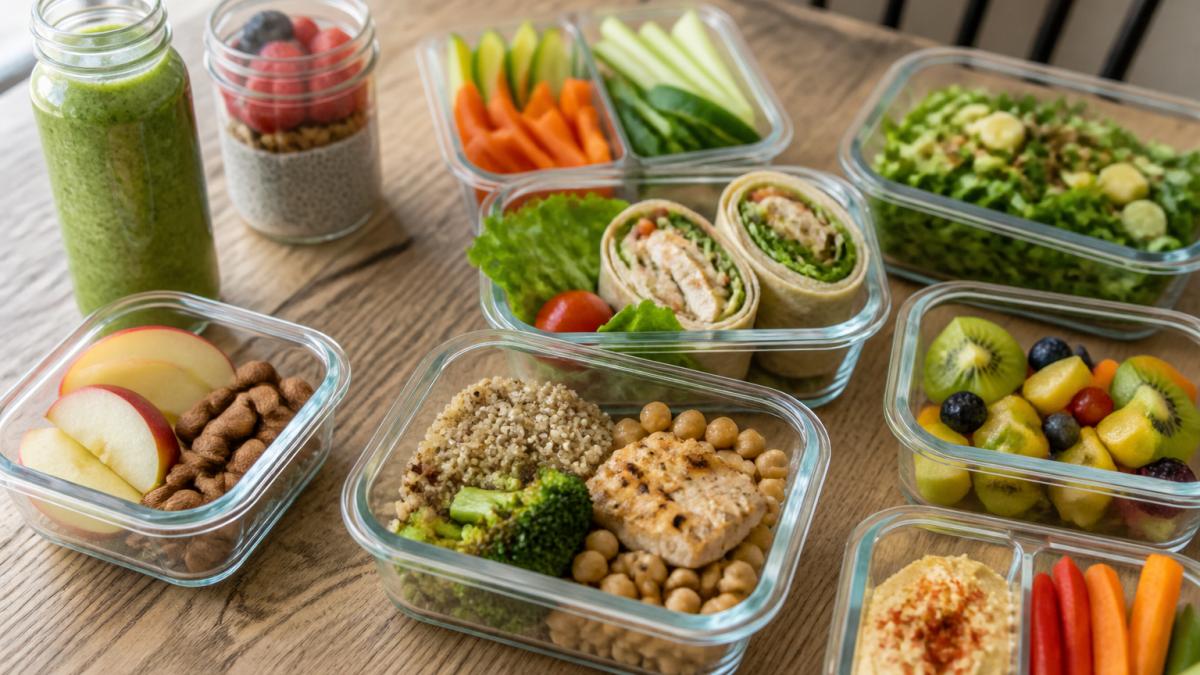
Make-ahead strategy that actually works
Assemble components separately, not the finished bowl, that's what goes soggy.
- Grains: Cook a batch on Sunday. Quinoa, farro, and brown rice all hold 4-5 days refrigerated in a sealed container.
- Proteins: Cooked chicken and roasted tofu hold 3-4 days. Beans and lentils hold 4-5 days once drained and rinsed. Greek yogurt and cottage cheese follow their package date once opened.
- Roasted vegetables: 3-4 days refrigerated. Leafy greens should be washed, dried thoroughly, and stored with a paper towel to absorb moisture.
Assemble fresh each morning or the night before, depending on whether you're eating at home or packing.
Transport and food safety
Remember the two-hour rule: perishable food left at room temperature over two hours should be discarded, and above 90°F the window drops to one hour, critical for anyone packing a yogurt- or protein-based bowl for a commute or desk lunch.
Practical packing:
- Use an insulated bag with a freezer pack for any bowl containing yogurt, cottage cheese, cooked meat, or tofu. A standard lunch bag without a cold source is not enough for a full workday.
- Keep components separate in leak-proof containers. Dressings, sauces, and wet ingredients go in their own small jars.
- Pack granola, seeds, and chips separately and add them right before eating. This is the single biggest texture upgrade you can make.
A weeknight assembly shortcut
With cooked grains, a protein, and a dressing ready, a bowl takes about 5 minutes to assemble, the prep time is in the batch cooking. Cook grains and proteins once, roast a sheet pan of vegetables, and make one dressing; those four components recombine into different bowls all week.
Conclusion
Superfood bowls for energy work because they balance macronutrients in ways that prevent blood sugar crashes. Whether you choose an açaí bowl, smoothie bowl, or grain bowl depends on your schedule and taste, but the principle holds: protein, healthy fats, and fiber create sustained energy.
Roxberry Juice Co. builds every bowl around this foundation. When you're ready to experience the difference a truly balanced superfood bowl makes, visit Roxberry Juice Co. to explore our menu and download our app to order ahead.
| Bowl Type | Best For | Prep Time | Energy Duration |
|---|---|---|---|
| Açaí Bowl | Breakfast or post-workout | 5 minutes | 3-4 hours |
| Smoothie Bowl | Quick recovery meal | 10 minutes | 3-4 hours |
| Grain Bowl | Lunch or dinner | 30 minutes | 4-5 hours |
| Quinoa Power Bowl | Plant-based protein needs | 20 minutes | 4-5 hours |
Quick Picks:
- Best for Sustained Energy: Grain bowls with complete proteins like quinoa or farro
- Best for Speed: Açaí bowls from Roxberry Juice Co., prepared fresh in minutes
- Best for Recovery: High-protein smoothie bowls with Greek yogurt and berries
Energy crashes aren't inevitable. When you're ready to try bowls designed specifically for sustained energy, Roxberry Juice Co. offers fresh-pressed bases and nutrient-dense toppings that work. Visit a local store or download the Roxberry Juice Co. app to order your first energy-supporting bowl today.
Frequently Asked Questions
Are acai bowls actually good for energy, or do they cause a sugar crash?
Acai bowls deliver sustained energy when built with balanced macronutrients. Pure acai is nutrient-dense, but many store-bought versions add sweetened syrups or excessive fruit that spikes blood sugar. The key is pairing acai with protein (Greek yogurt, nut butter), healthy fats (nuts, seeds, avocado), and whole grains. This combination slows sugar absorption, stabilizing energy for 3-4 hours. Skip bowls with added honey or sweetened granola if energy stability matters to you.
What should I put in a superfood bowl for energy that actually lasts?
Layer your bowl with three components: a nutrient-dense base (acai, quinoa, or oats), a protein source (Greek yogurt, almond butter, hemp seeds, or grilled chicken), and healthy fats (avocado, walnuts, chia seeds, or tahini). Add fiber-rich toppings like berries and leafy greens to slow digestion. Skip refined sugars and syrups. A balanced bowl with roughly equal parts carbohydrate, protein, and fat prevents the energy dip that comes from sugar-only meals. Portion control also matters: a proper bowl is filling but not oversized.
Are grain bowls or acai bowls better for lasting energy?
Grain bowls typically sustain energy longer because whole grains (quinoa, brown rice, farro) release energy slowly. Acai bowls are faster-acting but still stable if you add protein and healthy fats. For post-workout recovery, acai bowls with Greek yogurt and berries refuel quickly. For sustained morning energy, grain bowls with vegetables, legumes, and nuts keep you full for hours. The best choice depends on your timing: acai for quick recovery, grain bowls for steady all-day energy.
Do superfood bowls have a lot of added sugar?
Many commercial superfood bowls contain hidden sugar in syrups, sweetened granola, and fruit purees. A single bowl can contain 30-50g of added sugar if not carefully ordered. Natural fruit sugars are present, but added sweeteners are the culprit. Choose bowls with unsweetened bases, whole fruit toppings, and granola without added sugar. Ask about preparation: does the acai come pre-sweetened, or is it pure? Transparency about ingredients is essential for avoiding unnecessary sugar.
How can I make a smoothie bowl more filling so it actually keeps me full?
Add protein and healthy fats to increase satiety. Greek yogurt, nut butters, seeds (hemp, chia, pumpkin), and nuts create a filling base. Layer in whole grains like granola or oats, and include vegetables like spinach or avocado for fiber and nutrients. Portion matters too: a proper smoothie bowl should be 1.5-2 cups total, not oversized. Eating it with a spoon rather than drinking it slows consumption and increases fullness signals. Prep bowls with these additions in mind, and you'll avoid the hunger spike that comes 90 minutes after a fruit-only bowl.