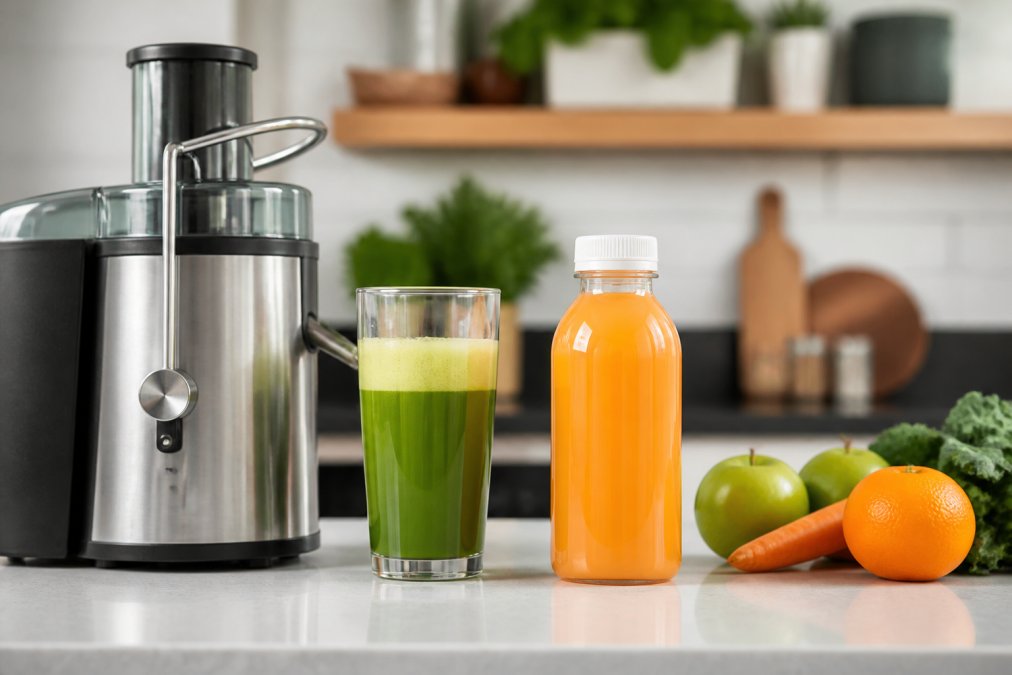
 comparison
Fresh Pressed Juice vs Store Bought: Which Is Worth It
Table of Contents
- Fresh Pressed Juice vs Store Bought: The Core Differences
- Nutrient Retention and Vitamin Content
- Benefits of Daily Green Juice
- Cold-Pressed Juice Shelf Life and Storage
- Cost of Juicing at Home vs Buying
- Processing Methods: Heat vs Cold-Pressed
- Which Option Is Right for Your Lifestyle
- Conclusion
- Frequently Asked Questions
Last Updated: August 23, 2026
Fresh Pressed Juice vs Store Bought: The Core Differences
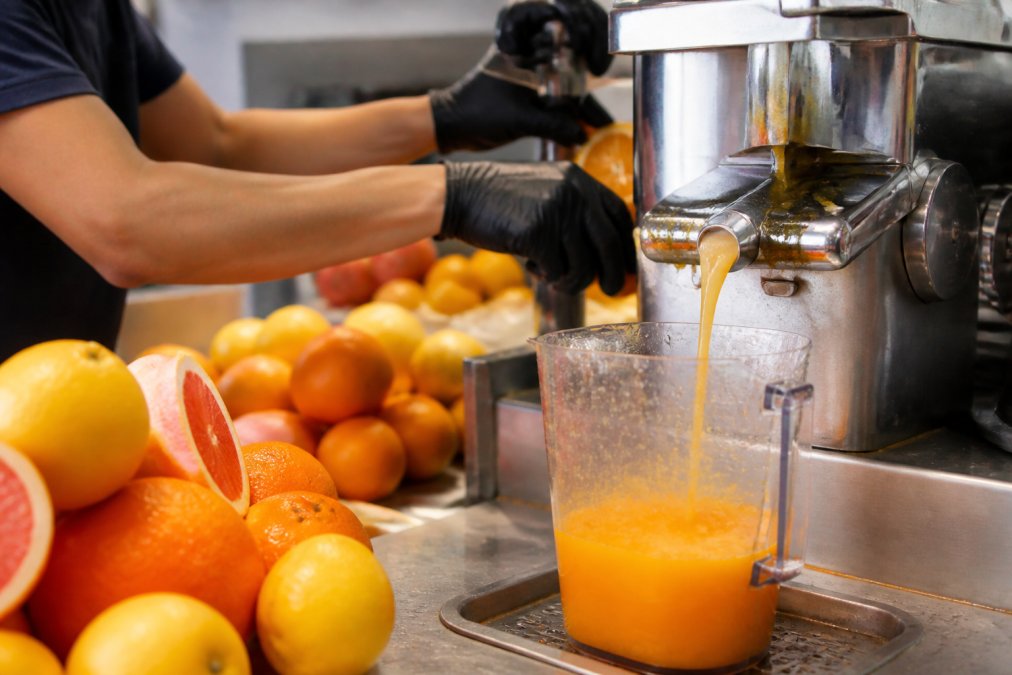
Fresh-pressed juice is extracted immediately before consumption using cold-pressed or centrifugal methods that preserve heat-sensitive vitamins and enzymes. Store-bought juice undergoes pasteurization or high-pressure processing to extend shelf life, which changes both the nutrient profile and bioavailability. At Roxberry Juice Co., we've focused on fresh-pressed options because the extraction method directly impacts what your body can absorb.
Fresh-pressed juice retains more original enzyme content and volatile nutrients, while store-bought juice trades nutrient density for convenience and shelf stability. Neither is inherently "wrong", it depends on your priorities, budget, and lifestyle.
Nutrient Retention and Vitamin Content
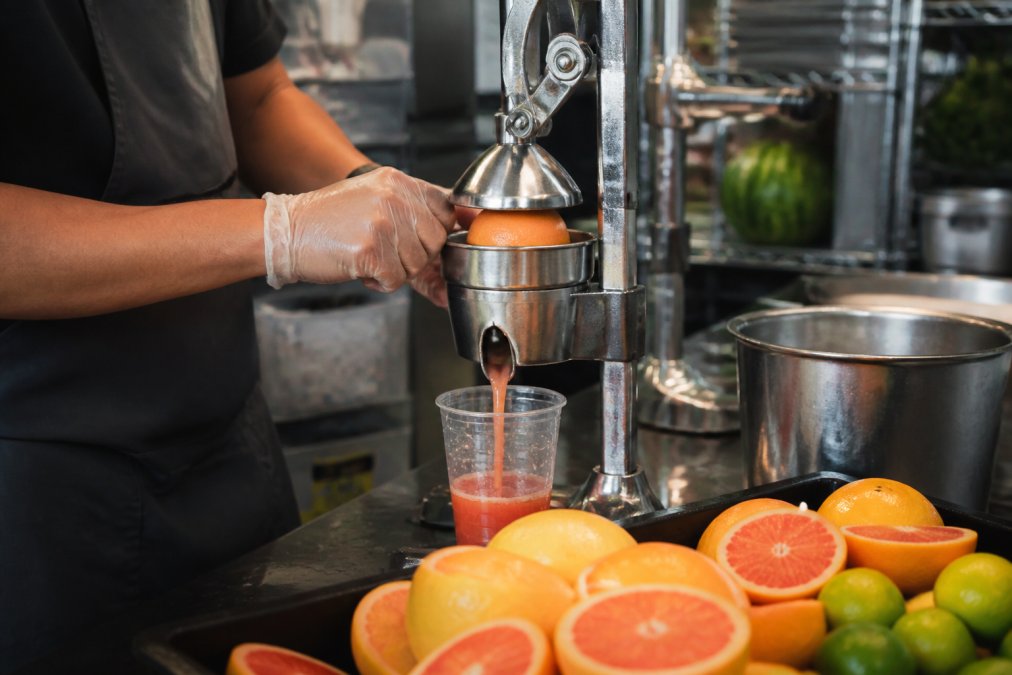
Fresh-pressed juice retains significantly more of its original nutrient profile because extraction happens without heat exposure. Cold-pressed juicers use hydraulic pressure while centrifugal juicers spin at high speeds, but neither applies sustained heat that degrades water-soluble vitamins like vitamin C and B vitamins.
Store-bought juice, particularly pasteurized varieties, loses heat-sensitive nutrients during processing. Pasteurization heats juice to kill pathogens, which also denatures certain enzymes and reduces vitamin content. High-pressure processing (HPP) preserves more nutrients than heat pasteurization, but still doesn't match the nutrient density of juice consumed within hours of pressing.
The practical difference matters most for vitamin C, which oxidizes quickly once juice is exposed to air. Fresh-pressed juice consumed immediately contains significantly more active vitamin C than juice sitting in a bottle for days, even refrigerated. Minerals like potassium and magnesium remain stable in both.
Fresh-pressed juice contains live enzymes that support digestion and nutrient absorption. These enzymes denature during pasteurization, which is why fresh-pressed juice feels different in your digestive system. Some people report better digestion and less bloating with fresh-pressed juice, though individual responses vary.
Benefits of Daily Green Juice
A consistent green juice habit provides concentrated micronutrients difficult to consume in whole vegetable form. Green juice concentrates leafy greens and cruciferous vegetables into a single serving, making it easier to hit micronutrient targets without spending hours preparing whole vegetables.
Many people experience more stable energy throughout the day when including green juice in their morning routine, reflecting the micronutrient boost. The digestive benefits likely stem from reduced fiber content and concentrated nutrient load, whole vegetables require significant digestive effort, while juice delivers nutrients directly. For people with compromised digestion or IBS, this can feel like relief.
Mental clarity improvements probably reflect better micronutrient status overall. Magnesium, B vitamins, and antioxidants all support cognitive function, and most people are deficient in these. A daily green juice habit addresses that gap, showing up as improved focus and reduced afternoon fatigue.
Consistency matters more than whether juice is fresh-pressed or store-bought. A daily habit of any juice delivers more micronutrients than sporadic whole vegetable consumption. Fresh-pressed juice provides a higher nutrient dose per ounce, so you get more benefit from a smaller serving.
Cold-Pressed Juice Shelf Life and Storage
Cold-pressed juice maintains its nutrient profile longer than centrifugally extracted juice because slower extraction minimizes oxidation and heat damage. Properly stored cold-pressed juice stays viable for 3-5 days refrigerated, compared to 24-48 hours for centrifugal juice (peer-reviewed research).
Fresh-pressed juice begins degrading the moment extraction finishes. Oxidation accelerates, enzymes denature, and vitamin C oxidizes into inactive forms. By day two, fresh-pressed juice has lost measurable nutrient density.
Store-bought juice, especially HPP-treated varieties, maintains stability for 30-45 days because high-pressure processing inactivates microorganisms without heat, and sealed packaging prevents oxidation (the FDA). This extended shelf life comes at the cost of some enzymatic activity and heat-sensitive vitamins.
Storage conditions matter significantly for both types. Light exposure degrades nutrients, particularly vitamin C and B vitamins. Refrigeration slows oxidation and microbial growth. Freezing fresh-pressed juice extends its life to several months, though thawing can separate components and affect texture.
The perishability of fresh-pressed juice explains the price difference and convenience trade-off. You're paying for juice that must be consumed quickly, typically made fresh or within 24-48 hours. Store-bought juice's extended shelf life means you can buy in bulk and consume over weeks, reducing per-serving cost.
Cost of Juicing at Home vs Buying
The financial comparison between fresh pressed juice vs store bought depends on consumption frequency and whether you're buying equipment or visiting a juice bar.
Making juice at home requires upfront equipment investment. A quality masticating juicer like the Hurom H-AA costs around $399.00, while the Nama J2 Cold Press Juicer costs approximately $599.00. These investments only make financial sense if you're juicing regularly, at least 4-5 times per week.
Homemade juice costs between $2-4 per serving in produce ingredients, depending on whether you're buying organic and what's in season. Daily juicing means $14-28 per week in produce costs alone, not counting water, electricity, and equipment maintenance.
Buying fresh-pressed juice from a juice bar like Roxberry Juice Co. costs more per serving but eliminates equipment investment and prep time. Pricing depends on quantity, dates, and delivery. Please check Roxberry Juice Co.'s website for current prices. Buying daily means roughly $35 per week.
Store-bought bottled juice from brands like Suja Organic starts around $3.28-$3.99 per bottle and offers the lowest per-serving cost when bought in bulk. However, you're paying for extended shelf life and convenience, not maximum nutrient density.
The true cost comparison requires factoring in time investment. Juicing at home takes 15-20 minutes per session including cleanup. If you value your time at $25-50 per hour, that cleanup cost adds $6-16 per juice session.
Frequency matters enormously. If you juice 2-3 times per week, homemade is cheaper over time. If you juice sporadically, buying from a juice bar makes more financial sense than maintaining equipment you'll rarely use.
| Option | Per-Serving Cost | Equipment Investment | Time Per Serving | Best For |
|---|---|---|---|---|
| Homemade cold-pressed | $2-4 | $400-600 upfront | 20-25 min (prep + cleanup) | Daily juicers, budget-conscious |
| Fresh-pressed juice bar | Pricing depends on quantity, dates, and delivery. Please check Roxberry Juice Co.'s website for current prices. | None | 5 min (ordering) | Convenience-focused, inconsistent frequency |
| Store-bought bottled | $3-4 (bulk) | None | 2 min (grab) | Lowest cost, longest shelf life |
Processing Methods: Heat vs Cold-Pressed
The processing method determines which nutrients survive to your glass and how quickly oxidation begins.
Cold-pressed juicers use hydraulic pressure to extract juice without generating heat. The process is slow, typically 40-60 minutes per batch, but minimizes oxidation and enzyme damage. Cold-pressed juice retains more vitamin C, B vitamins, and enzymatic activity. The trade-off is longer production time and lower juice yield, increasing per-serving cost.
Centrifugal juicers spin at high speeds (1,000-3,000 RPM) to separate juice from pulp. This method is fast, 3-5 minutes per juice, but generates friction heat that oxidizes nutrients and denatures enzymes. Centrifugal juice has a noticeably shorter shelf life because oxidation begins during extraction.
Masticating juicers use an auger that slowly grinds produce and presses pulp against a screen. The process is slower than centrifugal but faster than cold-pressing. Nutrient retention falls between the two extremes. Masticating juicers handle leafy greens and wheatgrass better than centrifugal models.
Pasteurization, used in most store-bought juice, heats juice to 161-185°F for 15-30 seconds to kill pathogens. This significantly reduces vitamin C and some B vitamins, and denatures most enzymes. Pasteurized juice is shelf-stable for weeks but starts with a lower nutrient baseline.
High-pressure processing (HPP) applies 87,000 PSI of pressure to inactivate microorganisms without heat (the FDA). HPP preserves more nutrients than pasteurization and maintains enzymatic activity better, making it the preferred method for premium store-bought juices.
Cold-pressed fresh juice consumed within 24 hours contains the highest concentration of active nutrients and enzymes. Centrifugal fresh juice is slightly lower but still significantly higher than store-bought. Store-bought HPP juice preserves more than pasteurized juice but starts from a lower baseline.
Which Option Is Right for Your Lifestyle
Choosing between fresh pressed juice vs store bought comes down to three factors: consumption frequency, budget flexibility, and whether convenience or nutrient density matters more to your health goals.
Choose fresh-pressed juice if you're committed to daily or near-daily consumption and value maximum nutrient density. The enzyme content and vitamin concentration matter most for people managing digestive issues, supporting athletic recovery, or pursuing intensive wellness protocols.
Fresh-pressed juice from a juice bar like Roxberry Juice Co. works best if you're willing to pay premium prices for convenience and consistency. You get fresh juice without equipment investment or cleanup, and can customize based on your specific health goals.
Choose homemade juicing if you're willing to invest in equipment and commit to regular use, at least 4-5 times per week. A quality masticating or cold-press juicer offers the best long-term value for daily juicers and gives you complete control over ingredients and processing.
Store-bought juice makes sense if cost is your primary concern or if you juice infrequently. HPP-treated juice offers a reasonable balance of nutrient preservation and shelf stability. You can buy in bulk, store for weeks, and consume on your schedule.
Consider your digestive health when choosing. Fresh-pressed juice can trigger detox symptoms if you're not accustomed to that nutrient concentration. Store-bought juice is gentler on sensitive digestive systems. If you have IBS or compromised digestion, starting with store-bought and gradually moving to fresh-pressed juice gives your system time to adapt.
Think about your actual behavior, not your aspirational behavior. If you've never juiced consistently before, buying a $500 juicer is unlikely to change that. Start with a juice bar habit or store-bought juice for 4-6 weeks. If you're actually consuming juice daily, then equipment investment makes sense.
Conclusion
The choice between fresh pressed juice and store-bought juice isn't about which is objectively "better", it's about which aligns with your actual consumption habits, budget, and health priorities. Fresh-pressed juice delivers maximum nutrient density and enzymatic activity but requires either equipment investment and daily commitment or premium prices at a juice bar. Store-bought juice offers convenience, extended shelf life, and lower cost, with reduced heat-sensitive nutrients.
At Roxberry Juice Co., we've built our business on the principle that fresh-pressed juice matters most when you're serious about your health. Our 100% natural, fresh-pressed juices made from real fruits and vegetables, combined with our smoothies blended to order, deliver the nutrient concentration that supports genuine digestion restoration, sustained energy, and mental clarity. Download our app to find your nearest location and experience the difference fresh-pressed juice can make.
=== FAQ ANSWERS (audit these too, same rules) ===
[1] Q: Is fresh pressed juice healthier than store-bought? A: Fresh pressed juice retains more enzymes, antioxidants, and heat-sensitive vitamins immediately after pressing. However, store-bought cold-pressed options preserve nutrients well through HPP (high-pressure processing), while pasteurized varieties lose some heat-sensitive compounds. The difference depends on processing method and how quickly you consume fresh pressed juice, oxidation begins within 15 minutes of extraction.
[2] Q: What are the benefits of daily green juice? A: Daily green juice provides concentrated micronutrients, minerals, and phytonutrients from vegetables like kale, spinach, and celery. These support energy levels, digestion, and antioxidant intake. However, whole fruits and vegetables offer fiber that juicing removes. For maximum benefit, combine fresh juice with whole foods and avoid relying on juice alone for nutrition.
[3] Q: How long does cold-pressed juice shelf life last? A: Fresh cold-pressed juice stays fresh for 3-5 days when refrigerated, though nutrient quality peaks within 24 hours as oxidation occurs. Store-bought cold-pressed juice with HPP processing lasts 30-45 days unopened. Pasteurized store-bought juice lasts 2-3 weeks. Storage temperature and container type affect shelf life significantly, airtight, opaque bottles preserve nutrients longer than clear containers.
[4] Q: Why is homemade juicing more expensive than buying? A: Home juicing requires a significant upfront investment ($399.00-$599.00 for quality masticating juicers), plus ongoing produce costs. A single serving of homemade juice typically costs $2-$4 in ingredients alone. Store-bought options distribute equipment costs across many servings. However, buying fresh pressed juice daily costs more annually than home juicing once equipment is purchased, making home juicing cost-effective for daily drinkers over time.
Frequently Asked Questions
Is fresh pressed juice healthier than store-bought?
Fresh pressed juice retains more enzymes, antioxidants, and heat-sensitive vitamins immediately after pressing. However, store-bought cold-pressed options preserve nutrients well through HPP (high-pressure processing), while pasteurized varieties lose some heat-sensitive compounds. The difference depends on processing method and how quickly you consume fresh pressed juice, oxidation begins within 15 minutes of extraction.
What are the benefits of daily green juice?
Daily green juice provides concentrated micronutrients, minerals, and phytonutrients from vegetables like kale, spinach, and celery. These support energy levels, digestion, and antioxidant intake. However, whole fruits and vegetables offer fiber that juicing removes. For maximum benefit, combine fresh juice with whole foods and avoid relying on juice alone for nutrition.
How long does cold-pressed juice shelf life last?
Fresh cold-pressed juice stays fresh for 3-5 days when refrigerated, though nutrient quality peaks within 24 hours as oxidation occurs. Store-bought cold-pressed juice with HPP processing lasts 30-45 days unopened. Pasteurized store-bought juice lasts 2-3 weeks. Storage temperature and container type affect shelf life significantly, airtight, opaque bottles preserve nutrients longer than clear containers.
Why is homemade juicing more expensive than buying?
Home juicing requires a significant upfront investment ($399.00-$599.00 for quality masticating juicers), plus ongoing produce costs. A single serving of homemade juice typically costs $2-$4 in ingredients alone. Store-bought options distribute equipment costs across many servings. However, buying fresh pressed juice daily costs more annually than home juicing once equipment is purchased, making home juicing cost-effective for daily drinkers over time.