 How-to
How to Reduce Sugar in Fruit Smoothies Without Losing Flavor
Last Updated: November 7, 2026
Quick Summary
To reduce sugar in fruit smoothies, swap juice for unsweetened liquid, use lower-sugar fruits like raspberries and blackberries, and skip added sweeteners such as honey and flavored yogurt. In our step-by-step example, these swaps cut a 70 g smoothie to roughly 17 g in the same glass.
- A berry-banana smoothie with juice and sweetened yogurt can total about 61 g of sugar.
- Replacing one cup of orange juice with unsweetened almond milk cut about 21 g.
- Raspberries carry about 5 g of sugar per cup; mango carries about 23 g.
- Add chia seeds, Greek yogurt, or nut butter to slow how fast sugar hits your bloodstream.
- At Roxberry, ask for unsweetened liquid, extra greens, and half the banana with extra berries.
Table of Contents
- Why Fruit Smoothies Can Carry More Sugar Than You Expect
- Start With a Sugar Audit: Counting Total Sugar per Serving
- Pick Low-Sugar Fruits for Smoothies Instead of High-Sugar Defaults
- Smoothie Ingredients to Avoid When Sugar Is the Concern
- How to Sweeten Smoothies Naturally Without Added Sugar
- Low-Sugar Smoothie Recipes You Can Blend This Week
- Balance Sugar With Protein, Fiber, and Healthy Fats
- Ordering a Lower-Sugar Smoothie at Roxberry Juice Co.
- Frequently Asked Questions
Why Fruit Smoothies Can Carry More Sugar Than You Expect
A fruit smoothie can hold more sugar than a can of soda, and most people never see it coming. A 2025 study in Frontiers in Nutrition's comparison of fruit forms reported high blood sugar in 70.93% of the fruit-smoothie group versus 62.37% of the solid-fruit group, though the authors note the comparison needs more detail before anyone reads it as proof.
At Roxberry Juice Co., our smoothies are blended to order from real fruits and vegetables. Below, we'll show you how to reduce sugar in fruit smoothies without losing flavor.
The fix is not one big change. It is five small ones: count the sugar, pick better fruit, cut the juice, skip added sweeteners, and balance what's left with protein and fiber.
Start With a Sugar Audit: Counting Total Sugar per Serving
A sugar audit means adding up every gram of sugar in your recipe and dividing by the number of servings you actually pour. Most home smoothies serve two, not one, and most people drink the whole blender, so the per-serving number on paper is often half of what one person swallows.
Here is the practical method:
- List every ingredient and its amount.
- Check the Nutrition Facts label or a nutrition database for sugar grams per serving.
- Multiply by how many servings you actually used (a "serving" on a label is often smaller than your pour).
- Add all ingredients together.
- Divide by the number of glasses you pour, not the number the recipe claims.
Worked example: a typical berry-banana smoothie
Here is the math on a common recipe that serves two on paper but realistically fills one large glass:
| Ingredient | Amount | Sugar |
|---|---|---|
| Banana | 1 medium | About 14 g |
| Orange juice | 1 cup | About 21 g |
| Strawberries (frozen) | 2 cups | About 14 g |
| Vanilla yogurt (sweetened) | 1/2 cup | About 12 g |
| Total | About 61 g |
Sugar
Divided by two glasses, that is roughly 30 g per serving. Poured into one 16-ounce glass, it is about 61 g. That is the number most people never see, because the recipe card says "serves two."
Reading the label for added sugar
Since 2020, the Nutrition Facts panel has a separate "Added Sugars" line under Total Sugars, expressed in grams and as a percent Daily Value. Once you’ve separated fruit’s natural sugars from added ones, that distinction can help you make thoughtful choices about reducing sugar in your diet.
Watch out: "No added sugar" on a juice or yogurt label does not mean low sugar, a 100% juice with no added sugar can still carry 21 g per cup, all of it free sugar with the fiber stripped out.
Natural sugar vs. added sugar: what actually matters
Natural sugar and added sugar are not the same thing, and the difference matters more than the total on its own.
Mayo Clinic Health System's smoothie guidance advises skipping added sugars, including fruit juice, and using water or unsweetened milk instead.
For a closer look at spotting hidden sweeteners in drinks, see our guide to signs of added sugar in fruit juice.
Pick Low-Sugar Fruits for Smoothies Instead of High-Sugar Defaults
Low-sugar fruits for smoothies are the ones that give you flavor and thickness without a sugar spike. Berries lead the list, and avocado quietly does more work than most people realize.
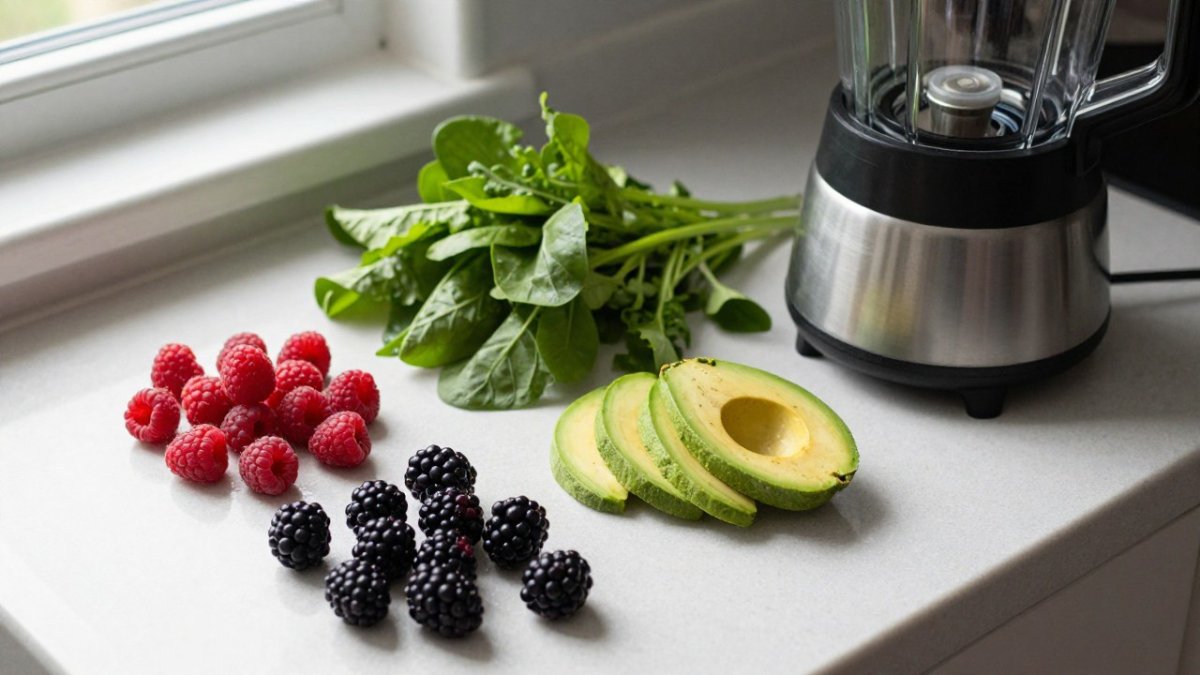
Here is how the common choices stack up per typical serving:
| Fruit | Sugar per Serving | Best Use in a Smoothie |
|---|---|---|
| Raspberries | About 5 g per cup | Flavor and fiber |
| Blackberries | About 7 g per cup | Tartness and body |
| Avocado | Under 1 g per half | Creamy thickness |
| Banana | About 14 g per medium | Sweetness, use half |
| Mango | About 23 g per cup | Treat, not base |
Berries, Avocado, and Other Lower-Sugar Picks
Raspberries and blackberries carry relatively little sugar among common fruits, and frozen versions work just as well. Avocado adds creaminess with very little sugar. Leafy greens, cucumber, and sweet potato bring volume and nutrients without much sweetness.
For a deeper list of options, our low-sugar smoothie ingredients for weight loss guide breaks down what to reach for and why.
Smoothie Ingredients to Avoid When Sugar Is the Concern
The biggest sugar offenders in smoothies are liquid, not solid. Fruit juice as a base, flavored yogurt, honey, agave, and dried fruit all push totals up quickly.
Watch out: dried fruit is the sneakiest one. A small handful of dates can add more sugar than an entire cup of berries, and it disappears into the blender without a trace.
Skip or cut back on:
- Fruit juice as a base
- Flavored or sweetened yogurt
- Honey, agave, and maple syrup
- Dried fruit like dates and raisins
Swap each one for an unsweetened version and you keep the texture without the sugar load.
How to Sweeten Smoothies Naturally Without Added Sugar
You can sweeten a smoothie naturally with ripe fruit, warm spice, and a little vanilla, no spoonful of sugar required. Cinnamon, nutmeg, and vanilla extract all read as sweetness to your tongue without adding grams.
Try these moves:
- Use one very ripe banana instead of two
- Add a pinch of cinnamon or nutmeg
- Splash in pure vanilla extract
- Blend in half a date only if needed
If you are weighing artificial sweeteners instead, our breakdown of artificial sweeteners and gut health covers what the science currently shows before you decide.
Low-Sugar Smoothie Recipes You Can Blend This Week
Low-sugar smoothie recipes follow one pattern: a low-sugar fruit base, a protein source, a healthy fat, and an unsweetened liquid. Once you know the pattern, you can build your own without a recipe card.
Try this berry blend:
- 1 cup frozen raspberries
- 1/2 cup frozen blackberries
- 1/2 cup unsweetened almond milk
- 1 scoop unflavored protein powder
That lands near 12 grams of sugar with 20-plus grams of protein. Houston Methodist's smoothie guidance suggests meal-replacement smoothies include at least 20 grams of protein and 400 to 800 calories, which is a useful target if the smoothie is your lunch.
A step-by-step recipe reformulation, with the math
Take a standard high-sugar recipe and reformulate it one swap at a time, so you can taste what each change does.
Original (serves 1 large glass): 1 banana (14 g), 1 cup orange juice (21 g), 1 cup mango (23 g), 1/2 cup sweetened vanilla yogurt (12 g). Total: about 70 g.
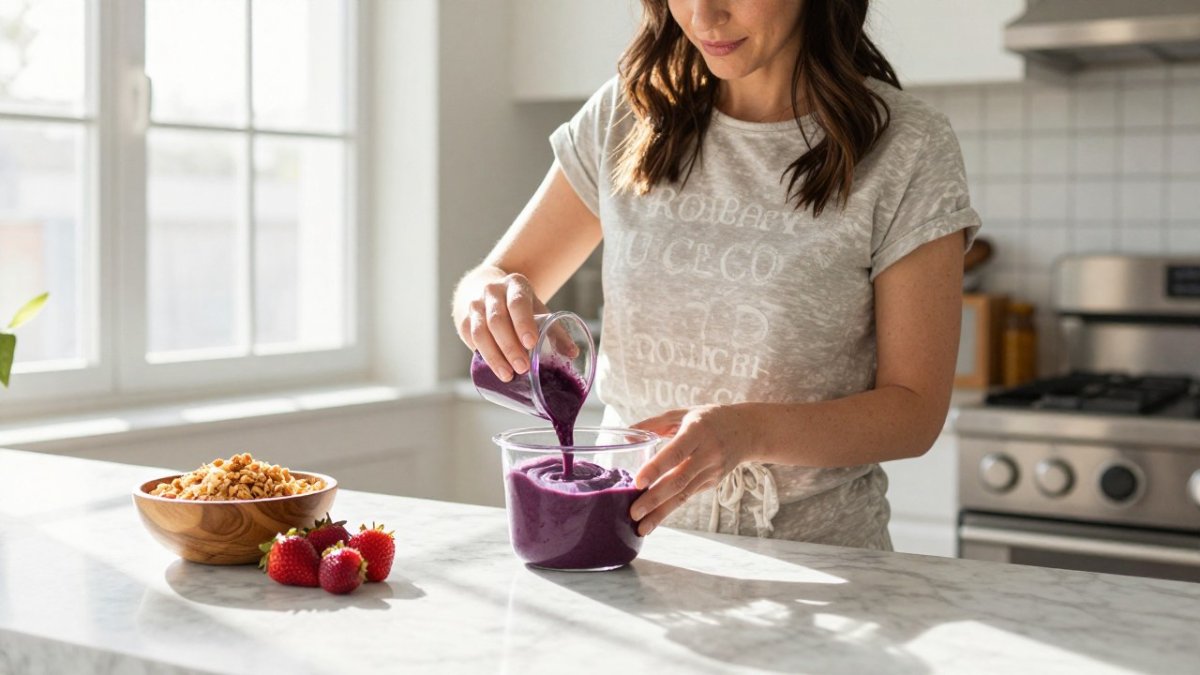
- Replace the juice with unsweetened liquid. Swap 1 cup orange juice for 1 cup unsweetened almond milk (about 0 g). New total: about 49 g. This is the single biggest cut, and most people cannot taste the difference once fruit is in the glass.
- Cut the banana in half. Use 1/2 banana (7 g) instead of a whole one. New total: about 42 g. A very ripe half-banana still reads as sweet.
- Swap the high-sugar fruit for berries. Replace 1 cup mango (23 g) with 1 cup frozen raspberries (about 5 g). New total: about 24 g. Add a second cup of berries for volume at roughly 5 g more.
- Swap the sweetened yogurt for unsweetened Greek yogurt. Replace 1/2 cup vanilla yogurt (12 g) with 1/2 cup plain Greek yogurt (about 4 g). New total: about 16 g.
- Add fiber and fat for staying power. Stir in 1 tablespoon chia seeds (about 0 g sugar, roughly 5 g fiber) and 1 tablespoon almond butter (about 0.5 g). Final total: roughly 17 g, about three-quarters less than the original, in the same glass.
That is the whole method: same serving size, same thickness, roughly a quarter of the sugar.
Fixing texture and sweetness after the swaps
Cutting sugar changes more than the number on the label, it changes body and mouthfeel. If the blend turns thin, add 1/4 cup frozen cauliflower or 2 tablespoons rolled oats; both thicken without meaningful sugar.
Watch out: replacing fruit with more juice or a "no-sugar" flavored syrup trades whole-fruit fiber for free sugar or sweeteners, which defeats the purpose, keep the volume coming from whole or frozen fruit and vegetables instead.
Serving size and how often
Sugar per serving depends as much on pour size as on ingredients. A recipe that serves two at 17 g each becomes 34 g in one glass. Measure your usual pour once, a standard blender jar is often 48 to 64 ounces, which is two to three real servings. For most people, a smoothie fits best as one 12-to-16-ounce serving a day alongside meals rather than as a replacement for every meal, and people managing blood glucose should treat these numbers as a starting point and confirm portions with a qualified clinician.
Balance Sugar With Protein, Fiber, and Healthy Fats
Protein, fiber, and healthy fats slow how fast sugar hits your bloodstream, which is why a balanced smoothie feels different from a sweet one. Pairing ingredients thoughtfully matters, so what you combine in a blend affects how balanced it is.
Add these to any blend:
- Greek yogurt or protein powder for protein
- Chia seeds or ground flax for fiber
- Nut butter or avocado for healthy fat
- Leafy greens for volume and nutrients
A common mistake is loading up on fruit and calling it balanced. Fruit is only one part of the glass.
Ordering a Lower-Sugar Smoothie at Roxberry Juice Co.
Ordering a lower-sugar smoothie at Roxberry Juice Co. starts with asking for unsweetened liquid and extra greens.
Ask for these adjustments:
- Unsweetened liquid instead of juice
- Extra spinach or kale
- Half the banana, extra berries
- No added sweeteners
- A scoop of protein to balance it out
Browse our full ingredient guide to see what goes into each blend before you order, then check our locations to find the store nearest you.
Most smoothies carry more sugar than people expect, and the fix is not deprivation. It is a handful of swaps you can make in under a minute.
Frequently Asked Questions
Are fruit smoothies too high in sugar?
They can be, depending on what goes in the blender. A smoothie built on several bananas, juice as the base, and a sweetened yogurt can stack up sugar fast. The fix is portion control: measure your fruit, use water or unsweetened milk, and add protein or healthy fats to balance the total sugar.
Which fruits are lower in sugar for smoothies?
Berries are the easiest swap. Raspberries and blackberries carry less sugar per cup than bananas or mango, and frozen versions work just as well. Avocado adds creaminess with very little sugar. If you want banana flavor, use half a banana instead of a whole one and fill the rest of the fruit slot with berries. This keeps the smoothie recognizable while lowering the total sugar per serving.
How can you sweeten a smoothie without adding sugar?
Rely on the fruit you already use. A few raspberries, a spoon of unsweetened nut butter, or a pinch of cinnamon can round out flavor without a sweetener. Vanilla extract adds aroma that reads as sweetness. Avoid fruit juice as a base, since health guidance generally advises against added sugars, including juice, and recommends water or unsweetened milk instead. If you need more sweetness, add a small amount of a natural sweetener and taste before adding more.
What ingredients should you avoid in a smoothie if you want less sugar?
Skip fruit juice as the liquid base, sweetened yogurt, flavored syrups, and dried fruit, which concentrates sugar per handful. Watch for frozen fruit blends with added sugar and granola with a sweet coating. Instead, use water or unsweetened almond milk, plain yogurt, and whole frozen fruit. A meal-replacement smoothie should generally include at least 20 grams of protein and land between roughly 400 and 800 calories, so build toward that balance rather than sweet taste alone.