 listicle
Best Low Sugar Smoothie Ingredients for Weight Loss
Last Updated: October 23, 2026
Quick Summary
Low sugar smoothie ingredients for weight loss should include high-protein sources, healthy fats, leafy greens, and low-sugar berries rather than tropical fruits or juice. This macronutrient balance stabilizes blood sugar, promotes satiety, and supports fat loss more effectively than fruit-only smoothies.
- A balanced weight loss smoothie contains one scoop of protein powder, half an avocado, one cup spinach, half cup blueberries, and unsweetened almond milk for 370 calories and 25g protein.
- Berries like blueberries, strawberries, and raspberries are optimal low-sugar fruits, while tropical fruits, juice, and dried fruit should be avoided entirely.
- Healthy fats from avocado, nut butters, and seeds slow digestion and trigger satiety hormones, keeping you full longer than protein-only smoothies.
- Avoid flavored yogurt, granola, honey, sweetened protein powders, and coconut water, which contain 9-20g hidden sugar per serving.
Table of Contents
- Best Low Sugar Smoothie Ingredients for Weight Loss
- Low-Sugar Fruits for Smoothies That Support Fat Loss
- Leafy Greens: The Foundation of Every Low Sugar Smoothie
- High-Protein Smoothies for Weight Loss: Building Satiety
- Healthy Fats That Promote Satiety Without Added Sugar
- Low-Sugar Smoothie Recipes That Actually Deliver Results
- Ingredients to Avoid: What Sabotages Weight Loss Smoothies
- Timing and Portion Control for Maximum Results
- Frequently Asked Questions
Best Low Sugar Smoothie Ingredients for Weight Loss
Choosing the right ingredients makes the difference between a smoothie that fuels fat loss and one that sabotages it. High-protein, moderate-fiber, low-sugar green or berry-based smoothies outperform fruit-only versions for weight loss, according to testing results on smoothie efficacy for weight management. At Roxberry Juice Co., we offer smoothies crafted to satisfy cravings and provide nourishing options. The secret isn't complicated: it's about macronutrient balance, blood sugar regulation, and satiety.
Why Ingredient Selection Matters for Weight Management
Your smoothie is only as effective as its ingredients. The wrong combination spikes insulin, leaves you hungry within an hour, and undoes your calorie deficit. The right combination stabilizes blood sugar, promotes satiety, and actually supports metabolic health.
Weight loss achieved through lifestyle modification is significantly associated with improvements in metabolic health markers, according to National Institutes of Health research. That means your smoothie isn't just about calories, it's about creating conditions where your body can actually lose fat efficiently.
Portion size is as critical as ingredient quality. Even smoothies made with healthy, low-sugar ingredients can cause blood sugar spikes if the total volume or portion size is too large.
Low-Sugar Fruits for Smoothies That Support Fat Loss
Not all fruit belongs in a weight loss smoothie. Berries (blueberries, strawberries, raspberries) are identified as optimal low-calorie, high-antioxidant ingredients by University of South Florida nutritional guidance. They deliver sweetness and antioxidants without spiking blood sugar the way tropical fruits do.
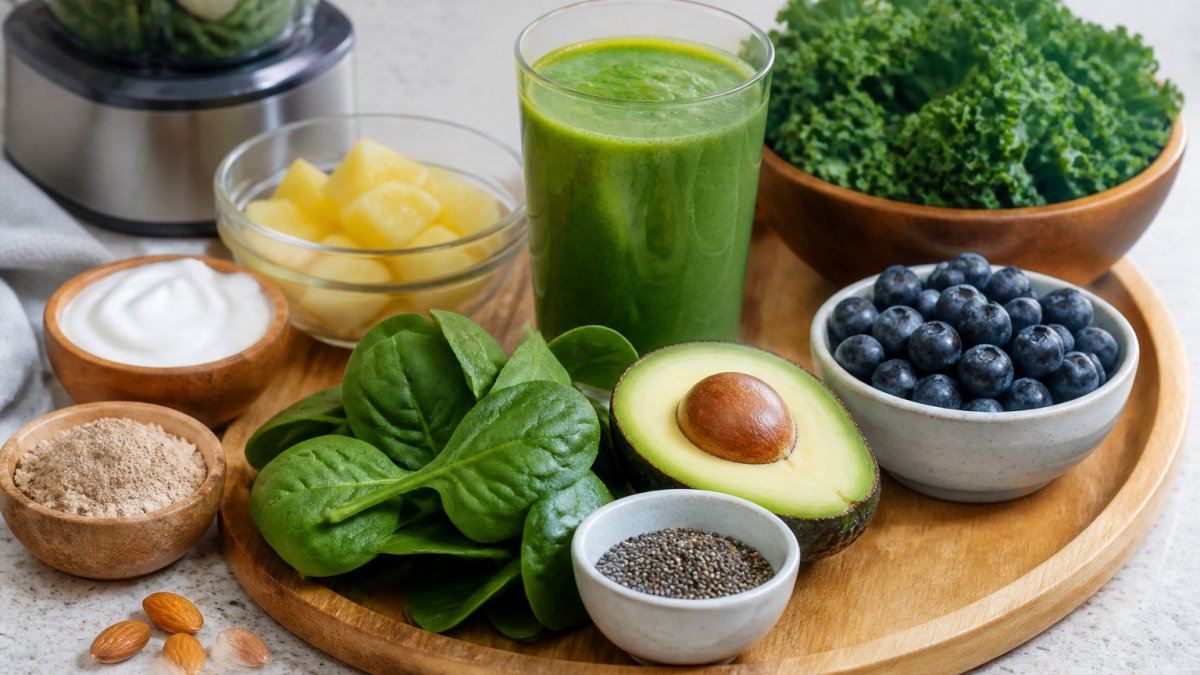
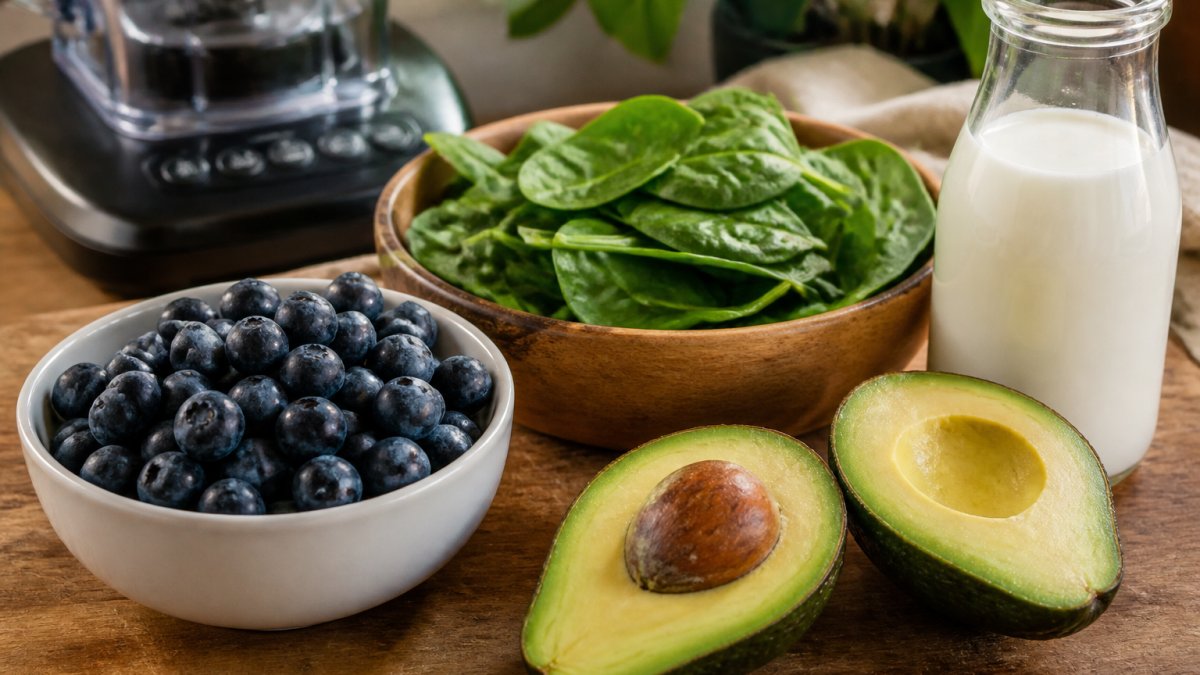
A sample smoothie containing 1 cup spinach, 1/2 cup blueberries, 1/2 avocado, 1 scoop protein powder, and unsweetened almond milk is recommended to promote satiety. This formula works because the blueberries provide flavor and nutrient density without excess fructose. The fiber in the berries slows sugar absorption, preventing the insulin spike that triggers fat storage.
Strawberries and raspberries work similarly. They're lower in natural sugars than mangoes, bananas, or pineapple. If you're tracking net carbs, berries deliver more fiber relative to their sugar content, making them the smart choice for blood sugar regulation.
Leafy Greens: The Foundation of Every Low Sugar Smoothie
Leafy greens like spinach and kale are essential low-sugar, low-calorie base ingredients. They add volume, nutrients, and satiety without meaningfully affecting taste when balanced correctly. Spinach is mild enough that most people don't notice it in a berry smoothie. Kale is earthier and works better with creamy ingredients like avocado.
At Roxberry Juice Co., we craft our smoothies from real fruits and vegetables.
One cup of spinach contains roughly 1 gram of carbs and 0.7 grams of fiber. It's nutritionally invisible in terms of sugar impact but delivers iron, magnesium, and lutein. Romaine lettuce works similarly, mild flavor, high volume, negligible carb impact. Celery is another underrated option: it's mostly water and fiber, adds a subtle vegetal note, and pairs well with ginger or turmeric.
The strategy here is simple: fill half your blender with greens, then add your protein, fat, and measured fruit. You end up with a much larger smoothie that feels more satisfying while keeping sugar and calories controlled.
High-Protein Smoothies for Weight Loss: Building Satiety
Protein is the macronutrient that actually keeps you full. Smoothies without adequate protein are snacks masquerading as meals. They taste good for 20 minutes, then your blood sugar crashes and you're hunting for carbs by 11 a.m.
Protein Powder Selection and Portion Control
One scoop of protein powder (typically 20-30 grams of protein) is the standard. Choose unsweetened or naturally sweetened varieties. Whey, plant-based, and collagen proteins all work; pick based on your dietary preferences and how your body tolerates them.
The key is reading the label. Many protein powders marketed as "natural" still contain 2-5 grams of added sugar per scoop. That's equivalent to a teaspoon of sugar you're not tasting because it's masked by cocoa or vanilla flavoring.
Nut butters (almond, peanut, or tahini) add protein, healthy fat, and satiety. One tablespoon provides roughly 3-4 grams of protein and 9 grams of fat. That fat slows digestion, stabilizes blood sugar, and keeps you satisfied for hours.
Healthy Fats That Promote Satiety Without Added Sugar
Healthy fats are non-negotiable for weight loss smoothies. They slow gastric emptying (how fast food leaves your stomach), stabilize blood sugar, and trigger satiety hormones.
Avocado is the obvious choice. Learn more about specific ingredients and their nutritional profiles to make informed choices for your smoothies.
Chia seeds and flax seeds are underrated additions. One tablespoon of chia seeds provides 3 grams of fiber, 2 grams of protein, and omega-3 fatty acids.
Coconut milk (full-fat, unsweetened) works as a liquid base instead of almond milk if you want extra fat and satiety.
Alpine Fitness recommended ingredient profile emphasizes that satiety comes from macronutrient balance, not calorie restriction.
Low-Sugar Smoothie Recipes That Actually Deliver Results
The Spinach-Blueberry-Avocado Foundation
This is the formula we recommend as a starting point. It's balanced, sustainable, and tastes good.
Ingredients:
- 1 cup fresh spinach
- 1/2 cup blueberries (fresh or frozen)
- 1/2 avocado
- 1 scoop vanilla protein powder
- 1 cup unsweetened almond milk
- 1 tablespoon almond butter (optional but recommended)
- Handful of ice
Process: Add liquid first, then greens, then frozen berries, then soft ingredients (avocado, protein powder, almond butter). Blend until smooth. Total time: 90 seconds.
This smoothie works as a breakfast replacement or post-workout recovery drink. Explore additional healthy breakfast smoothie recipes and techniques for more energy-boosting options. The protein and fat prevent the mid-morning energy crash. The fiber and greens support digestion.
Green Smoothie Without Juice: Vegetable-Forward Approach
This recipe skips fruit entirely, relying on herbs and spices for flavor complexity.
Ingredients:
- 2 cups spinach
- 1 cup romaine lettuce
- 1/2 cucumber
- 1/2 avocado
- 1 tablespoon chia seeds
- 1 scoop vanilla or unflavored protein powder
- 1 cup unsweetened almond milk
- Squeeze of fresh lemon juice
- Small pinch of ginger
- Handful of ice
Process: Blend greens and liquid first to create a smooth base. Add remaining ingredients. Blend until smooth. Total time: 2 minutes.
This approach works for people who find fruit-based smoothies too sweet or who are concerned about fructose intake. The ginger and lemon provide flavor interest without sugar. The high water content (cucumber and greens) means you get a large, filling smoothie at a lower calorie count.
Ingredients to Avoid: What Sabotages Weight Loss Smoothies
Fruit juice is the #1 saboteur. Signs of Added Sugar in Fruit Juice: A Label Guide helps you identify hidden sugars, but the simplest rule is: if it's liquid fruit, avoid it.
Flavored yogurt, granola, and honey are common additions that destroy the macronutrient balance. A single serving of flavored yogurt can contain 15-20 grams of added sugar.
Sweetened protein powders sneak in 3-5 grams of sugar per scoop. Learn what the science shows about natural sweeteners and their effects on weight loss when choosing alternatives. Read the nutrition label, not the marketing. If it says "naturally sweetened," check the carb count. Stevia and monk fruit are better options than sucralose or aspartame, but the best option is unsweetened protein powder with a small amount of natural sweetener added by you (or none at all).
Coconut water, while trendy, contains 9 grams of sugar per cup. It's marketed as "natural hydration" but it's basically sugar water. Unsweetened almond milk, coconut milk, or water are better choices.
Cacao nibs, while nutrient-dense, should be used sparingly. They're easy to overeat, and a handful can add 100+ calories and 10 grams of carbs. If you use them, measure them.
| Ingredient | Why It Sabotages Weight Loss | Better Alternative |
|---|---|---|
| Fruit juice | 12-15g sugar per cup, no fiber | Whole berries (1/2 cup) |
| Flavored yogurt | 15-20g added sugar per serving | Plain Greek yogurt (unsweetened) |
| Honey/agave | 15-17g sugar per tablespoon | Monk fruit or stevia (if needed) |
| Sweetened protein powder | 3-5g hidden sugar per scoop | Unsweetened protein powder |
| Coconut water | 9g sugar per cup | Unsweetened almond milk |
| Granola | 10-15g sugar per quarter-cup | Unsweetened nuts or seeds |
Timing and Portion Control for Maximum Results
When you drink your smoothie matters. A post-workout smoothie serves a different purpose than a breakfast smoothie.
Post-workout smoothies can include slightly more carbs (25-30g net carbs) because your muscles will use that glucose for glycogen replenishment.
Portion control is about total volume and macronutrient density.
Drink your smoothie slowly. Sipping over 10 minutes triggers satiety signals more effectively than chugging it in 2 minutes. Your brain needs time to register fullness.
Make smoothies fresh when possible. Blended smoothies oxidize within 30 minutes, which degrades some nutrients and changes taste.
The difference between a smoothie that supports weight loss and one that undermines it comes down to ingredient selection and macronutrient balance.
Frequently Asked Questions
What are the best low-sugar ingredients to put in a smoothie for weight loss?
Start with leafy greens like spinach or kale as your base, add a small portion of berries (about 1/2 cup blueberries or strawberries), include healthy fats from avocado or nut butters, and boost protein with 1 scoop of protein powder. Use unsweetened almond milk as your liquid. A recommended formula includes 1 cup spinach, 1/2 cup blueberries, 1/2 avocado, 1 scoop protein powder, and unsweetened almond milk, this combination promotes satiety while keeping sugar low and supporting metabolic health.
Which fruits are lowest in sugar for smoothies?
Berries rank among the lowest-sugar fruits for smoothies. Blueberries, strawberries, and raspberries are optimal choices because they're high in antioxidants yet low in calories compared to tropical fruits. Use berries in measured portions, typically 1/2 cup per smoothie, rather than relying on high-sugar fruits like mango, pineapple, or banana. This approach prevents blood sugar spikes that can hinder fat loss while still providing natural sweetness and nutrient density.
What can I use instead of juice in a low-sugar smoothie?
Replace juice with unsweetened almond milk or other non-dairy liquids like coconut water in moderation. Unsweetened almond milk is the preferred base because it adds creaminess without added sugars. You can also use filtered water mixed with a small amount of coconut water for electrolytes. This vegetable-forward approach eliminates concentrated fruit sugars while maintaining hydration and nutrient absorption, making it ideal for weight loss smoothies.
Can protein powder help make a smoothie more filling?
Yes. Protein powder significantly increases satiety and supports macronutrient balance. A single scoop (roughly 20-25g protein) helps stabilize blood sugar and prevents the hunger spike that often follows high-carb smoothies. When combined with healthy fats from avocado and fiber from leafy greens, protein powder creates a filling smoothie that sustains energy for hours. This macronutrient balance is essential for weight loss because it reduces overall calorie intake by minimizing between-meal cravings.
How much fruit should I put in a low-sugar smoothie?
Limit fruit to 1/2 cup per smoothie to control sugar intake and insulin response. High-protein, moderate-fiber, low-sugar smoothies outperform fruit-only versions for weight loss. Fill the remaining volume with leafy greens (1 cup), healthy fats (1/2 avocado), protein powder (1 scoop), and unsweetened almond milk. This ratio maintains nutrient density and satiety while preventing blood sugar spikes that interfere with fat burning and metabolic health.