 comparison
Jamba Juice vs Tropical Smoothie Cafe: A Comparison
Table of Contents
- Jamba Juice vs Tropical Smoothie Cafe: Quick Overview
- Flavor and Taste Profiles Compared
- Natural vs Processed Smoothie Ingredients
- Nutritional Value and Sugar Content Analysis
- Healthiest Smoothie Chain Rankings and Menu Variety
- Best Acai Bowls Near Me: Comparing Offerings
- Price Point, Convenience, and Customer Service
- Which Chain Should You Choose?
- Frequently Asked Questions
Last Updated: August 18, 2026
Jamba Juice vs Tropical Smoothie Cafe: Quick Overview
When you're standing in line at a smoothie bar deciding between chains, the choice feels straightforward, until you start asking the right questions. What's actually in that smoothie? How much sugar are you drinking? Is the fruit real or reconstituted? These aren't trivial details for health-conscious consumers seeking genuine nutrition.
Jamba Juice vs Tropical Smoothie Cafe represents one of the most common purchasing decisions in the smoothie category. Both chains operate hundreds of locations nationwide and dominate the quick-service beverage market. But beneath their similar storefronts lie meaningful differences in ingredient sourcing, nutritional profiles, menu philosophy, and customer experience. Understanding these distinctions helps you make an informed choice aligned with your health goals.
This guide from Roxberry Juice Co. breaks down how these two major chains compare across the dimensions that matter most: flavor quality, ingredient transparency, nutritional value, menu variety, pricing, and convenience. We've analyzed what each chain does well and where each falls short, so you can decide which better fits your lifestyle and dietary priorities.
Flavor and Taste Profiles Compared
Jamba Juice has built its reputation on bold, consistent flavor profiles that appeal to mainstream palates. Their smoothies taste sweet, fruity, and indulgent, designed to satisfy cravings rather than challenge taste preferences. The flavor experience is predictable across locations, which works well for customers who know exactly what they want every time they order.
Tropical Smoothie Cafe leans into tropical and exotic flavor combinations. Their menu features more adventurous tastes: açaí bowls with unique topping combinations, smoothies blending unexpected ingredients like kale and pineapple, and bowls that double as meals rather than beverages. The flavor profile tends toward brighter, more complex notes, less about sweetness and more about ingredient interplay.
The practical difference matters. If you value consistency and familiar flavors, Jamba Juice delivers predictability. If you want variety and are willing to try new flavor combinations, Tropical Smoothie Cafe offers more exploration. Neither approach is objectively superior; it depends on whether you prioritize comfort in your daily smoothie or welcome experimentation.
The texture experience also differs. Jamba Juice smoothies tend toward a thicker, creamier consistency, almost dessert-like. Tropical Smoothie Cafe offerings range more widely depending on the drink type: some are juice-forward and lighter, others are bowl-based with chunky toppings and varied textures.
Natural vs Processed Smoothie Ingredients
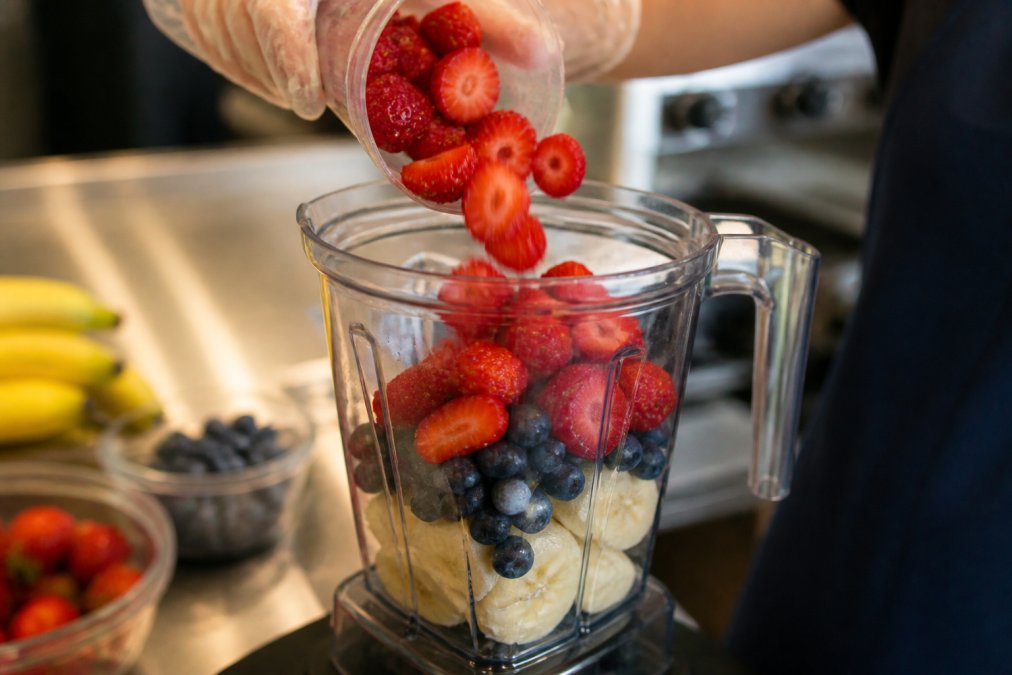
This is where the comparison gets substantive. Jamba Juice uses a combination of fresh fruit, fruit purees, and ingredient concentrates. Many of their smoothies contain added sugars, syrups, and flavorings designed to enhance sweetness and consistency. Their açaí bowls use processed açaí puree rather than whole fruit. This approach prioritizes shelf stability, consistency, and operational efficiency across their franchise network.
Tropical Smoothie Cafe similarly uses a mix of fresh and processed ingredients. Their smoothies incorporate fresh fruit alongside juice blends and flavor additives. The açaí bowls feature processed açaí puree topped with granola and fresh fruit, creating a hybrid approach between whole-food and convenience-based ingredients.
The honest truth: both chains rely on processed elements to maintain operational consistency. A true 100% fresh-pressed smoothie bar would face inventory challenges, labor costs, and seasonal variability that franchise models struggle to accommodate. Neither Jamba Juice nor Tropical Smoothie Cafe positions itself as a fresh-pressed juice operation, that positioning belongs to specialized juice bars and local operations like Roxberry Juice Co., which emphasizes 100% natural, fresh-pressed juices blended to order from real fruits and vegetables.
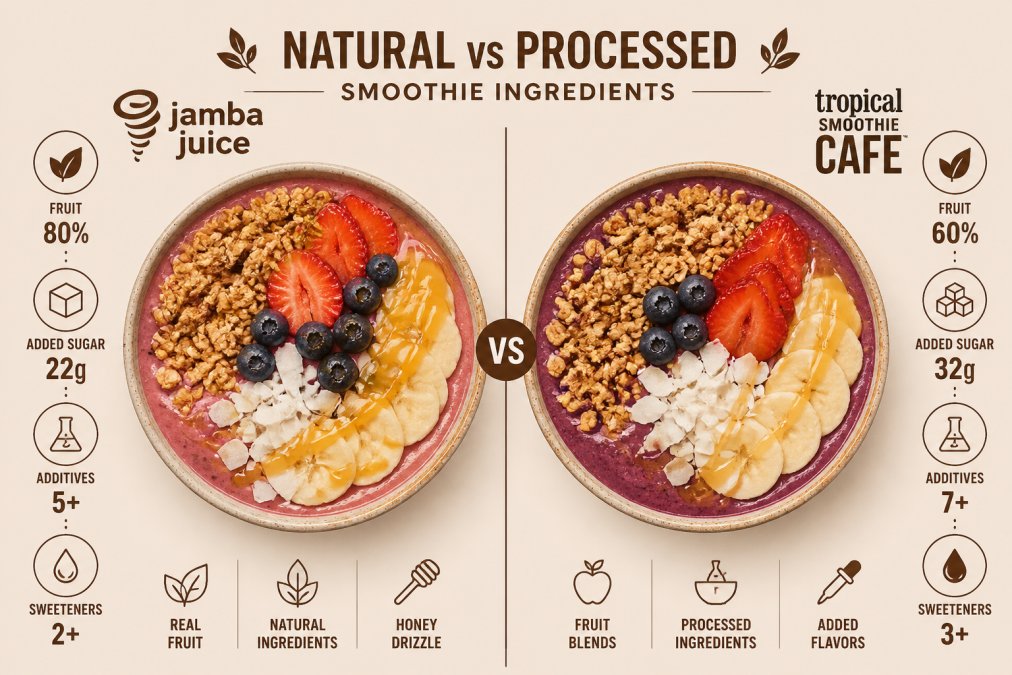
For consumers prioritizing ingredient transparency, this distinction matters. If you're concerned about artificial sweeteners, additives, or the ratio of whole fruit to processed ingredients, reading the specific menu items becomes essential. Jamba Juice and Tropical Smoothie Cafe both publish nutritional information, but the presence of syrups, concentrates, and added sugars is common across their offerings.
Nutritional Value and Sugar Content Analysis
Here's what matters most: the sugar content in smoothies often surprises health-conscious consumers. A single smoothie from either chain can contain 40-60 grams of sugar, depending on the size and specific drink selected. This rivals desserts in sugar density, even when the smoothie is marketed as "healthy."
Jamba Juice smoothies tend toward the higher end of the sugar spectrum. Their standard smoothies often exceed 50 grams of sugar per serving. Some of their more indulgent offerings, blended with sorbets, yogurt, and syrups, push toward 70+ grams. This reflects their positioning as a treat-oriented beverage rather than a strictly nutritional product.
Tropical Smoothie Cafe offers more variability. Their menu includes options explicitly positioned as lower-sugar alternatives, and their bowls (which include solid toppings) provide more satiety per serving compared to liquid-only smoothies. However, their standard smoothie lineup still contains significant sugar content, often in the 40-55 gram range.
The nutritional profile extends beyond sugar. Protein content varies significantly between drinks. Jamba Juice smoothies typically contain 5-8 grams of protein unless specifically formulated with protein powder additions. Tropical Smoothie Cafe's protein smoothies and bowls range from 10-20 grams depending on the specific item and whether you add protein boosters.
Fiber content, often overlooked, differs based on ingredients. Tropical Smoothie Cafe's emphasis on whole fruits and vegetable-based smoothies generally provides more fiber per serving. Jamba Juice smoothies, which rely more on purees and juice concentrates, typically deliver less fiber.
For dietary preferences, both chains accommodate dairy-free options using coconut milk or almond milk alternatives. However, neither chain specializes in serving individuals with specific digestive concerns or those seeking cleanses focused on ingredient transparency and natural sourcing.
Healthiest Smoothie Chain Rankings and Menu Variety
Ranking "healthiest" depends entirely on your criteria. If you prioritize lowest sugar content, Tropical Smoothie Cafe edges ahead with more explicitly lower-sugar options. If you want maximum protein for post-workout recovery, both chains offer protein-enhanced versions, though Tropical Smoothie Cafe's bowl format provides more substantial nutrition per serving.
Menu variety tells a different story. Tropical Smoothie Cafe offers significantly more diversity: smoothies, bowls, wraps, and food pairings create a broader ecosystem. Their menu acknowledges that customers may want a complete meal rather than just a beverage. Jamba Juice focuses primarily on smoothies and bowls, with a more simplified approach.
Jamba Juice's strength lies in consistency and simplicity. Their menu is easier to navigate if you want a quick decision without extensive options. This appeals to customers seeking efficiency over exploration.
Tropical Smoothie Cafe's strength is versatility. Their menu accommodates different meal occasions and dietary approaches, breakfast, snack, post-workout refuel, or light lunch. This flexibility matters for customers building a regular habit around the chain.
For customization, both chains allow modifications: adding protein, changing milk types, requesting less sweetener. Tropical Smoothie Cafe tends to be more transparent about ingredient modifications upfront in their menu descriptions.
Best Acai Bowls Near Me: Comparing Offerings
Açaí bowls have become a category unto themselves, and both chains recognize this trend. Jamba Juice's açaí bowls use processed açaí puree topped with granola, fresh fruit, and sometimes honey or coconut. The bowl format provides texture variety that smoothies alone cannot, the granola crunch, fruit chunks, and creamy base create a more complex eating experience.
Tropical Smoothie Cafe's açaí bowls similarly feature açaí puree bases but often include more elaborate topping combinations. Their bowls frequently incorporate superfoods like chia seeds, hemp hearts, and additional fresh fruit varieties. The presentation tends toward more visually distinctive bowls with varied colors and textures.
The practical consideration: açaí bowls require a spoon and eating time, unlike smoothies consumed on-the-go. This makes them better for customers with time to sit and eat rather than those rushing between commitments. Both chains position bowls as more substantial than smoothies, they're positioned as meals or significant snacks rather than beverages.
For the best acai bowls near me search, location matters more than chain affiliation. Local juice bars and açaí-focused establishments often provide higher-quality bases and fresher toppings than franchise chains. However, if your nearest options are Jamba Juice and Tropical Smoothie Cafe, Tropical Smoothie Cafe's bowls generally offer more variety and ingredient diversity.
The granola component deserves attention. Both chains use commercial granola formulations for consistency and shelf stability. If you're seeking signature quality in your granola topping, like Roxberry Juice Co.'s approach with their proprietary Roxberry Granola crafted specifically to complement their smoothies and bowls, you'll need to explore beyond major chains.
Price Point, Convenience, and Customer Service
Pricing between Jamba Juice and Tropical Smoothie Cafe falls within comparable ranges, though specific costs vary by location. Both chains position themselves in the mid-range smoothie market, more expensive than fast-food beverages, less costly than specialty juice bars. For current pricing on specific menu items, visiting their websites or mobile apps provides the most accurate information.
Convenience factors differ meaningfully. Jamba Juice locations are more numerous nationwide, giving them a geographic advantage. Their ordering process is straightforward: select a smoothie size and flavor, optionally add protein or supplements, and pay. The transaction moves quickly.
Tropical Smoothie Cafe's convenience is more variable. Bowls require longer preparation time than smoothies. Their menu complexity, more options, more customization possibilities, can slow ordering for indecisive customers but provides flexibility for those with specific preferences.
Wait times represent a real-world consideration. Jamba Juice smoothies typically prepare in 2-3 minutes. Tropical Smoothie Cafe smoothies prepare similarly, but their bowls can take 3-5 minutes due to topping assembly. During peak hours (morning rush, post-lunch), wait times extend accordingly at both chains.
Customer service quality varies by individual location rather than by chain. Both operate franchise models where training and service standards depend on local management. Some locations excel at customer experience; others feel rushed and impersonal. Reading recent reviews for your specific location provides more relevant information than generalizing about the entire chain.
Mobile ordering and loyalty programs represent modern convenience factors. Both chains offer app-based ordering for pickup, reducing in-store wait times. Their loyalty programs provide rewards and incentives for repeat customers. Tropical Smoothie Cafe's app tends toward more sophisticated personalization features, while Jamba Juice's app emphasizes simplicity.
The drive-thru consideration matters for busy professionals. Jamba Juice locations more commonly feature drive-thru service, making them more convenient for grab-and-go customers. Tropical Smoothie Cafe locations vary, some have drive-thru capability, others don't.
Which Chain Should You Choose?
The decision between Jamba Juice vs Tropical Smoothie Cafe ultimately reflects your priorities and lifestyle constraints.
Choose Jamba Juice if:
- You value consistency and predictability in flavor
- You prioritize speed and convenience above all else
- You want the simplest menu without extensive options
- You appreciate the treat-like smoothie experience
- Drive-thru access matters to your routine
- You're seeking a quick breakfast or post-workout beverage
Choose Tropical Smoothie Cafe if:
- You want menu variety and the flexibility to explore different flavors
- You're interested in bowls as more substantial meals
- You appreciate customization options and ingredient transparency
- You're looking for a place to sit and eat rather than grab-and-go
- You want more protein-forward or nutrient-dense options
- You're willing to spend a few extra minutes for more elaborate offerings
Consider alternatives if:
- You prioritize 100% natural, fresh-pressed ingredients without processed elements
- You're concerned about sugar content and want truly lower-sugar options
- You have specific dietary requirements like dairy-free, organic, or transparent sourcing
- You value locally owned and operated establishments over national franchises
- You want smoothies and juices crafted from real fruits and vegetables blended fresh to order
For health-conscious consumers seeking maximum ingredient transparency and nutritional integrity, local juice bars and smoothie shops, particularly those emphasizing fresh-pressed preparation and whole-fruit bases, often outperform national chains. Roxberry Juice Co. exemplifies this alternative approach, offering 100% natural juices, smoothies blended to order from real fruits and vegetables, and açaí bowls topped with signature Roxberry Granola. For customers prioritizing ingredient quality and transparent sourcing over franchise convenience, exploring locally owned options provides access to products designed specifically to restore digestion, increase energy, and improve mental clarity through genuinely natural ingredients.
The comparison between major chains serves a purpose: it clarifies what each does well and where compromises exist. Armed with this understanding, you can make a choice aligned with your actual priorities rather than defaulting to whichever location is nearest.
Choosing between smoothie chains involves more than picking a familiar name. It requires understanding what each prioritizes, Jamba Juice's consistency and convenience versus Tropical Smoothie Cafe's variety and menu sophistication. But the real decision extends beyond these two: whether you're satisfied with the ingredient compromises both chains make, or whether you want to explore options that prioritize fresh-pressed preparation and whole-fruit bases. Download the Roxberry Juice Co. app to discover how fresh-pressed smoothies, 100% natural juices, and nutrient-dense açaí bowls crafted from real ingredients can elevate your daily nutrition routine with transparency and genuine health benefits.
Frequently Asked Questions
What's healthier, Tropical Smoothie or Jamba Juice?
Neither chain is universally healthier, it depends on what you order. Both offer menu items with high sugar content and options with better nutritional profiles. Tropical Smoothie Cafe emphasizes real fruit and offers protein-boosted smoothies, while Jamba Juice provides customization options to reduce added sugars. The healthiest choice at either chain involves selecting items with lower sugar content, requesting no added sweeteners, and choosing protein or fiber boosts when available.
Does Tropical Smoothie Cafe use real fruit?
Yes, Tropical Smoothie Cafe uses real fruit in their smoothies. They emphasize fresh ingredients and avoid artificial sweeteners in many menu items. However, some smoothies contain added sugars and fruit purees rather than whole fruit. Reading nutritional labels and asking about specific ingredients helps you identify which menu items align with your health goals and dietary preferences.
Which smoothie chain has the best acai bowls?
Acai bowl quality varies by location and personal preference. Both chains offer acai bowls topped with granola and fresh ingredients, but Jamba Juice and Tropical Smoothie Cafe differ in bowl size, topping variety, and texture consistency. Visit locations near you to compare offerings, taste profiles, and customization options. Local juice bars and smoothie shops in your area may also offer superior acai bowls with unique ingredient combinations.
Is anything at Jamba Juice actually healthy?
Yes, Jamba Juice offers health-conscious options. Their smoothies can be customized to reduce sugar by requesting no added syrups, choosing fruit-based smoothies, and adding protein powder or fiber boosts. Menu items labeled as 'Lighter' contain fewer calories and less sugar. However, many standard menu items contain significant added sugars and artificial ingredients. Checking nutritional information and making intentional customization choices helps you find genuinely nutritious options at Jamba Juice.