 Ultimate guide
7 Low Glycemic Sweeteners for Steady Energy Without the Crash
Last Updated: November 9, 2026
Quick Summary
Low glycemic sweeteners raise blood glucose slowly instead of in a sharp spike, which helps you avoid the fast drop that follows a sugary drink. Low GI is defined as a score below 55, and options like stevia, monk fruit, and allulose sweeten with little to no impact on blood glucose. Keep portions modest, since total carbohydrate per serving matters more than the GI number alone.
- Stevia, monk fruit, and allulose all hold Generally Recognized as Safe status from the FDA.
- A food with a glycemic load under 10 is generally considered low; 20 or above is high.
- A teaspoon of maple syrup has a glycemic load of roughly 2.4, but a quarter cup nears 29.
- Allulose browns and freezes like sugar and substitutes at roughly a one-to-one ratio by volume.
- Erythritol is generally the best tolerated polyol, while maltitol is more likely to cause discomfort.
Table of Contents
- Why Low Glycemic Sweeteners Matter for Energy
- Sweetener Glycemic Index Chart: How 7 Options Compare
- Stevia, Monk Fruit, and Allulose: Zero-Calorie Standouts
- Sugar Alcohols and Polyols: Erythritol and Beyond
- Agave, Honey, Maple, and Coconut Sugar: Natural but Not All Equal
- How to Avoid Sugar Crashes Without Giving Up Sweetness
- Natural Ways to Boost Energy Beyond the Sweetener Aisle
- Choosing Your Sweetener at Roxberry
- Frequently Asked Questions
Why Low Glycemic Sweeteners Matter for Energy
Low glycemic sweeteners are sugars and sugar substitutes that raise blood glucose slowly rather than in a sharp spike, and that slower curve is the reason they matter for steady energy. The glycemic index, or GI, ranks carbohydrate foods by how quickly they lift blood sugar, and low GI is defined as a score below 55, according to the standardized GI ranges published by the National Center for Biotechnology Information.
Drinks built around real fruit and vegetables raise a common question: which sweetener lands gently? Below, we rank seven options, flag where the numbers mislead, and show how to use them without losing the sweetness you actually want.
Sweetener Glycemic Index Chart: How 7 Options Compare
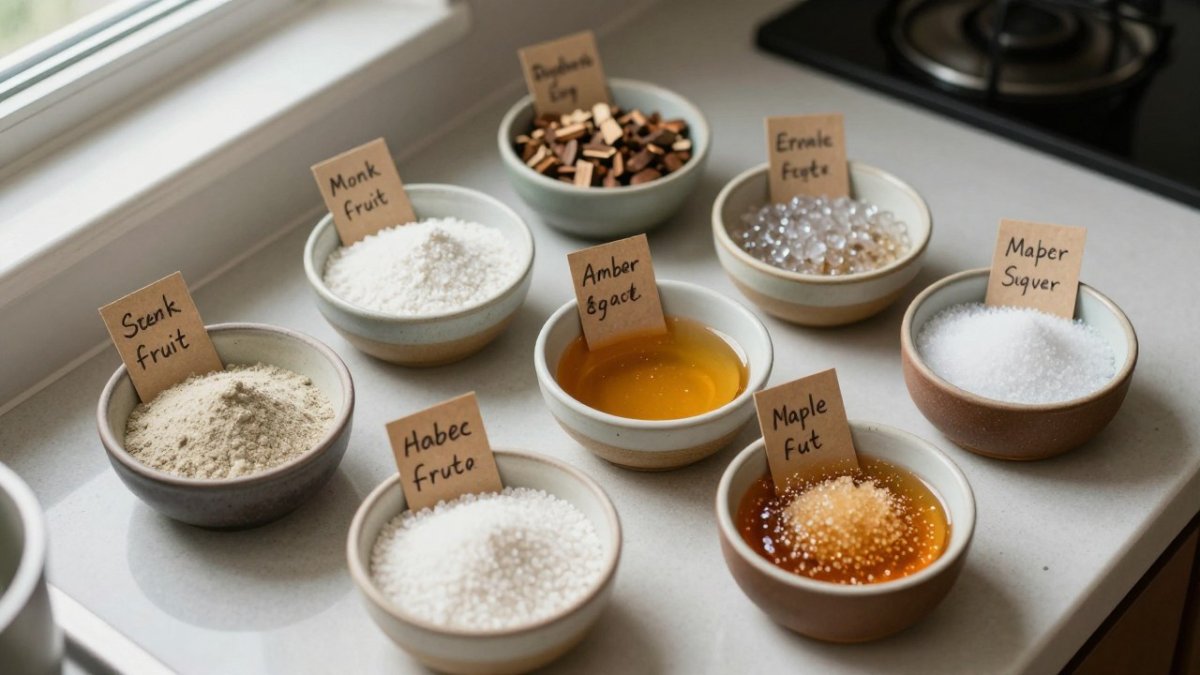
Here is how seven common sweeteners rank by glycemic index, from lowest to highest, based on data compiled by Vivacity Healthcare's sweetener GI rankings.
| Sweetener | GI Score | Calories | Sweetness vs. Sucrose | Best For |
|---|---|---|---|---|
| Stevia | 0 | Zero | 200-300x | Coffee, baking blends |
| Monk fruit | 0 | Zero | 100-250x | Drinks, desserts |
| Allulose | Near 0 | Very low | About 70% | Baking, frozen treats |
| Agave syrup | 15 | Moderate | About 1.4x | Cold drinks, drizzling |
| Brown rice syrup | 25 | Moderate | About 0.5x | Granola, snack bars |
| Coconut sugar | 35 | Moderate | About 1x | Baking, coffee |
| Maple syrup | 54 | Moderate | About 1x | Pancakes, glazes |
Reading the Chart: What the Numbers Do and Don't Tell You
A GI score describes the speed of a glucose response, not the size of it. That distinction trips up most people scanning a chart like the one above, and it is the single biggest reason a low number can mislead.
GI is measured on a fixed amount of available carbohydrate, usually 50 grams, so a sweetener with a low score can still deliver a meaningful carbohydrate load if you use a lot of it. Portion size decides the real-world effect. Stevia also illustrates the gap between GI and sweetness: stevia has 200 to 300 times the sweetening power of sucrose, per the same NCBI review of natural sweetener potency, so the amount you use is tiny.
Why GI Values Conflict and How Much to Trust Them
Published GI values are not fixed constants. They shift with the specific product, the degree of processing, the ripeness of the source plant, and the test method used in the lab. Agave syrup from one brand can test differently from another because fructose and glucose ratios vary by lot. Coconut sugar can land anywhere in the 30s to mid-40s depending on how refined it is.
That means a single-number ranking is a starting point, not a guarantee. Measured GI data from a lab is more reliable than a front-label claim, and many products marketed as "low glycemic" have no published test behind the claim.
Serving Size and Carbohydrate Load: The Number That Actually Matters
Glycemic load, or GL, combines GI with the actual carbohydrate in a portion, and it is a better guide to what happens after you eat. The formula is simple: GL equals GI multiplied by grams of available carbohydrate, divided by 100. A food with a GL under 10 is generally considered low; 20 or above is high.
Applied to sweeteners, the math is revealing. A teaspoon of maple syrup (GI 54) carries about 4.5 grams of carbohydrate, so its GL is roughly 2.4, which is low in practice because the portion is small. A quarter cup of the same syrup carries about 54 grams of carbohydrate and a GL near 29, which is high.
Glycemic Index Scores of Seven Sweeteners
Stevia, Monk Fruit, and Allulose: Zero-Calorie Standouts
Stevia, monk fruit, and allulose are the three options that sweeten with little to no impact on blood glucose, and all three hold Generally Recognized as Safe status from the FDA, per the American Heart Association's summary of natural sweeteners. Stevia comes from a leaf and carries a slight herbal note that works well in tea and fruit-forward drinks. Monk fruit extract is rounder and fruitier, which makes it a better fit for desserts. Allulose behaves like sugar in baking, browns, and freezes, which is why it shows up in low-calorie frozen treats.
The honest limitation: all three taste different from sugar at high concentrations. Stevia turns bitter in large amounts, and monk fruit can read as slightly cooling. Start with half the sugar equivalent and adjust up.
Sugar Alcohols and Polyols: Erythritol and Beyond
Sugar alcohols, also called polyols, are carbohydrates that sweeten with fewer calories than sugar and a much slower glucose response. Erythritol is the most common, with a GI near zero and about 70% of sugar's sweetness.
Digestive tolerance is the trade-off. Polyols draw water into the gut, and larger doses cause bloating or loose stools in sensitive people. If you have a sensitive stomach, keep erythritol portions modest and read labels carefully. For a deeper look at how sweeteners interact with digestion, our guide to artificial sweeteners and gut health covers the current evidence.
Agave, Honey, Maple, and Coconut Sugar: Natural but Not All Equal
Natural sugars are not interchangeable, and the GI spread proves it. Agave syrup sits at 15 and brown rice syrup at 25, while coconut sugar lands at 35 and maple syrup at 54, per Vivacity Healthcare's rankings. That range is wide enough to change how a sweetener fits your day.
Agave's low score comes from its high fructose content, which is worth knowing: fructose has a low GI because it does not raise blood glucose directly, but it is still sugar with calories. If you are scanning labels for hidden added sugar, our guide to spotting added sugar in fruit juice walks through what to look for.
How to Avoid Sugar Crashes Without Giving Up Sweetness
Avoiding a sugar crash comes down to three moves: pair sweetness with fiber and protein, keep portions small, and choose a sweetener whose GI sits below 55. Fiber slows gastric emptying, which flattens the glucose curve, so a smoothie with whole fruit behaves very differently from a glass of juice with added syrup.
Do Low-Glycemic Sweeteners Actually Give You Energy?
This is the question the rankings rarely answer. A sweetener does not create energy on its own; it supplies carbohydrate that the body converts to glucose, or it supplies sweetness with little or no carbohydrate at all.
Sweeteners that do carry carbohydrate, such as agave, maple syrup, and coconut sugar, deliver usable energy, just more slowly than table sugar. The practical difference is timing: a low-GI sweetener releases glucose more gradually, which some people experience as a steadier mood and energy level, while a high-GI sweetener delivers a quicker lift followed by a faster decline.
Matching the Sweetener to the Use Case
Beverages, baking, and exercise fueling put very different demands on a sweetener, and the best choice changes with the job.
For baking, allulose browns and freezes like sugar and substitutes at roughly a one-to-one ratio by volume, though it can brown faster, so watch the oven. Stevia and monk fruit are far sweeter than sugar and need a conversion chart.
Blends complicate the picture. A product labeled "low glycemic" may combine stevia with cane sugar, and the label rarely states the ratio. For readers cutting sugar for steady energy, our list of low-sugar smoothie ingredients gives you building blocks that keep flavor high and the curve gentle.
Digestive Tolerance and Individual Response
Polyols such as erythritol, xylitol, and maltitol draw water into the gut, and larger doses cause bloating or loose stools in sensitive people. Erythritol is generally the best tolerated, while maltitol is more likely to cause discomfort and also behaves more like regular sugar for blood glucose. Start with small amounts and increase gradually. Glucose response and tolerance differ between individuals, so a sweetener that suits one person may not suit another; tracking how you feel after a swap is more useful than any single chart.
Natural Ways to Boost Energy Beyond the Sweetener Aisle
Sweeteners only shape one part of the energy picture. Sleep, hydration, meal timing, and movement all move the needle more than any single swap, and a low-GI sweetener cannot rescue a diet built on refined carbohydrates. The most useful habit is a steady rhythm: protein at breakfast, real food at lunch, and a small, fiber-rich snack in the afternoon instead of a sugary one.
If you want a broader playbook, our guide to natural ways to boost energy covers the full set of levers. For the underlying science of how sweeteners affect energy, our breakdown of sweeteners and energy goes deeper than a chart can. On the evidence itself, a 2026 review found no indication that low- and no-calorie sweeteners cause disordered glycemia or increased energy intake, per the ScienceDirect review of sweeteners and health, though the authors note the evidence base varies in quality.
Choosing Your Sweetener at Roxberry
The practical answer is that no single sweetener wins for everyone. Zero-calorie options suit coffee and baking, agave and brown rice syrup suit cold drinks and granola, and whole fruit remains the most satisfying way to get sweetness with fiber attached.
That is the approach we take at Roxberry Juice Co. Roxberry Juice Co. offers smoothies blended to order, 100% natural fresh-pressed juices, and açaí bowls topped with our signature Roxberry Granola.
Steady energy is less about finding one perfect sweetener and more about how sweetness arrives on your plate. Roxberry Juice Co. makes that easy with 100% natural juices, smoothies blended to order, and açaí bowls built from real fruits and vegetables.
Frequently Asked Questions
What is the healthiest low glycemic sweetener for sustained energy?
There is no single best option, but stevia and monk fruit stand out because they have negligible glycemic impact and zero calories, so they do not trigger a blood glucose spike or the crash that can follow. If you prefer a sweetener with some carbohydrate content, allulose and erythritol are low-glycemic polyols that provide sweetness with minimal impact on blood sugar. For steady energy, pair any sweetener with protein, fiber, or fat, and keep portions modest.
Do low glycemic sweeteners provide the same energy as refined sugar?
No. Refined sugar (sucrose) provides about 4 calories per gram and raises blood glucose quickly, which can supply a fast burst of energy followed by a dip. Most low glycemic sweeteners either provide fewer calories (sugar alcohols, allulose) or no calories at all (stevia, monk fruit), so they do not deliver the same fuel. They sweeten without the glucose spike, which is useful for avoiding crashes, but they are not an energy source on their own. For lasting energy, combine them with whole foods that contain carbohydrates, protein, and fiber.
Can switching to low glycemic sweeteners improve my overall energy levels?
It can help smooth out the peaks and dips that come from frequent sugary foods. Stable blood glucose often translates to steadier energy, but individual response varies, and sweeteners are only one part of the picture.
What is a good low-glycemic sweetener for coffee or smoothies?
For coffee, stevia and monk fruit are popular because they dissolve easily, add no calories, and do not spike blood sugar. Allulose works well in coffee too and browns like sugar when baked. In smoothies, a small amount of date syrup or coconut sugar can add flavor, but keep portions small because both still contain carbohydrates. If you are watching glucose response, blend in fresh fruit for sweetness and fiber, and use stevia or monk fruit to adjust sweetness without extra sugar.