 listicle
What Are the Best Fermented Foods for Beginners?
Last Updated: October 30, 2026
Quick Summary
The best fermented foods for beginners are plain yogurt, kefir, and refrigerated sauerkraut, because they need no cooking and no special equipment. Start with one serving a day of a single fermented food and hold there for a week before adding anything else.
- Buy plain yogurt with live cultures listed on the label and add your own fruit.
- Refrigerated sauerkraut is far more likely to be unpasteurized than shelf-stable jars.
- Keep vegetables under the brine, weigh your salt, and ferment in a cool spot.
- A thin white film is often harmless kahm yeast, but fuzzy or colored mold means discard the batch.
- Talk to your doctor before making raw fermented foods a daily habit if pregnant or immunocompromised.
Table of Contents
- Why Fermented Foods Are Worth Trying
- A Common Fermented Foods List, Ranked by Ease
- How to Start Eating Fermented Foods Without Overdoing It
- Easy Fermented Foods to Make at Home
- Beginner Fermentation Recipes to Try This Week
- Store-Bought vs. Homemade: What Actually Works
- Food-Safety Troubleshooting for First-Timers
- Pick Up a Fresh-Pressed Boost at Roxberry Juice Co.
- Frequently Asked Questions
Why Fermented Foods Are Worth Trying
Fermented foods are foods transformed by beneficial bacteria and yeast, and they earn their place on your plate because that process does more than preserve them. According to Stanford Medicine's science-based guide to fermented foods, clinical studies show these foods can support health by boosting nutrients, reducing inflammation, and supporting digestion. For a closer look, see the benefits of fermented foods for digestion.
Here is the honest version, though: the science is promising but unfinished. A 2022 review in the journal Fermentation found that fermented foods can affect the gut microbiome in both the short and long term, yet researchers still lack clear consensus on how often to eat them or which ones are best.
Below, we rank the best fermented foods for beginners by how easy they are to actually live with, then cover safety, taste, and store-bought shortcuts.
A Common Fermented Foods List, Ranked by Ease
Plain yogurt, kefir, and refrigerated sauerkraut are commonly considered easy starting points, because they require no cooking and no special equipment. We rank by three criteria: how mild the flavor is, how little effort it takes to buy or make, and how forgiving it is when you get the details slightly wrong.
And if you are still fuzzy on which foods feed good bacteria versus which ones deliver them, the difference between probiotics vs prebiotics for digestion is worth five minutes.
The Easiest Tier: Yogurt, Kefir, and Sauerkraut
Plain yogurt is a common gateway ferment. It is mild, familiar, and widely sold. Buy the plain kind with live cultures listed on the label, then add your own fruit. Flavored tubs often carry more sugar than the cultures are worth.
Kefir drinks like a thin smoothie and is often described as containing a wider mix of bacteria and yeasts than yogurt. It is tangy, so start with a small glass.
Refrigerated sauerkraut, the kind in the cold case rather than the shelf-stable aisle, delivers crunch and live cultures with zero prep.
The Middle Tier: Kimchi, Miso, and Tempeh
Kimchi brings heat and funk. If spicy food is not your thing, look for a mild or white kimchi. Miso paste dissolves into soups and marinades and adds savory depth, though it is salty, so taste as you go. Tempeh is a firm, nutty soybean cake that takes a marinade well and holds up in a stir-fry.
These three ask more of your palate than your schedule. That is the trade.
The Advanced Tier: Kombucha and Sourdough
Kombucha is a fizzy, tart tea ferment sold in most grocery stores. Buying it is easy. Brewing it at home requires a culture, patience, and clean equipment. Sourdough belongs here for a different reason: maintaining a starter is a daily relationship, not a one-time project. Both are rewarding, neither is where you should begin.
How to Start Eating Fermented Foods Without Overdoing It
Start with one serving a day of a single fermented food and hold there for a week before adding anything else. That is the whole method. Most beginners rush, stack three new foods into one day, and then blame the food when their stomach protests.
A few practical notes:
- Keep servings small at first, a few spoonfuls rather than a full bowl
- Eat fermented foods with meals rather than on an empty stomach
- Add one new ferment at a time so you know what agrees with you
- Give it a week before you judge the results
Easy Fermented Foods to Make at Home
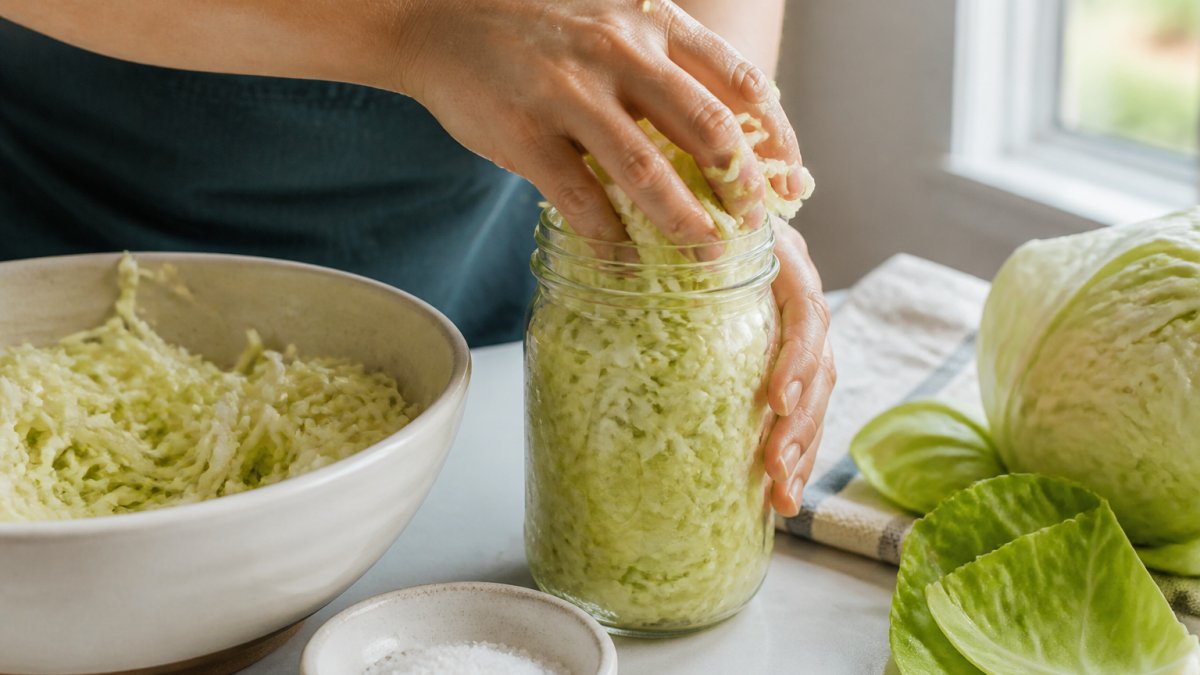
Home fermentation starts with two ingredients and one rule: keep the vegetables under the brine. Salt controls which microbes thrive, and an anaerobic environment keeps the wrong ones out.
The simplest projects for a first-timer are refrigerator pickles, sauerkraut, and a basic kimchi. Each needs a clean glass jar, non-iodized salt, and a cool spot.
Beginner Fermentation Recipes to Try This Week
Here are three recipes that stay inside beginner territory.
Quick Sauerkraut. Shred one medium head of cabbage, toss with salt, and massage until it releases liquid.
Refrigerator Pickles. Slice cucumbers, pack them into a jar with garlic, dill, and spices, then cover with a salt-and-water brine. Refrigerate and start eating within a few days.
Simple Kimchi. Toss chopped cabbage with salt, rinse, then mix with ginger, garlic, and chili flakes. Pack into a jar, press down, and ferment at room temperature for a few days before refrigerating.
Store-Bought vs. Homemade: What Actually Works
Store-bought wins on consistency and safety for most beginners; homemade wins on cost and flavor control once you know what you are doing. That is the short answer. The longer answer is that store-bought only works if you know how to spot a live-culture product, because the shelf-stable versions of the same foods often contain no living microbes at all.
How to Read the Label
Look for the words "live and active cultures" or "live cultures" on the package. For yogurt, the National Yogurt Association's Live & Active Cultures seal is a commonly used marker, though it is a voluntary program rather than a government standard. For sauerkraut and kimchi, the reliable signal is location: products in the refrigerated case are far more likely to be unpasteurized, while jars in the shelf-stable aisle have usually been heat-treated. For kombucha, check that the label says raw or unpasteurized and look at the sugar content, which varies widely between brands.
Why Refrigeration Matters
Heat treatment kills the microbes that make fermented food interesting, which is why shelf-stable sauerkraut can sit in a pantry for a year. Refrigerated, unpasteurized products keep those cultures alive but come with a shorter shelf life and a need to stay cold. If a refrigerated fermented food has been left out for hours, treat it the way you would any perishable food and discard it.
The Comparison
| Option | Effort | Best For | Watch Out For |
|---|---|---|---|
| Plain yogurt | None | Daily habit, kids | Added sugar in flavored tubs; check for live cultures |
| Kefir | None | Quick morning drink | Strong tang at first; sugar in flavored versions |
| Refrigerated sauerkraut | None | Crunch and live cultures | Shelf-stable jars lack live cultures |
| Kimchi | Low | Flavor variety | High sodium |
| Miso | Low | Soups and marinades | Very salty |
| Tempeh | Low | Hearty meals | Needs marinating |
| Kombucha | Low to buy, high to brew | Fizzy alternative to soda | Sugar content varies; check for raw labeling |
| Sourdough | High | Long-term hobby | Starter maintenance |
When Homemade Is Worth It
Homemade makes sense once you have eaten enough store-bought versions to know what the food should taste like. A jar of sauerkraut, a head of cabbage, and non-iodized salt cost less than a few store-bought jars, and you control the salt level and the fermentation time.
For a beginner, buying is not cheating. It is a practical way to learn what the food is supposed to taste like before you try to make it.
Food-Safety Troubleshooting for First-Timers
Most home fermentation problems trace back to three causes: vegetables floating above the brine, dirty equipment, or a jar kept too warm. Fix those and the rest usually sorts itself out. What beginners actually need is a way to tell a healthy batch from a spoiled one, because the two can look similar on day three. If gas and bloating are your concern, learn how to reduce daily bloating.
Mold Versus Harmless Surface Yeast
A thin white film on the surface of sauerkraut or kimchi is often kahm yeast, a harmless surface yeast that appears when oxygen is present. It looks flat, powdery, or slightly wrinkled, and it smells yeasty rather than rotten. Skim it off, confirm the vegetables are still under the brine, and continue. Fuzzy growth is different: mold that is hairy, raised, or colored (green, black, blue, pink, or orange) means the batch should be discarded, not scraped. Mold filaments can extend below the surface even when you only see a small patch.
Signs of Spoilage to Discard On
- Fuzzy or colored mold on the surface or on exposed vegetables
- A rotten, putrid, or sewage-like smell rather than a sour, tangy one
- Slimy, mushy texture that cannot be explained by the vegetable itself
- Pink or black discoloration on the brine surface
- Any batch that was left with vegetables above the brine for more than a day or two
A sour smell, a bit of cloudiness, and bubbles during the first week are normal signs of active fermentation, not spoilage.
Safe Handling Basics
Wash hands, jars, weights, and utensils with hot soapy water before you start. Use non-iodized salt, because iodine can inhibit the microbes you want. Keep vegetables submerged under the brine with a weight or a tight-packed cabbage leaf, and keep the jar covered so dust and insects stay out while gas escapes. Ferment in a cool spot, roughly 60 to 75 degrees Fahrenheit for vegetable ferments, and move the jar to the refrigerator once the tang suits you. Refrigeration slows fermentation rather than stopping it, so flavor will continue to sharpen slowly.
When to Talk to a Professional
If you are pregnant, immunocompromised, or managing a digestive condition, talk to your doctor before making raw fermented foods a daily habit. Pregnant people and immunocompromised individuals are commonly advised to be cautious with unpasteurized fermented foods. This is general guidance, not medical advice.
Pick Up a Fresh-Pressed Boost at Roxberry Juice Co.
Building a fermented-food habit takes patience. Getting a nutrient-dense boost on a busy morning should not.
At Roxberry Juice Co., we press 100% natural juices from real fruits and vegetables, blend smoothies to order, and top our açaí bowls with our signature Roxberry Granola. Our locally owned and operated stores are built for people who want a convenient way to enjoy wholesome, transparent ingredients.
Find your nearest store through our locations page, then download our app and make your next good choice an easy one.
Frequently Asked Questions
Which fermented foods are easiest for beginners to try?
Plain yogurt, kefir, and refrigerated sauerkraut are the simplest starting points. They need no equipment, are sold in most grocery stores, and have mild flavors most people already like. Official serving guidelines for fermented foods have not been established, so start with a small portion, such as a few spoonfuls of yogurt or sauerkraut, and see how your body responds before increasing.
How much fermented food should a beginner eat?
There is no official recommended serving size. Serving guidelines for fermented foods have not yet been established. A practical approach is to begin with one small serving daily, such as half a cup of plain yogurt or a forkful of sauerkraut, and adjust based on comfort. If you have a digestive condition, talk to your doctor first.
How can you tell whether a fermented food is safe to eat?
Trust your senses. Safe vegetable ferments like sauerkraut and kimchi smell tangy and sour, similar to vinegar. Throw it out if you see fuzzy mold in colors like black, pink, or green, or if it smells rotten or putrid rather than sour. A thin white film on the brine surface is normal yeast and can be skimmed off. Keep vegetables fully submerged under the brine during fermentation, since exposure to air is what lets harmful microbes grow.
What are some common examples of fermented foods?
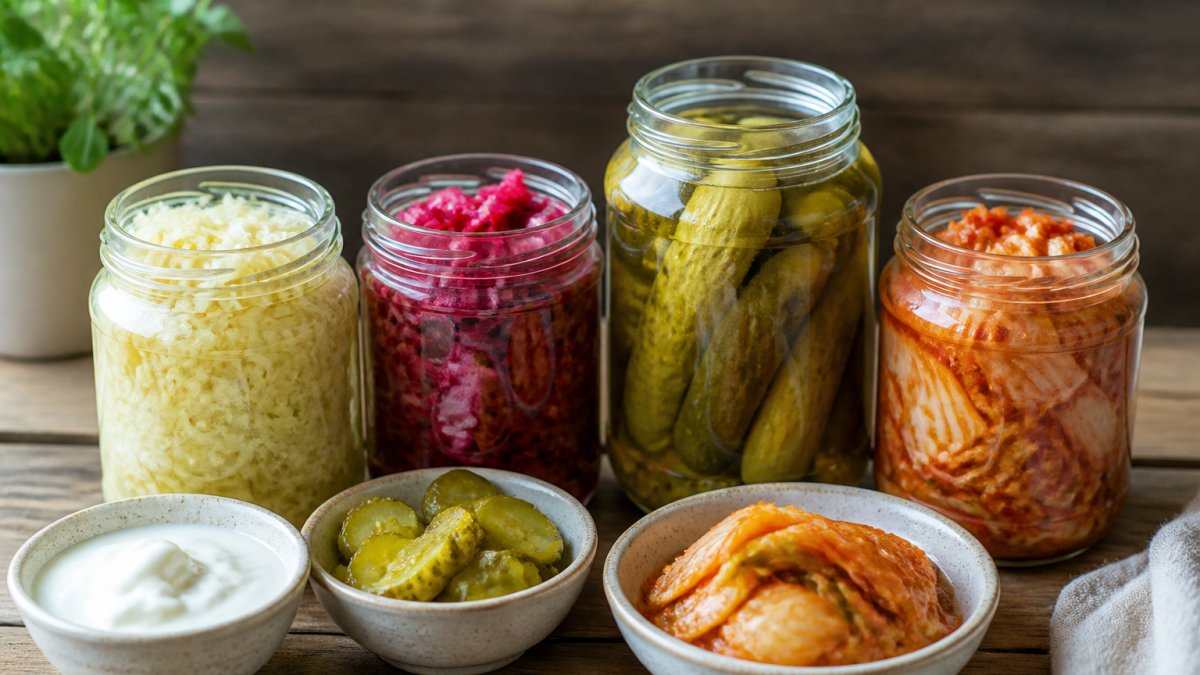
The common fermented foods list includes vegetable ferments like sauerkraut, kimchi, pickles, and giardiniera; dairy ferments like plain yogurt, kefir, and aged cheese; soy ferments like miso and tempeh; and drinks like kombucha and beet kvass. Sourdough bread is another familiar example. Each delivers live cultures and beneficial bacteria in different forms, so rotating a few across the week gives you variety without relying on any single food.