 blog
Best Healthy Snacks for Sustained Energy All Day
Last Updated: November 5, 2026
Quick Summary
The best healthy snacks for sustained energy pair protein with fiber, because that combination slows digestion and delivers a steady stream of fuel instead of a spike and crash. Aim for roughly one serving of each, such as apple slices with almond butter or Greek yogurt with berries.
- Added sugar hits your bloodstream fast, causing a spike, a fall, and the foggy afternoon crash.
- Desk-drawer picks include almonds, roasted chickpeas, nut butter packets, oat bars, and jerky.
- For an afternoon workout, shift to faster carbs about 30 to 60 minutes before training.
- Measure a serving of nuts, nut butter, or granola instead of eating straight from the bag.
- Prep your morning snack the night before and eat it within three hours of waking.
Table of Contents
- Why a Balanced Snack Beats a Quick Sugar Fix
- High Energy Snacks for Work That Fit in a Desk Drawer
- Best Afternoon Snacks for Energy When the Midday Slump Hits
- Best Snacks for Energy and Focus During Long Stretches
- Quick Energy Snacks for Athletes Before and After Training
- Portion Sizes, Dietary Swaps, and Budget Trade-Offs
- Build a Sustained Energy Snack Into Your Morning Routine
- Frequently Asked Questions
Why a Balanced Snack Beats a Quick Sugar Fix
The best healthy snacks for sustained energy share one trait: they pair protein with fiber. That combination slows digestion and feeds your body a steady stream of fuel instead of a spike. At Roxberry Juice Co., we build every smoothie and bowl around real fruit, vegetables, and whole ingredients for exactly that reason.
A snack built on refined sugar gives you a fast lift. Then it drops you. The crash hits about an hour later, and you reach for another cookie.
The Protein-and-Fiber Combination That Keeps You Full
Fiber and protein are the two nutrients that keep hunger quiet. Fiber slows how fast your body absorbs sugar (The Effects of Soluble Dietary Fibers on Glycemic Response). Protein takes longer to break down, so you feel full well past the next hour.
A balanced snack means roughly one serving of each. Think apple slices with almond butter, or Greek yogurt with berries.
The Healthy Snack Project's research on snack choices recommends pushing fruits and vegetables as snacks instead of energy-dense foods like chips, biscuits, and sweets. That swap alone changes how your afternoon feels.
How Added Sugar Drives the Afternoon Energy Crash
Added sugar is any sugar put into a food during processing, not the natural sugars found in fruit or milk. It hits your bloodstream fast. Your blood sugar spikes, then falls, and the fall is what makes you foggy and tired.
Watch for these hidden sources:
- Flavored yogurt with fruit syrup
- Granola bars coated in chocolate
- Sweetened coffee drinks
- Bottled smoothies with added cane sugar
For a full list of foods that drag your energy down, see our guide to foods to avoid for better energy levels.
High Energy Snacks for Work That Fit in a Desk Drawer
The best high energy snacks for work are portable, shelf-stable, and built on protein and fiber. They should survive a drawer for a week and need no fridge.
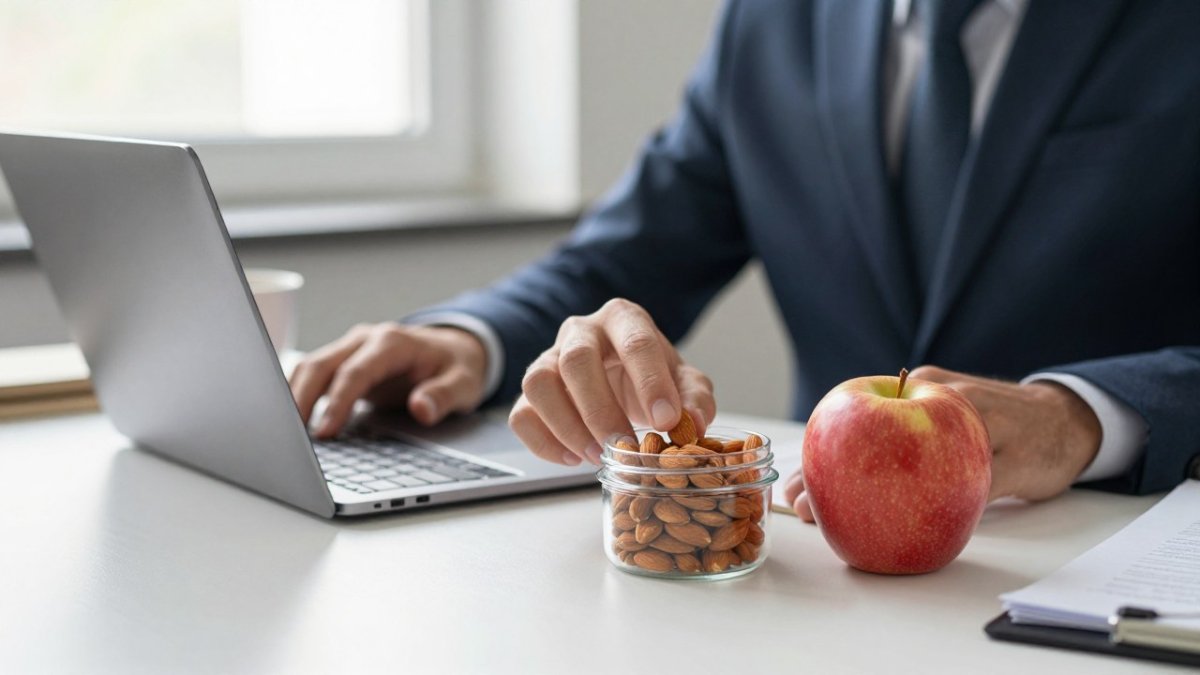
Here are our go-to picks:
- Almonds and pistachios. A small handful delivers protein, healthy fats, and fiber.
- Roasted chickpeas. Crunchy, cheap, and full of fiber.
- Nut butter packets with an apple or banana.
- Oat bars with visible whole grains and low added sugar.
- Beef or turkey jerky. High protein, no fridge needed.
Portion matters. A serving of nuts is about a small handful, not the whole bag.
If you want more no-fridge ideas, our list of high-protein office snacks that need no fridge has you covered.
Best Afternoon Snacks for Energy When the Midday Slump Hits
The best afternoon snacks for energy combine quick natural sugars with protein and fat. That pairing lifts you now and keeps you level through the late afternoon. What you eat at that moment determines whether you get a gentle rise or a spike-and-crash cycle.
Why the Pairing Matters
A snack that is mostly refined carbohydrate, a cookie, a sweetened granola bar, a flavored coffee drink, digests fast. Blood sugar rises quickly, insulin responds, and the subsequent fall is what leaves you foggy and reaching for more. Choosing a steadier morning drink can help avoid the same quick rise and fall, and alternatives to coffee may offer a gentler start to the day.
Afternoon Options With Practical Portions
Each option below pairs natural sugars with protein or fat. Portions are listed so the snack stays a bridge to dinner rather than a second meal.
- Greek yogurt with berries and a spoon of granola. About 3/4 cup plain Greek yogurt, 1/2 cup berries, 1 tablespoon granola. Choose plain yogurt and add your own fruit to keep added sugar low.
- Cottage cheese with sliced peaches. About 1/2 cup low-fat cottage cheese with 1/2 cup sliced peaches. High protein, moderate carbohydrate, no added sugar.
- A banana with a tablespoon of peanut butter. Fast carbohydrate from the banana, fat and protein from the nut butter. Easy to pack and needs no refrigeration for a few hours.
- Trail mix with nuts, seeds, and dried fruit. Keep to a small handful, about 1/4 cup, because dried fruit and nuts are calorie-dense. Look for mixes without chocolate candies or yogurt-covered pieces, which add sugar.
- Ricotta drizzled with honey and topped with almonds. About 1/2 cup part-skim ricotta, 1 teaspoon honey, 1 tablespoon sliced almonds. Protein-forward with a small amount of added sugar.
- Apple slices with almond butter. One small apple and 1 tablespoon almond butter. Fiber from the apple, fat and protein from the nut butter.
Timing and Activity Adjustments
If you are at a desk, a protein-and-fiber snack around 3 p.m. is usually enough to carry you to dinner. If you have an afternoon workout, shift toward faster carbohydrate about 30 to 60 minutes before training, a banana or a small smoothie, and save the protein-heavy option for after.
Watch out: a snack labeled "energy" or "protein" can still carry added sugar. Check the Nutrition Facts panel for added sugars rather than trusting front-of-package claims.
If you want options beyond food, our article on natural energy boosters for afternoon slumps covers more ways to reset.
Best Snacks for Energy and Focus During Long Stretches
The best snacks for energy and focus are low in added sugar and rich in healthy fats and complex carbohydrates. Steady blood sugar is what keeps your attention sharp through a long meeting or study block.
Focus foods to keep nearby:
- Walnuts and pumpkin seeds. Healthy fats plus magnesium.
- Whole-grain toast with nut butter. Complex carbohydrates release slowly.
- Berries. Natural sugars with fiber and antioxidants.
- Popcorn. A whole grain, light and filling when air-popped.
- Hard-boiled eggs. Pure protein, easy to prep ahead.
A common mistake is skipping the snack and loading up on caffeine instead. Caffeine gives a short push, then leaves you flatter than before.
Quick Energy Snacks for Athletes Before and After Training
Quick energy snacks for athletes should be easy to digest before training and protein-heavy after. Timing changes what your body needs.
Before a workout, go for fast carbs with a little protein:
- A banana with a spoon of honey
- A small smoothie with fruit and yogurt
- Oat bars with dried fruit
After training, protein and carbs help recovery:
- Greek yogurt with berries and granola
- A fruit smoothie blended with nut butter
- Chocolate milk and a handful of almonds
Plant-based athletes have strong options too. Our guide to plant-based snacks for endurance athletes covers them in detail.
Portion Sizes, Dietary Swaps, and Budget Trade-Offs
Serving size is where most snack plans fall apart. Nuts, nut butter, and granola are nutrient-dense but calorie-dense too. Measure a serving instead of eating from the bag. The table below gives practical portions and approximate nutrition so you can compare snacks on the metrics that matter for sustained energy: protein, fiber, and added sugar.
| Snack | Serving Size | Protein (approx.) | Fiber (approx.) | Added Sugar (approx.) | Best For | Budget Note |
|---|---|---|---|---|---|---|
| Almonds | 1 oz (about 23 nuts) | 6 g | 3.5 g | 0 g | Desk drawer | Buy in bulk |
| Greek yogurt, plain | 3/4 cup | 15-18 g | 0 g | 0 g | Afternoon slump | Store brand saves |
| Apple with almond butter | 1 small apple, 1 tbsp | 3-4 g | 4 g | 0 g | Pre-workout | Cheap and filling |
| Trail mix | 1/4 cup | 4-6 g | 2-3 g | Varies; check label | Long stretches | Mix your own |
| Oat bar | 1 bar | 3-5 g | 2-3 g | Check label; often 5-12 g | On the go | Compare unit price |
| Hard-boiled egg | 1 large | 6 g | 0 g | 0 g | Focus stretches | Batch-cook ahead |
| Roasted chickpeas | 1/2 cup | 6-7 g | 5-6 g | 0-1 g | Desk drawer | Low cost per serving |
Amounts are approximate and vary by brand and preparation. Use the Nutrition Facts panel on the package for exact values.
Budget and Preparation Trade-Offs
Bulk nuts, plain yogurt in a large tub, and homemade trail mix cost less per serving than single-serve packs. The trade-off is prep time and portability. A common pattern is to buy pantry staples in bulk, portion them into small containers at home, and reserve single-serve packs for travel days when convenience matters more than cost. Compare the per-ounce cost and the Nutrition Facts panel before assuming a ready-made option is the better value.
Allergy-Friendly and Dairy-Free Substitutions
Swap dairy yogurt for coconut or almond yogurt. Replace nut butter with sunflower seed butter for nut-free schools and offices. Use pumpkin seeds or roasted chickpeas instead of almonds. For gluten-free needs, choose oat bars certified gluten-free and check that trail mix does not include wheat-based cereals. For lower-sodium options, favor unsalted nuts and seeds and rinse canned chickpeas before roasting. These swaps keep the protein-and-fiber balance intact while meeting dietary restrictions.
Food Safety and Storage
Not every snack can live in a desk drawer. Clarify which options need refrigeration: opened dairy, cut fruit, and hard-boiled eggs should be kept cold. For work or travel, pack perishable items with an ice pack and consume within about two hours at room temperature.
Build a Sustained Energy Snack Into Your Morning Routine
A morning snack habit works best when it is built into your existing routine, not added on top. Pair it with something you already do.
Try this simple plan:
- Prep the night before. Portion nuts or pack a yogurt cup.
- Eat within three hours of waking. This bridges breakfast and lunch.
- Pair protein with fiber every time. Never sugar alone.
- Keep a backup in your bag. Jerky or an oat bar works.
If mornings are rushed, a blended smoothie is the fastest route. Our guide to healthy breakfast smoothies for energy shows how to build one that holds you until lunch.
Your afternoon energy does not have to collapse every day. Build snacks around protein, fiber, and real ingredients, and the slump gets smaller.
Frequently Asked Questions
What snack gives you the most sustained energy?
Snacks that pair protein with fiber and healthy fats hold energy steadiest. Examples include Greek yogurt with berries, an apple with nut butter, cottage cheese with sliced fruit, or a handful of almonds with dried fruit. Serving size still matters: a snack around 150 to 200 calories works well for most adults between meals, and you can adjust up or down based on activity level and timing.
What are good high energy snacks for work?
Desk-friendly options include portioned nuts and seeds, trail mix, whole-grain oat bars, roasted chickpeas, popcorn, string cheese, and single-serve Greek yogurt. Keep a few non-perishables in a drawer and pair them with fresh fruit you bring from home. Build the snack around produce first and add protein or healthy fats second. A small cooler bag handles perishables if your office fridge is unreliable.
Which snacks help prevent an afternoon energy slump?
The best afternoon snacks for energy combine fiber, protein, and a little healthy fat while keeping added sugar low. Try apple slices with almond butter, berries with cottage cheese, hummus with vegetables, or a smoothie blended with real fruit and yogurt. Timing helps too: eating a balanced snack around two to three hours after lunch can carry you to dinner without the crash that sends you looking for caffeine or candy.
What should I eat for energy before a workout?
Quick energy snacks for athletes should lean on easily digested carbohydrates with a small amount of protein, eaten about 30 to 60 minutes before training. A smoothie with fruit and yogurt, a banana with a spoon of nut butter, or an oat bar are practical choices. After training, shift toward protein plus carbohydrate to support recovery, such as a fruit-and-yogurt smoothie or chocolate milk. Keep fat and fiber lower right before exercise, since both slow digestion and can cause discomfort during hard efforts.