 Listicle
How to Build Superfood Bowls for Morning Workouts
Last Updated: November 18, 2026
Quick Summary
Superfood bowls fuel morning workouts best when you match the bowl to your timing: a full bowl three or more hours out, a standard bowl two to three hours before, and a half bowl or smoothie within 60 to 90 minutes. Keep fiber under about 5 grams and fat under about 10 grams before early sessions.
- The stomach empties a mixed meal in roughly two to four hours, and fat, fiber, and large volume slow that process.
- A full superfood bowl eaten three or more hours before training can include 2 cups of base, 1/2 cup granola, and 1 tablespoon of seeds.
- Within 60 to 90 minutes of training, aim for roughly 30 to 45 grams of carbohydrate with no granola.
- For workouts starting within 90 minutes, keep total volume to about 1 to 1 1/2 cups of food.
- If you feel sick before training, cut the volume first by halving the bowl before changing any ingredient.
Table of Contents
- Why Superfood Bowls Work as Morning Workout Fuel
- What to Eat Before a Morning Workout
- How Long Before a Workout Should You Eat?
- Pre-Workout Bowl Ingredients That Fuel Without Weighing You Down
- Building a Pre-Workout Smoothie Bowl for Your Training Type
- Digestibility and Portion Size: Getting the Bowl Right for Your Gut
- Dietary Substitutions and Allergens in Superfood Bowls
- Ordering a Superfood Bowl Before Your Morning Workout
- Frequently Asked Questions
Why Superfood Bowls Work as Morning Workout Fuel
A superfood bowl is a blended fruit or yogurt base topped with ingredients like seeds, berries, and granola, built to deliver carbohydrates, protein, and healthy fats in one easy-to-digest meal. For an early training session, that combination matters more than any single "superfood" label.
The formula is simple: carbohydrates for quick energy, a little protein to steady it, and enough fiber to satisfy without sitting heavy. A bowl you can eat at 6 a.m. and train on at 7 a.m. beats a "perfect" meal you skip because it takes too long. For recipe ideas, our guide to the best superfood bowls for energy walks through seven combinations worth trying.
What to Eat Before a Morning Workout
The best pre-workout meal is one that is mostly carbohydrate, low in fat and fiber, and easy on your stomach. That usually means fruit, a small amount of protein, and nothing fried or overly rich.
A 2020 review in the Journal of the International Society of Sports Nutrition notes that pre-exercise nutrition should be personalized to the athlete, the session, and the timing. In practice, that means matching the size of your bowl to how hard and how soon you are training.
Simple is often better. A banana, a slice of toast with nut butter, or a small smoothie can outperform a large, fiber-heavy bowl when your workout starts within the hour.
How Long Before a Workout Should You Eat?
Timing decides your portion, and portion decides whether the bowl helps or hurts. The stomach empties a mixed meal in roughly two to four hours, and fat, fiber, and large volume slow that process. That is why a topping-loaded bowl eaten 20 minutes before a run can feel like a brick, while the same bowl eaten two hours out digests comfortably. The same timing principle applies when training shifts from a morning run to boxing: Man of War Boxing & Fitness connects careful meal timing with the demands of hard sessions.
Use this as a starting framework, then adjust to your own gut:
- 3 or more hours before: a full superfood bowl, about 2 cups of blended base, 1/2 cup granola, 1 tablespoon seeds, and a full fruit topping. This is the only window where a heavy build is clearly safe.
- 2 to 3 hours before: a standard bowl, about 1 1/2 cups base, 1/4 cup granola, and 1 teaspoon seeds. Keep nut butter to a single tablespoon or skip it.
- 60 to 90 minutes before: a half bowl or a smoothie, about 1 cup base, no granola, and fruit-only toppings. Aim for roughly 30 to 45 grams of carbohydrate.
- 30 to 60 minutes before: a small smoothie or a half banana, about 15 to 30 grams of carbohydrate, minimal fiber and fat.
- Under 30 minutes: a banana, a few dates, or a small juice. Save the bowl for after training.
A useful rule of thumb: the closer the workout, the smaller and simpler the bowl.
If your mornings are tight, prep ahead. Our açaí bowl meal prep tips for busy mornings show how to portion bases and toppings the night before so you can blend and go.
Match your portion to how soon you train, using this timing framework and adjusting to your own gut.
| Time before workout | Bowl size | Key details |
|---|---|---|
| 3 or more hours | Full superfood bowl | 2 cups base, 1/2 cup granola, 1 tablespoon seeds, full fruit topping |
| 2 to 3 hours | Standard bowl | 1 1/2 cups base, 1/4 cup granola, 1 teaspoon seeds |
| 60 to 90 minutes | Half bowl or smoothie | 1 cup base, no granola, fruit-only toppings, 30 to 45 grams carbohydrate |
| 30 to 60 minutes | Small smoothie or half banana | 15 to 30 grams carbohydrate, minimal fiber and fat |
| Under 30 minutes | Banana, a few dates, or small juice | Save the bowl for after training |
Pre-Workout Bowl Ingredients That Fuel Without Weighing You Down
The right pre-workout bowl ingredients are the ones your gut clears quickly: fruit for carbohydrates, a lean base, and modest toppings. Skip heavy creams, excess nut butter, and piles of high-fiber add-ins right before training.
Bases: Açaí, Banana, and Yogurt
Açaí brings a thick texture. Banana adds natural sweetness. Yogurt, especially Greek, contributes creaminess.
Blend with almond milk or coconut water rather than heavy dairy for a lighter result.
Toppings: Seeds, Berries, and Adaptogens
Toppings are where bowls get heavy. Keep them light before exercise.
- Chia and hemp seeds: healthy fats and fiber, so use a small spoonful, not a handful
- Berries: blueberries, strawberries, and raspberries add fresh flavor and color
- **
- Granola: flavor and crunch, but keep the portion modest before training
Want to see what we actually stock? Check our ingredient guide for the bases, toppings, and adaptogens we offer.
Building a Pre-Workout Smoothie Bowl for Your Training Type
Match the bowl to the session. A pre-workout smoothie bowl for a long run looks different from one for a short strength session.
-
Long endurance sessions: larger bowl, more banana and dates, a little protein, eaten two to three hours out
-
Short intense sessions: small smoothie, simple carbohydrates, minimal fiber
-
Rest or light days: a full bowl with all the toppings works fine
There is no single perfect bowl. Build around your session, and adjust based on how you feel.
Digestibility and Portion Size: Getting the Bowl Right for Your Gut
A bowl that upsets your stomach is worse than no bowl. Portion size, fiber load, and fat content are the three biggest factors, and each has a rough ceiling worth respecting before an early session.
As a starting point for a workout starting within 90 minutes, most practitioners find these limits comfortable:
- Total volume: about 1 to 1 1/2 cups of food, roughly the size of your closed fist plus a cupped hand
- Fiber: under about 5 grams, a tablespoon of chia alone carries roughly 5 grams, so one spoonful is the practical ceiling
- Fat: under about 10 grams, a single tablespoon of nut butter is about 8 grams, which is why it counts as a heavy topping
- Protein: 10 to 20 grams is plenty; more than that slows digestion without helping the session
Start smaller than you think you need. A half bowl with light toppings before an early session often fuels better than a full one, because it clears the stomach faster and leaves less to slosh around. Chew your toppings rather than swallowing them whole, and sip water alongside rather than drinking a large volume at once.
If you feel sick when eating before training, work through this order of fixes:
- Cut the volume first. Halve the bowl before changing any ingredient.
- Drop the fat. Remove nut butter, coconut cream, and full-fat granola.
- Simplify the base. A banana-and-berry blend with almond milk is lighter than a thick açaí or yogurt base.
- Move the timing. Shift the meal 30 minutes earlier and see whether the nausea resolves.
- Switch to liquid. A smoothie without granola or seeds empties faster than a topped bowl.
Watch out: loading up on chia, flax, and nut butter right before a hard workout can cause cramping and bloating, save the heavy toppings for rest days or for bowls eaten three or more hours out.
For sugar, calorie, and portion details, our nutritional information breaks down each option.
Dietary Substitutions and Allergens in Superfood Bowls
Most bowls adapt to dietary needs with a few swaps.
Ordering a Superfood Bowl Before Your Morning Workout
The easiest pre-workout bowl is one you do not have to build yourself at dawn. Ordering ahead saves the scramble and lets you pick a base and toppings that fit your session.
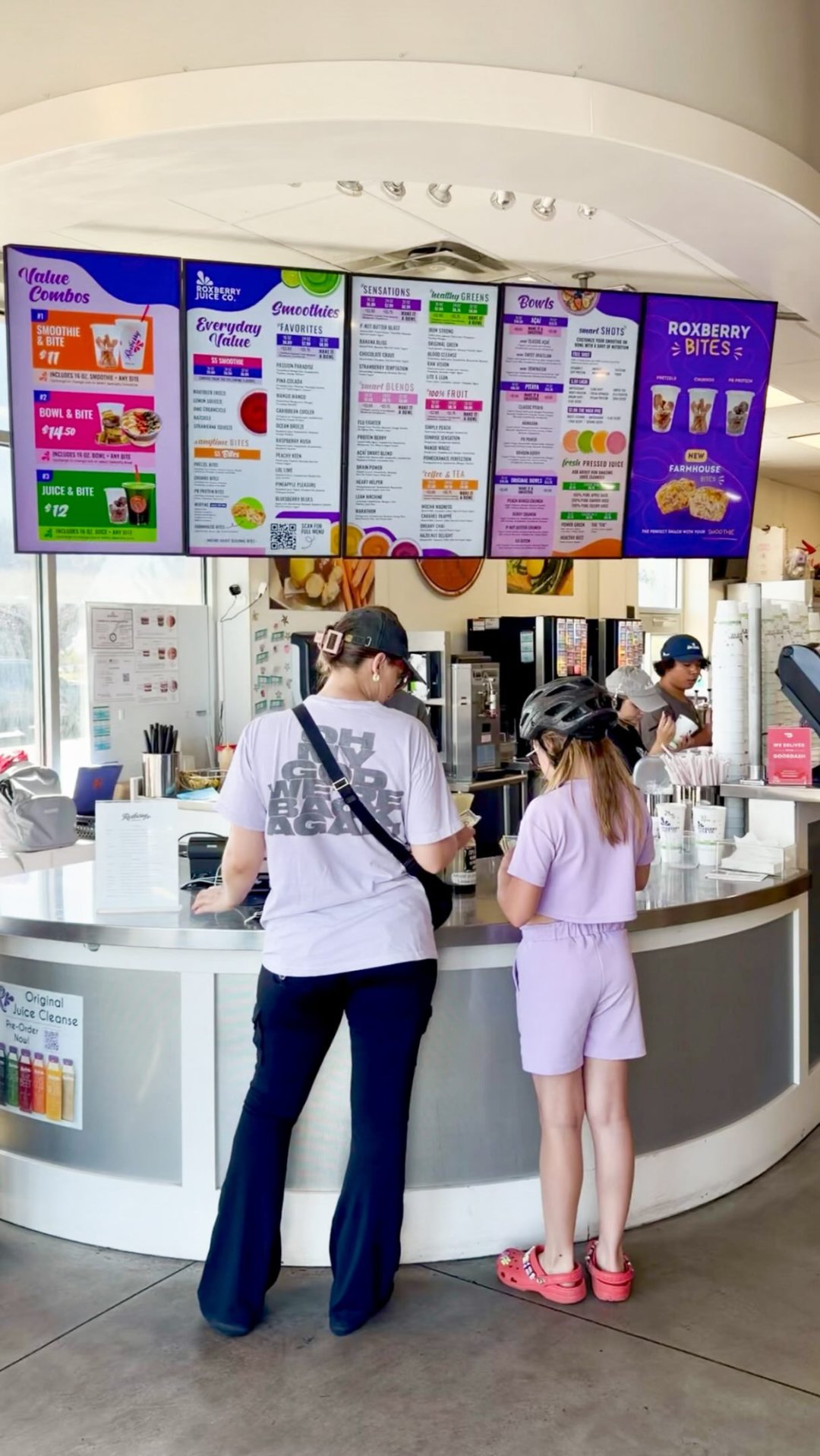
Take a look at our menu to see the bowls and smoothies available, then choose a lighter build if you are training soon.
Your morning workout deserves fuel that works as hard as you do. Roxberry Juice Co. blends smoothies to order and builds açaí bowls from real fruits and vegetables, topped with our signature Roxberry Granola, so you get transparent ingredients and energy you can feel. Our locally owned stores are here to help you start strong. Get started with Roxberry Juice Co. and fuel your next morning workout the wholesome way.
Frequently Asked Questions
What is the best food to eat before an early morning workout?
For an early workout, choose something easy to digest with mostly carbohydrates and a little protein. A smoothie bowl with a banana or açaí base, a spoon of yogurt, and light toppings like berries works well if you have 60 to 90 minutes. If you are heading out within 30 minutes, keep it smaller: half a banana, a small smoothie, or a bowl with minimal fiber and fat.
How long before a workout should you eat a smoothie bowl?
A full, meal-sized superfood bowl is best eaten two to three hours before training so it has time to empty from the stomach. A smaller bowl or smoothie works at 60 to 90 minutes. Within 30 minutes of exercise, stick to something light and low in fiber, like a banana or a small smoothie. Portion size matters as much as timing: the closer you eat to your workout, the smaller and simpler the bowl should be.
Are smoothie bowls good before exercise?
They can be, if you build them right. A pre-workout smoothie bowl gives you carbohydrates for energy, plus fluids and electrolytes from fruit and coconut water. The risk is a bowl loaded with fiber, fat, and heavy toppings, which can sit in the stomach and cause discomfort during exercise. Choose a lighter base, keep nut butters and seeds to a minimum close to training time, and save the granola-heavy version for days when you eat further out from your workout.
What should you eat before an early morning workout if you have a sensitive stomach?
Keep it low in fiber and fat, and small. A banana, a simple smoothie with almond milk and a little protein, or a bowl with a light base and berries rather than heavy seeds and nut butter are gentler options. Eat at least 60 minutes before training if you can. If you have a digestive condition, check with your doctor or a registered dietitian before relying on any pre-workout food.