 Listicle
Best Breakfast Recipes for Sensitive Stomachs to Try
Last Updated: November 8, 2026
Quick Summary
The best breakfasts for sensitive stomachs are warm or room-temperature, low in acid and fat, and built on simple ingredients. Oatmeal, poached or soft-scrambled eggs, and plain yogurt or kefir are common gentle choices, and portions should stay moderate at first.
- Eat something warm or at room temperature rather than ice-cold.
- Choose poached or soft-scrambled eggs over fried eggs, bacon or sausage.
- Swap orange juice and coffee for diluted apple juice or decaf to reduce acidity.
- Increase fiber by about 3 to 5 grams a day per week, drinking more water as you go.
- Read labels on instant oatmeal, since many contain added sugar and flavorings.
Table of Contents
- Why Breakfast Choices Matter With a Sensitive Stomach
- Gentle Oatmeal and Overnight Oats Recipes
- Egg-Based Breakfasts That Stay Gentle on Digestion
- Yogurt, Kefir and Smoothie Bowls for Sensitive Stomachs
- Vegetarian Breakfast Recipes for Sensitive Stomachs
- Swaps for Common Triggers and Gradual Fiber Increases
- Make Your Next Gentle Breakfast a Roxberry Stop
- Frequently Asked Questions
Breakfast is often the first meal that tells you how your stomach is going to behave all day. For people with a sensitive stomach, the wrong morning choice can mean bloating, reflux or a long, uncomfortable commute. This guide covers gentle, practical breakfast ideas that you can make at home, with simple swaps that help you stay comfortable. For a fuller explanation of which foods are easy to digest, see the Easy to Digest Foods for Sensitive Stomachs guide.
Breakfast ideas for sensitive stomachs are not one-size-fits-all. What calms one person can irritate another. Still, most people with digestive sensitivity do better with breakfasts that are warm or room temperature, low in acid, and built on simple ingredients. This list covers the most common options, from oatmeal and eggs to yogurt and smoothie bowls, along with ways to adjust each one to your needs.
Quick note: this guide offers general food ideas, not medical advice. If you have ongoing symptoms, talk to a doctor or registered dietitian before making big changes.
Why Breakfast Choices Matter With a Sensitive Stomach
The first meal of the day sets the tone. An empty stomach that receives a heavy, greasy or very acidic meal can react quickly, and many people notice symptoms within an hour. Choosing gentler foods in the morning gives your digestive system a calmer start.
We recommend three simple habits for most sensitive stomachs:
- Eat something warm or at room temperature rather than ice-cold.
- Keep the first meal moderate in size, especially if you tend to feel full or bloated.
- Pair fiber with liquid and protein so your body can process it steadily.
Keep your portions reasonable at first, then build up as you learn what your body tolerates.
Common Triggers: Coffee, Citrus and Fried Foods
Several common breakfast items are known to bother sensitive stomachs. Coffee, orange juice, grapefruit and other citrus fruits are acidic and can aggravate reflux (Gastro-Oesophageal Reflux and Nutrition). Fried eggs, bacon, sausage and buttery pastries are high in fat, which slows stomach emptying and can trigger discomfort.
You do not have to cut these out forever. Try them one at a time, in small amounts, and note how you feel. A common approach is to swap coffee for a milder tea or a smaller cup, and to choose baked or poached foods instead of fried ones. For more on cutting back daily triggers, see these proven steps to reduce bloating.
Gentle Oatmeal and Overnight Oats Recipes
Oats are a common choice for a sensitive stomach. They are soft, warm and mild, and they provide soluble fiber that many people find easy to digest. Choose plain rolled or steel-cut oats and avoid heavy added sugars.
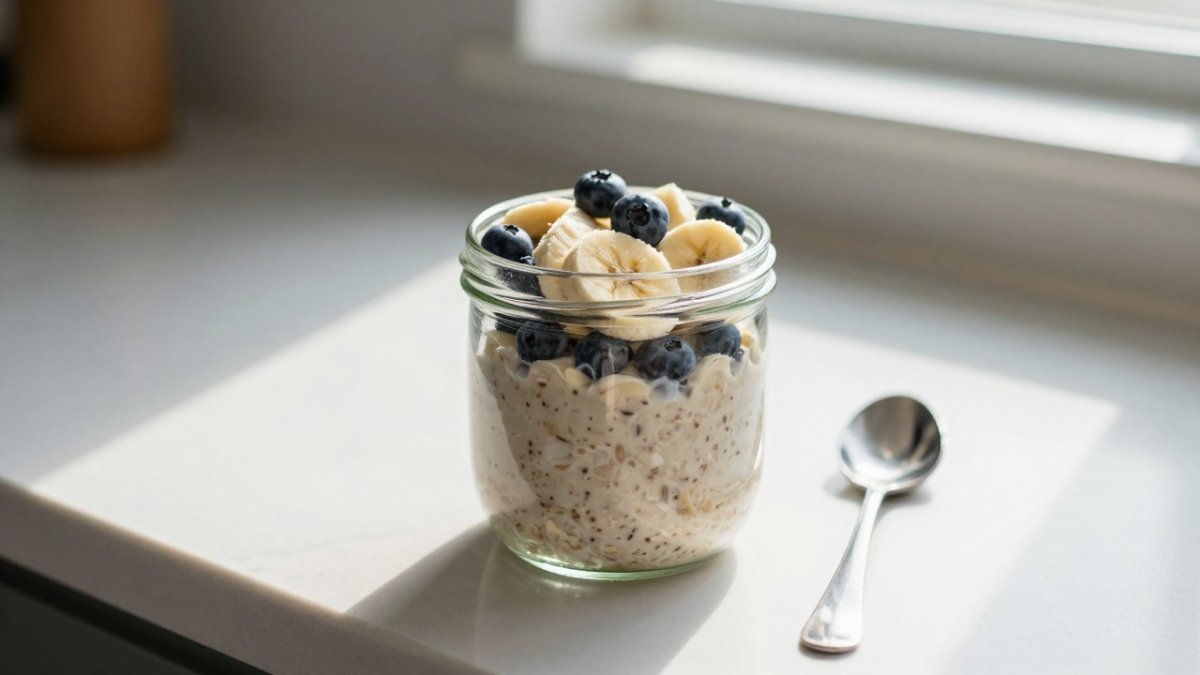
Simple overnight oats: Combine half a cup of rolled oats with half a cup of milk or a lactose-free alternative, and a spoonful of chia seeds. Refrigerate overnight. In the morning, top with sliced banana and a small handful of blueberries.
Warm oatmeal: Cook oats in water or milk until soft. Stir in a little honey or maple syrup, and add cinnamon or a mashed ripe banana for natural sweetness.
Watch out: many packaged instant oatmeals contain added sugar and flavorings. Read labels and choose plain varieties when you can.
Egg-Based Breakfasts That Stay Gentle on Digestion
Eggs are a versatile, protein-rich choice. The key is cooking method. Poached and soft-scrambled eggs are generally easier to digest than fried eggs cooked in a lot of oil.
Try a soft-scrambled egg on whole-grain or sourdough toast, or a poached egg over sautéed zucchini and spinach. Many people with sensitivities find that sourdough is easier to tolerate than standard white bread, though this varies from person to person.
For a quicker option, boil a couple of eggs ahead of time. Store them in the refrigerator and pair one or two with a slice of toast and a piece of fruit in the morning.
Yogurt, Kefir and Smoothie Bowls for Sensitive Stomachs
Fermented dairy and blended breakfasts can be gentle and filling. Plain yogurt and kefir contain live cultures, and tolerance differs from person to person. For a beginner-friendly overview, see the best fermented foods to start with. If dairy is a problem, lactose-free yogurt or a plant-based alternative may work better.
Berry yogurt bowl: Spoon plain Greek or lactose-free yogurt into a bowl, then add blueberries, a little honey and a sprinkle of oats or low-sugar granola.
Smoothie bowl: Blend a frozen banana with a splash of milk or kefir, and add a handful of berries. For more bowl ideas you can act on right away, try these vegan açaí bowl recipes. Keep it thick and top with sliced fruit, chia seeds or a spoonful of peanut butter.
Smoothies can be easy on the stomach, but very large or very cold drinks may not suit everyone. Sip slowly and start with a smaller serving.
Vegetarian Breakfast Recipes for Sensitive Stomachs
Meat-free breakfasts can be gentle, but plant foods are also where most fiber and FODMAP triggers hide. The three recipes below are labeled by the symptom pattern they tend to suit, with portion guidance and make-ahead notes. Tolerance varies, so treat the labels as a starting point, not a promise.
Sautéed vegetable and egg scramble (suits reflux and general sensitivity). Warm a teaspoon of olive oil in a nonstick pan over medium heat. Add half a cup of diced zucchini and cook until soft, about 4 minutes, then add a handful of spinach and wilt.
Ricotta toast with sliced pear (suits general sensitivity; not ideal for IBS). Spread two tablespoons of part-skim ricotta on one slice of sourdough or whole-grain toast and top with a few thin slices of ripe pear and a light drizzle of maple syrup. Ricotta is lower in lactose than many aged cheeses are high in fat, and the toast gives a small, steady fiber dose. Pear is high in FODMAPs, so swap in half a banana or a few strawberries if you have IBS.
Warm oat and almond butter bowl (suits constipation and general sensitivity). Cook half a cup of rolled oats in one cup of water or lactose-free milk until soft, about 5 minutes. Stir in one tablespoon of almond butter and half a sliced banana. This bowl delivers roughly 6 to 7 grams of fiber, mostly soluble, which is a reasonable single-meal contribution toward a 25-to-30-gram daily target. Make ahead: portion dry oats into jars on Sunday so weekday mornings only need liquid and heat. Adding a savory twist to your morning routine can also soothe digestion, and you might find inspiration for such balanced meals at Spice And Dipity.
Tofu scramble with soft vegetables (suits general sensitivity; watch FODMAPs). Crumble half a block of firm tofu into a pan with a teaspoon of olive oil, add diced zucchini and a pinch of turmeric, and cook 5 minutes. Firm tofu is lower in FODMAPs than silken tofu, but check labels if you are sensitive. Make ahead: press and crumble the tofu the night before and refrigerate.
A few practical notes apply across all four. Keep portions modest at first, especially with beans, lentils, and cruciferous vegetables, which are common gas triggers. Introduce one new plant food at a time so you can tell what your body accepts.
Watch out: vegetarian does not automatically mean gentle. Onion, garlic, beans, and large raw salads are common culprits for IBS and bloating, so read the ingredient list before assuming a meat-free recipe is safe for you.
Swaps for Common Triggers and Gradual Fiber Increases
A sensitive stomach is not one condition. Irritable bowel syndrome (IBS), acid reflux and GERD, food intolerances such as lactose or gluten, and a one-off upset stomach each respond to different ingredients.
| Common trigger | Gentler swap | Best suited for | Why it helps |
|---|---|---|---|
| Coffee | Decaf coffee, low-acid cold brew, or ginger or peppermint tea | Reflux, general sensitivity | Lower acidity and caffeine; cold brew is typically less acidic than hot-brewed coffee |
| Orange juice and citrus | Diluted apple juice, pear juice, or a small banana | Reflux, general sensitivity | Less acid; banana is low-acid and soft |
| Fried eggs, bacon, sausage | Poached or soft-scrambled eggs; baked or grilled turkey | Reflux, general sensitivity | Less added fat, which slows stomach emptying |
| Butter-heavy pastries | Whole-grain toast with nut butter, or a plain baked sweet potato | General sensitivity | Simpler fats and steadier energy |
| Large raw salads | Cooked or roasted vegetables | IBS, bloating | Cooking softens fiber and lowers some fermentable content |
| Cow's milk yogurt | Lactose-free yogurt or a plain plant-based yogurt | Lactose intolerance | Removes lactose while keeping the creamy texture |
| Wheat toast | Sourdough, spelt, or a certified gluten-free bread | Gluten sensitivity, IBS | Sourdough fermentation lowers some FODMAPs; gluten-free avoids the protein entirely |
| High-FODMAP fruit (apple, pear, mango, watermelon) | Blueberries, strawberries, kiwi, or a small orange | IBS | Lower in fermentable sugars that draw water into the gut |
| Honey and high-fructose syrups | Maple syrup in a small amount, or cinnamon | IBS | Honey is high in fructose, which some people malabsorb |
| Large smoothie | Half-size smoothie sipped slowly | Reflux, bloating | Smaller volume means less pressure on the stomach |
Portion size matters as much as the ingredient. A common pattern is that a half-cup serving of oats or a single slice of toast sits well, while a double portion of the same food triggers bloating. Start with smaller servings and add a few bites at a time over several days.
Fiber deserves its own caution. Most adults are advised to reach roughly 25 to 30 grams of fiber a day, but jumping there from a low-fiber diet in one morning is a reliable way to cause gas, cramping, and bloating.
Watch out: if a swap makes symptoms worse rather than better, stop it and note what you ate and when. A simple food-and-symptom log for two weeks is often more useful to a doctor or registered dietitian than any single elimination.
Make Your Next Gentle Breakfast a Roxberry Stop
Some mornings you need a sensitive-stomach-friendly breakfast without the prep. Roxberry Juice Co. offers 100% natural, fresh-pressed juices, smoothies blended to order and açaí bowls made from real fruits and vegetables, topped with our signature Roxberry Granola. Ask our team about ingredients before you order if you have specific sensitivities.
Ready to make mornings easier? Download our app to order ahead, check menu details and plan your next visit, and get started with a breakfast that suits how your stomach feels.
Frequently Asked Questions
What should I eat for breakfast with a sensitive stomach?
Choose warm or room-temperature foods that are low in acid and fat. Oatmeal, scrambled eggs, plain yogurt, and smoothies made with banana or cooked apple are common starting points. Avoid coffee, citrus, and fried foods on mornings when your stomach is already irritable. Introduce one new food at a time so you can see how your body responds, and keep portions moderate until you know what works.
What is a good breakfast for stomach problems?
Many people find that simple, bland options work best during a flare. Plain oats cooked with water or lactose-free milk, a soft-boiled egg on white or sourdough toast, and a small bowl of lactose-free yogurt with a little honey are gentle choices. These meals avoid heavy seasoning and large amounts of fat. If symptoms persist or worsen, a doctor or registered dietitian can help identify the cause.
What are gentle breakfast options for gas and bloating?
Foods that are lower in fermentable carbohydrates tend to cause less gas for many people. Try a small portion of oatmeal made with water, scrambled eggs cooked with a little olive oil, or a banana and peanut butter toast. Increase fiber gradually rather than all at once, since a sudden jump can increase bloating. Eating slowly and avoiding carbonated drinks at breakfast can also help.
Is a vegetarian breakfast a good choice for a sensitive stomach?
Yes, many vegetarian breakfasts suit a sensitive stomach. Eggs, oats, chia pudding made with lactose-free milk, and sautéed zucchini or spinach with eggs are gentle options. Watch for beans, high-fiber cereals, and large raw vegetable portions if you are sensitive to them, and build your meal around cooked or soft foods first.