 How-to
7 Ways to Identify Natural Fruit Juice Before You Buy
Last Updated: November 11, 2026
Quick Summary
To identify natural fruit juice, read the ingredient list first: real juice lists fruit first and often nothing else, with no added sugars, sweeteners, colors, or flavorings. Look for a 100% juice claim, since terms like juice drink, juice cocktail, and fruit punch signal added water or sweetener. Use color and smell only as backup clues, not proof.
- Ingredients are listed by weight, so fruit should appear before water or sugar.
- Pure juice typically has one ingredient, or fruit plus ascorbic acid for vitamin C.
- A zero next to Added Sugars means the sweetness comes from fruit alone.
- A 12-ounce bottle often holds two or more servings, doubling the sugar you drink.
- 100% juice from concentrate is still 100% juice by law, just not fresh.
Table of Contents
- Why Natural Fruit Juice Is Harder to Spot Than It Looks
- Start With the Ingredient List and Nutrition Facts
- Juice Drink, Juice Cocktail, or Pure Juice: Telling Them Apart
- How to Identify Natural Fruit Juice at Home
- The 100% Juice From Concentrate Meaning, Explained
- Juice From Concentrate vs Not From Concentrate
- Is Concentrated Juice Bad? What the Processing Actually Changes
- Where Color, Cloudiness, and Sediment Stop Being Proof
- Frequently Asked Questions
Why Natural Fruit Juice Is Harder to Spot Than It Looks
Most people think they can spot real juice by color or by the picture on the bottle. Both are unreliable. The label tells the truth, but only if you know which words to look for.
A short ingredient list is the clearest sign of real juice. The University of Maine Cooperative Extension defines 100% fruit juice as juice made entirely from real fruit with no added sugars, additives, colors, or sweeteners. That definition is your starting point.
The problem is marketing. Bottles show orchards and sunrises. Federal labeling guidance expects fruit images to say whether a product contains that fruit's juice or just natural or artificial flavor, per FDA guidance discussed in a 2020 analysis.
Below, we walk through seven ways to identify natural fruit juice before you buy. Start with the label. Then use your senses as a backup, not a verdict.
Start With the Ingredient List and Nutrition Facts
The ingredient list is the fastest test. Real juice lists fruit first, and often nothing else. If water or sugar appears before the fruit, you are holding a juice drink, not pure juice.
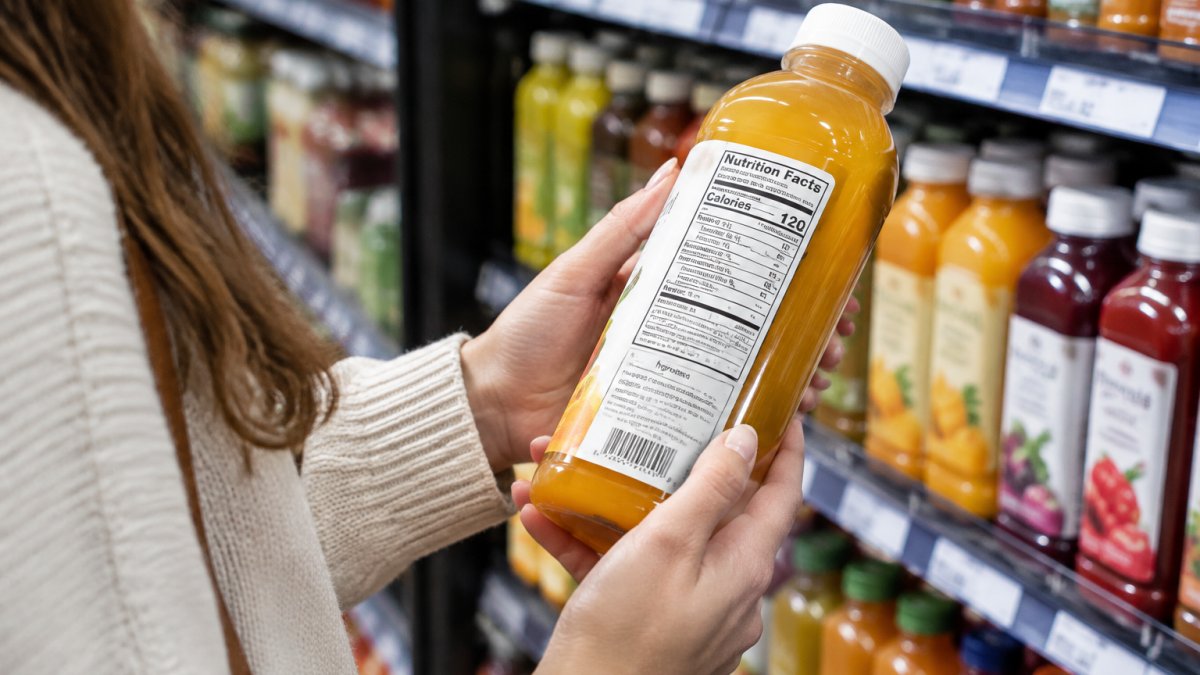
A Step-by-Step Label Checklist You Can Use in the Aisle
Use the same order every time so you compare products consistently:
- Read the product name first. "100% fruit juice" is a regulated claim. "Juice drink," "juice cocktail," "fruit punch," and "juice beverage" are not.
- Scan the ingredient list top to bottom. Ingredients are listed by weight. Fruit or fruit juice should be first. Water, sugar, corn syrup, or flavorings appearing before the fruit means the fruit is a minor ingredient.
- Count the ingredients. Pure juice typically has one ingredient, or fruit plus ascorbic acid for vitamin C. A list of five or more ingredients usually means added water, sweeteners, flavors, or preservatives.
- Check the Nutrition Facts for added sugars. A zero next to "Added Sugars" means the sweetness comes from fruit. A number means sweetener was added, even if the front label says "natural."
- Check the serving size. A 12-ounce bottle often holds two or more servings. Multiply the sugar per serving by the number of servings in the bottle to see what you actually drink.
- Look for the percentage claim. "100% juice" means all the juice content comes from fruit. A label that says "contains 30% juice" is mostly water and sweetener.
What a Real 100% Fruit Juice Label Looks Like
A 100% juice label carries a short list: one or more fruits, maybe ascorbic acid for vitamin C. That is it. No added sugar, no sweeteners, no artificial flavoring. A mixed-fruit juice may list several fruits, but each one is still a fruit, not a flavoring.
Added Sugars, Sweeteners, and Serving Size Traps
Check the Nutrition Facts panel for added sugars. A zero here means the sweetness comes from fruit. Then check serving size. A small bottle often holds two servings, which doubles the sugar you actually drink. Watch out: "no sugar added" does not mean low sugar, juice is naturally high in fruit sugar, and the claim only says nothing extra was poured in.
What the Label Cannot Tell You
Labels are the strongest evidence you have in a store, but they are not proof of authenticity. A label can tell you what the maker declares, not what a lab would find. For a shopper, the practical takeaway is to trust a short, clear ingredient list from a brand you can verify, and treat front-of-pack imagery as marketing rather than evidence.
For a deeper walkthrough, read our guide on signs of added sugar in fruit juice.
Juice Drink, Juice Cocktail, or Pure Juice: Telling Them Apart
The name on the front matters as much as the ingredients. Fruit juice means juice from fruit. Juice drink, fruit drink, and juice cocktail all signal a blend that usually includes water, sweeteners, or flavorings.
Here is the quick rule:
- Pure juice: one ingredient, or fruit plus vitamin C
- Juice drink or cocktail: water, sugar, or flavors appear on the label
- Fruit juice concentrate: juice with water removed, often reconstituted later
Only the first is pure juice. The other two can still taste good, but they are not the same product.
If you want the full breakdown, our guide on how to identify fresh pressed juice covers the rest.
How to Identify Natural Fruit Juice at Home
You can test a juice at home with three simple steps. None of them is perfect, but together they tell you a lot.
- Read the label again. Look for a short ingredient list and a 100% juice claim.
- Smell it. Real juice smells like the fruit. Artificial flavoring smells flat and sweet.
- Taste a small sip. Natural sweetness fades. Added sugar lingers on the tongue.
Watch out: color and cloudiness fool people. A bright orange drink can be dyed, and a clear apple juice is still real juice. Use your senses as clues, not proof.
Ready to press your own? Our guide on preparing fresh juice at home walks through it step by step.
The 100% Juice From Concentrate Meaning, Explained
100% juice from concentrate means the juice was pressed, had its water removed, and then had water added back. It is still 100% juice by law. It is just not fresh.
The process matters because it explains what you taste and what you should check on the label:
- Pressing extracts juice from whole fruit.
- Concentration removes water under heat and vacuum, leaving a syrup-like concentrate that is cheaper to ship and store.
- Reconstitution adds water back, usually to the strength the maker specifies.
- Pasteurization heats the juice to reduce harmful bacteria and extend shelf life. Most bottled juice, concentrate or not, is pasteurized.
That distinction matters if freshness is your goal. Concentrate is shelf-stable and cheaper to ship. Fresh-pressed juice is made from whole fruit and sold soon after. Both can be 100% juice. Only one is fresh.
Fresh-Squeezed, Pasteurized, NFC, and Reconstituted: What Each Term Means
These four terms get used loosely, so here is what each one actually describes:
- Fresh-squeezed juice is pressed and sold without a pasteurization step. It has the shortest shelf life and is usually found refrigerated near the produce section or at a juice bar.
- Pasteurized juice has been heat-treated to reduce pathogens. It can be sold refrigerated or shelf-stable depending on the process.
- Not from concentrate (NFC) juice is pressed and pasteurized without removing and re-adding water. It tastes closer to fresh fruit and usually costs more.
- Reconstituted juice is made by adding water back to concentrate. It is the most common form of shelf-stable bottled juice.
A common pattern is that the more processing a juice goes through, the more uniform it tastes from bottle to bottle. Fresh-pressed juice varies with the fruit; reconstituted juice is blended to a consistent target.
What This Means for Ingredients and Handling
Processing affects more than flavor. Reconstituted juice may also include flavor packs, natural volatile compounds captured during concentration and added back to restore aroma. These are not necessarily artificial, but they are a sign the product was rebuilt rather than simply pressed.
Handling matters too. Once opened, any juice should be refrigerated and consumed within the time the label states, typically a few days to a week. Fresh-squeezed juice carries the shortest window because it has not been pasteurized. Watch out: leaving juice at room temperature after opening speeds spoilage, and the smell or fizz that develops is a sign to discard it, not to taste it.
For a side-by-side look at how these forms compare, see our comparison of fresh pressed juice vs store bought.
Juice From Concentrate vs Not From Concentrate
Not from concentrate (NFC) juice is pressed and pasteurized without the water-removal step. It tastes closer to fresh fruit and usually costs more.
| Type | Water Removed? | Typical Taste | Shelf Life |
|---|---|---|---|
| From concentrate | Yes, then added back | Lighter, more uniform | Long |
| Not from concentrate | No | Closer to fresh fruit | Shorter |
| Fresh-pressed | No | Brightest, most variable | Shortest |
The trade-off is simple. Concentrate wins on cost and shelf life. NFC and fresh-pressed win on flavor. For a side-by-side look, see our comparison of fresh pressed juice vs store bought.
Is Concentrated Juice Bad? What the Processing Actually Changes
Concentrated juice is not bad. It is processed. The water removal and reheating can dull flavor and some heat-sensitive vitamin C, but the juice is still real fruit.
What changes most is what gets added back. Some concentrate products include added sugar or flavor packs to restore taste. Read the label to see which one you have.
If you want to avoid syrups and additives entirely, our guide on why to avoid artificial juice syrups explains what to watch for.
Where Color, Cloudiness, and Sediment Stop Being Proof
Cloudiness feels honest. It is not proof. A 2023 study in Organic Juice Processing Quality from the Processors' Perspective found that buyers prefer cloudy organic juice and read natural variation as a sign of quality. That is a perception, not a test.
Real verification goes further. The USDA National Agricultural Library has evaluated DNA-based methods to confirm which fruits are actually in a juice, testing apple, blueberry, elderberry, grape, pear, and pomegranate. That is how authenticity gets checked at scale.
So use color, pulp, and sediment as clues. Trust the label and the source for the real answer.
Spotting real juice comes down to reading labels and knowing what fresh tastes like. At Roxberry Juice Co., we take the guesswork out.
Frequently Asked Questions
What is considered natural fruit juice?
Natural fruit juice is juice pressed from real fruit with nothing added: no sugar, sweeteners, colors, or artificial flavors. University of Maine Extension defines 100% fruit juice as juice made entirely from real fruit without added sugars, additives, colors, or sweeteners. That definition is the practical test. If the ingredient list names anything beyond the fruit itself, or water in a reconstituted product, it is not a pure natural juice. Watch for natural flavors too, since they can appear on a label that still calls itself juice.
How can you tell whether a juice is 100% fruit juice?
Check two places. First, the ingredient list should name only the fruit or fruits, and water if the juice is reconstituted from concentrate. Second, the front label should state 100% juice. The FDA's labeling guidance discussed in a 2020 review says fruit vignettes should indicate whether a product contains that fruit's juice or natural or artificial flavor, and it distinguishes products labeled as 100% juice. Fruit pictures alone prove nothing. A bottle covered in oranges can still be a juice drink with added sugar and flavoring.
Is concentrated juice bad for you?
Concentrate is not automatically bad. It is juice with water removed, then water added back at the point of packaging, and it is processed differently from fresh-pressed juice. What matters is what else is in the bottle. A 100% juice from concentrate with no added sugar is a reasonable choice. A sweetened juice cocktail built on concentrate is a different product. Read the ingredient list and the nutrition facts, and treat concentrate as a processing detail rather than a health verdict.
Can cloudiness or sediment prove a juice is natural?
No. Buyer preferences for cloudy juice do not establish cloudiness as an authenticity test. Clear, light-cloud, and heavy-cloud juices are all legitimate styles. Sediment and separation happen in fresh-pressed juice, but they can also be engineered. For real verification, DNA-based methods can be used to identify fruit species in juice.